
Quick Answer
Higher coffee intake was associated with lower visceral fat, greater skeletal muscle mass and favorable cardiometabolic markers in a 46-year follow-up of the Northern Finland Birth Cohort 1966. The observational study involved 2,264 participants with complete coffee-intake and body-composition data, but its design does not establish that coffee caused the differences.
Researchers assessed habitual coffee consumption along with body mass index, waist-to-hip ratio, body-fat percentage and skeletal muscle mass. Participants who reported drinking more coffee had lower total and visceral fat and greater skeletal muscle mass than participants who did not drink coffee.
What Did the Coffee and Body Composition Study Find?
The study found an association between higher habitual coffee intake and a more favorable body composition, including less total and visceral fat and higher skeletal muscle mass.
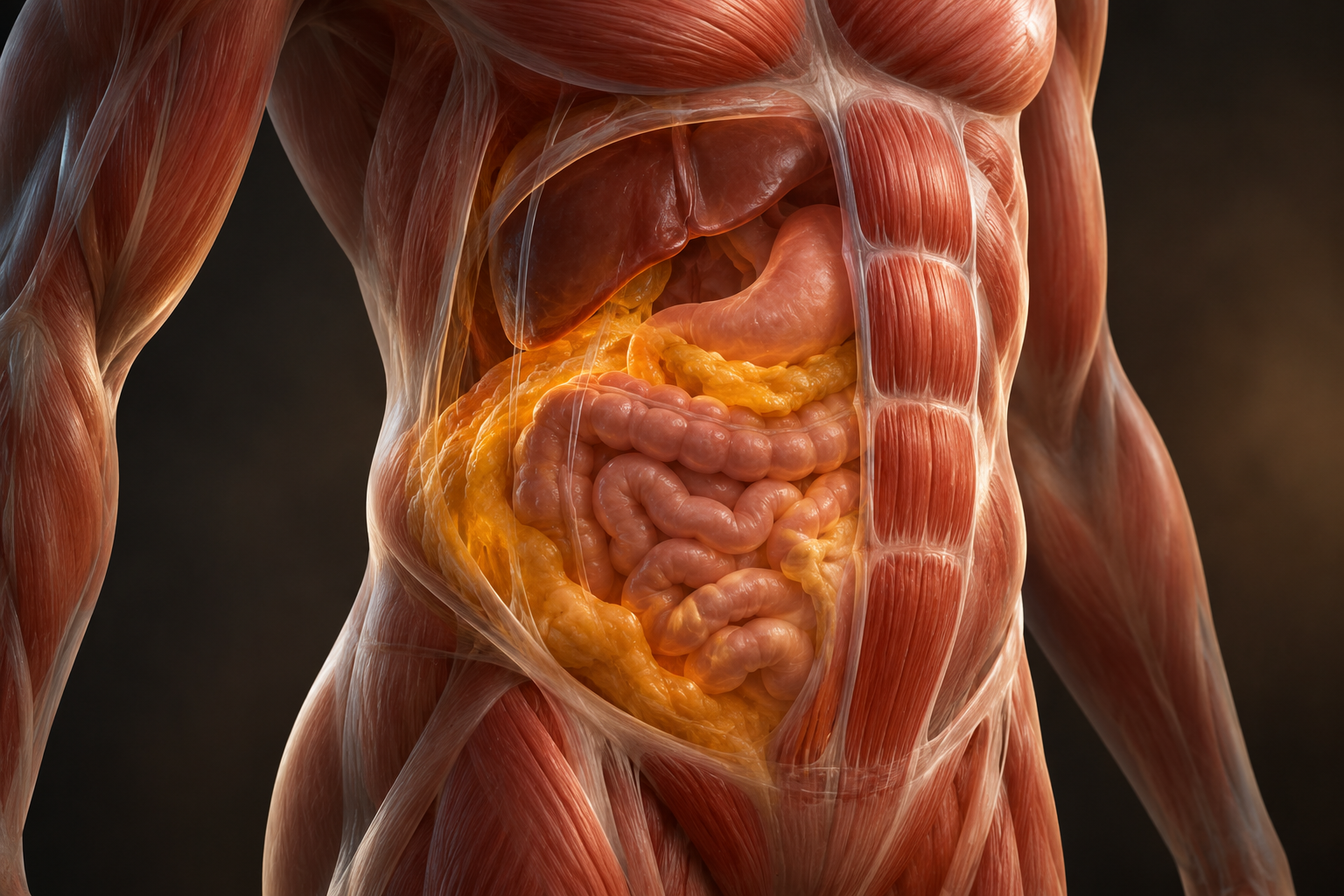
Visceral fat is fat around internal organs. The researchers examined its distribution alongside muscle mass instead of relying only on body mass index, which measures weight relative to height without distinguishing fat from lean tissue.
Higher coffee intake was also associated with lower circulating levels of branched-chain amino acids, or BCAAs. The researchers described this result as correlational and said it could reflect differences in metabolism rather than the amount of amino acids consumed through coffee.
Among male participants, higher coffee intake was associated with a more favorable glucose-insulin profile and increased total and bioavailable testosterone. The study also identified different patterns among women, although the available coverage did not provide those details in full.
NHANES Coffee and Serum Lipids (2025)
The 2025 NHANES Coffee and Serum Lipids study used cross-sectional data collected from 2005 through 2020. It measured daily coffee consumption in cups and examined total cholesterol, triglycerides, HDL cholesterol and LDL cholesterol.
Each additional daily cup of coffee was associated with higher total cholesterol and LDL cholesterol. Among participants consuming at least three cups daily, additional coffee was linked with greater total and LDL cholesterol compared with non-drinkers. The study reported a 1.23 mg/dl increase in total cholesterol and a 1.22 mg/dl increase in LDL cholesterol for each additional cup consumed per day. In the categorical analysis, each additional cup among participants consuming at least three cups daily was linked with an 8.45 mg/dl increase in total cholesterol and a 7.86 mg/dl increase in LDL cholesterol compared with non-drinkers.
How Did Researchers Study Coffee Intake?
The analysis used data from the 46-year follow-up of the Northern Finland Birth Cohort 1966, which enrolled 12,058 children born in 1966 in northern Finland.
The follow-up included 2,264 participants with complete information on coffee consumption and body-composition measures. Participants reported their habitual coffee intake and underwent assessments including BMI, waist-to-hip ratio, body-fat percentage and skeletal muscle mass.
Lead author Luca Verroest, a doctoral researcher at the University of Oulu, said Finland has the highest per-capita coffee consumption in the world.
Coffee contains more than 1,000 bioactive compounds, according to Verroest. He said the number and variety of compounds make it difficult to determine which components, if any, were responsible for the observed associations.
What Was Different About Male and Female Participants?
Male participants with higher coffee intake showed a more favorable glucose-insulin profile, higher total and bioavailable testosterone, and higher sex hormone-binding globulin.
Sex hormone-binding globulin binds testosterone and other sex hormones, affecting their availability to tissues. Verroest said the hormone pattern was one of the study’s most distinct findings and was consistent with the glucose-insulin profile observed in the same men.
Women who reported drinking more coffee showed different patterns. The study was observational, so it also could not determine whether coffee consumption preceded or followed the hormonal differences observed at follow-up.
What Does the Evidence Show?
- The European Journal of Nutrition study included 2,264 participants from the 46-year follow-up of the Northern Finland Birth Cohort 1966.
- In the 2,264 participants, higher coffee intake was associated with lower total and visceral fat and higher skeletal muscle mass.
- Higher coffee intake was associated with lower circulating BCAAs.
- Male participants with higher coffee intake had a more favorable glucose-insulin profile, higher total and bioavailable testosterone, and higher sex hormone-binding globulin.
A separate randomized, controlled and blind crossover study published in Nutrients in 2024 examined coffee rich in phenolic compounds among people with overweight or obesity.
The Nutrients study was published on August 26, 2024, and used the DOI 10.3390/nu16172848. The material available for this post describes its design and general topic but does not provide the full numerical results needed to compare the two studies directly.
What Are the Main Limitations?
Mir Ali, a bariatric surgeon and medical director at MemorialCare Surgical Weight Loss Center at Orange Coast Medical Center, said the observational design limits the conclusions that can be drawn. He also said caffeine has shown some benefit for weight loss and overall health, although its mechanism is not clearly understood.

Monique Richard, a registered dietitian nutritionist and owner of Nutrition-In-Sight, said the cross-sectional and observational design cannot establish that coffee caused lower visceral fat or more muscle. Other lifestyle behaviors that differ between coffee drinkers and non-drinkers may influence both coffee consumption and body composition.
Richard also noted that plain brewed coffee is metabolically different from coffee beverages containing added sugar, syrups or saturated fat. The Finnish study did not distinguish between coffee preparations, which limits how the results can be applied to specific drinks.
Because the analysis was cross-sectional, it could not establish whether coffee consumption came before or after the measured body-composition and hormonal differences. The BCAA finding could not determine whether coffee directly improved amino-acid clearance or tracked alongside better metabolic health for other reasons.
Key Considerations
- The study links higher coffee intake with lower visceral fat and greater skeletal muscle mass, but does not show that coffee caused the differences.
- The study did not separate plain brewed coffee from drinks containing sugar, syrups or saturated fat.
- Coffee contains more than 1,000 bioactive compounds, and the study could not isolate the component or components responsible.
- Other lifestyle behaviors may differ between coffee drinkers and non-drinkers.
- The cross-sectional analysis could not determine the order in which coffee consumption and the measured differences occurred.
What to Do Now
- Track your habitual coffee intake and the type of coffee you drink.
- Include body-fat percentage, waist-to-hip ratio and skeletal muscle mass when reviewing changes in body composition.
- Record sugar, syrup and saturated-fat additions separately from plain brewed coffee.
- Keep records of diet, physical activity and other lifestyle habits alongside coffee consumption.
FAQ
Does Coffee Cause Lower Visceral Fat and More Muscle?
The Finnish cohort study found an association between higher coffee intake and lower visceral fat and greater muscle mass, but its observational, cross-sectional design does not establish that coffee caused those differences.
How Many Participants Were Included in the Study?
The 46-year follow-up included 2,264 participants with complete data on coffee intake and body-composition measures. The original cohort enrolled 12,058 children.
What Body-Composition Measurements Did the Researchers Use?
The participants underwent assessments that included body mass index, waist-to-hip ratio, body-fat percentage and skeletal muscle mass.
What Did the Study Find About BCAAs?
Higher coffee intake was associated with lower circulating levels of branched-chain amino acids. Verroest said this likely reflects differences in metabolism rather than coffee adding or replacing amino acids in the diet.
Did the Study Distinguish Among Types of Coffee?
No. The study did not distinguish between coffee preparations, including plain brewed coffee and beverages containing sugar, syrups or saturated fat.
Related Coverage
- Black Coffee Linked To Longer Life, But Sugar And Cream May Undo Benefits, New Study Finds (October 12, 2026): Drinking two to three cups of black coffee a day is associated with a 17% lower risk of death, and the link gets stronger as intake rises, according to a new observational study from Tufts University that tracked roughly 46,000 Americans.
- HIIT Helped Older Adults Lose Fat and Keep Muscle, a Six-Month Study Found
- Study Finds Uneven Muscle Loss in Older Adults With Sarcopenia, Legs Most Affected