Quick Answer
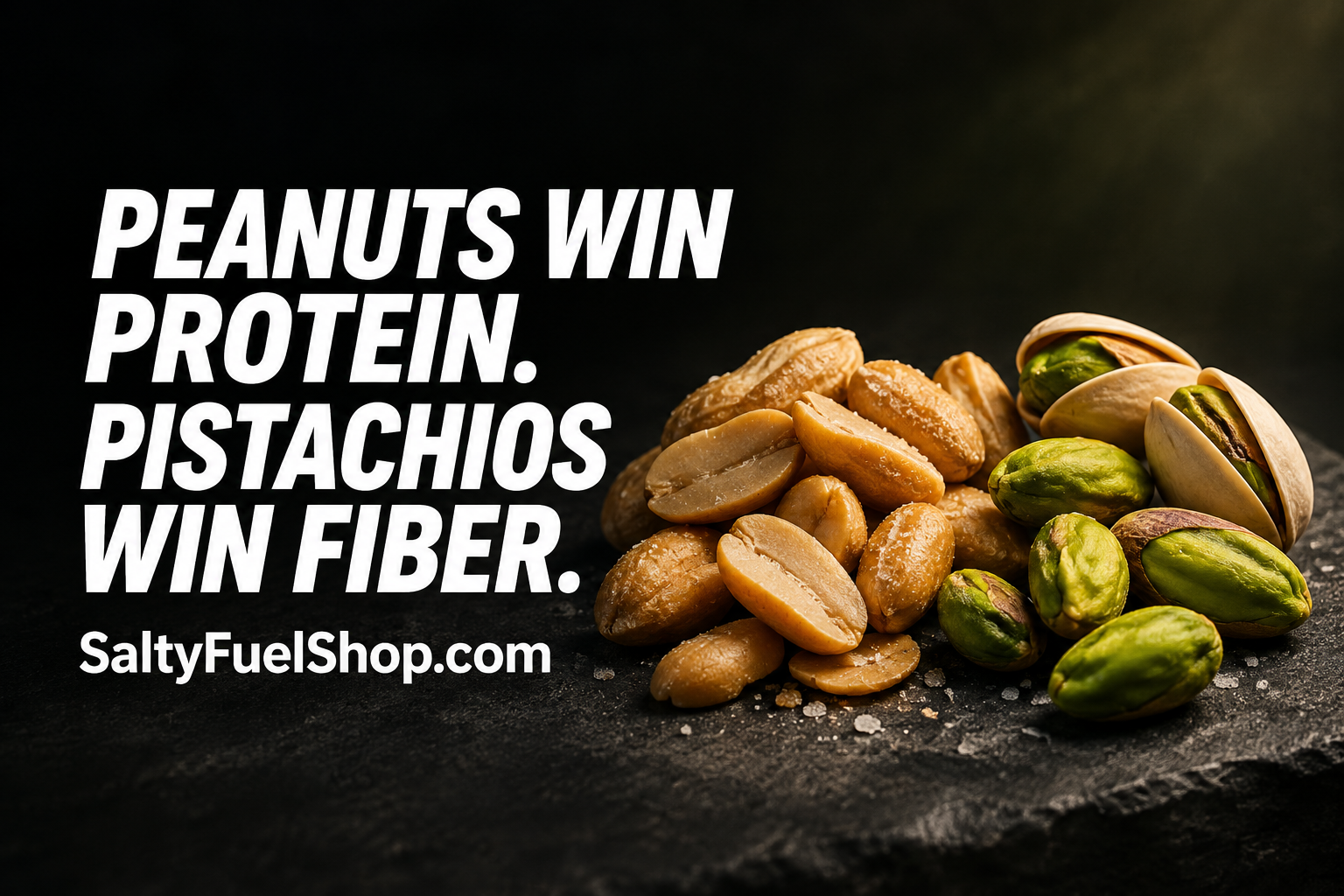
Peanuts provide more protein per one-ounce serving, while pistachios provide slightly more fiber. The package label remains the most useful guide because serving size, sodium, added sugar, allergies and the rest of a person’s diet affect which choice fits better.
Peanuts vs Pistachios: What Each Shopper Should Check
| Comparison Point | Peanuts | Pistachios | Scope of the Evidence |
|---|---|---|---|
| Edible amount per labeled serving | Check the edible portion stated on the package | For in-shell pistachios, the one-ounce serving refers to edible nuts rather than shell weight | Specific to how products are measured and labeled |
| Protein | More protein in the cited one-ounce comparison | Less protein than peanuts in that comparison | Head-to-head comparison described in the nutrition coverage |
| Fiber | Less fiber than pistachios in the cited one-ounce comparison | Slightly more fiber in the cited one-ounce comparison | Head-to-head comparison described in the nutrition coverage |
| Sodium | Compare the sodium listed for the labeled serving | Compare the sodium listed for the labeled serving | Product-label information |
| Added sugar | Compare added sugar listed for the labeled serving | Compare added sugar listed for the labeled serving | Product-label information |
| Allergen statement | Peanuts are legumes but can cause life-threatening allergic reactions | Pistachios are tree nuts and can cause life-threatening allergic reactions | General safety guidance from the Linus Pauling Institute |
| Broader research | Included in reviews that group peanuts with tree nuts or examine them separately | Included in reviews that group peanuts with tree nuts or examine them separately | Most cited findings concern nuts generally, not a direct peanut-pistachio trial |
Which Has More Protein and Fiber?
Peanuts have the protein advantage in the cited one-ounce comparison, while pistachios have slightly more fiber. The difference in fiber is described as modest, and either food can contribute to daily intake. Because the supplied comparison does not include complete nutrient tables for both foods, the package label is the best source for an exact product-and-serving comparison.
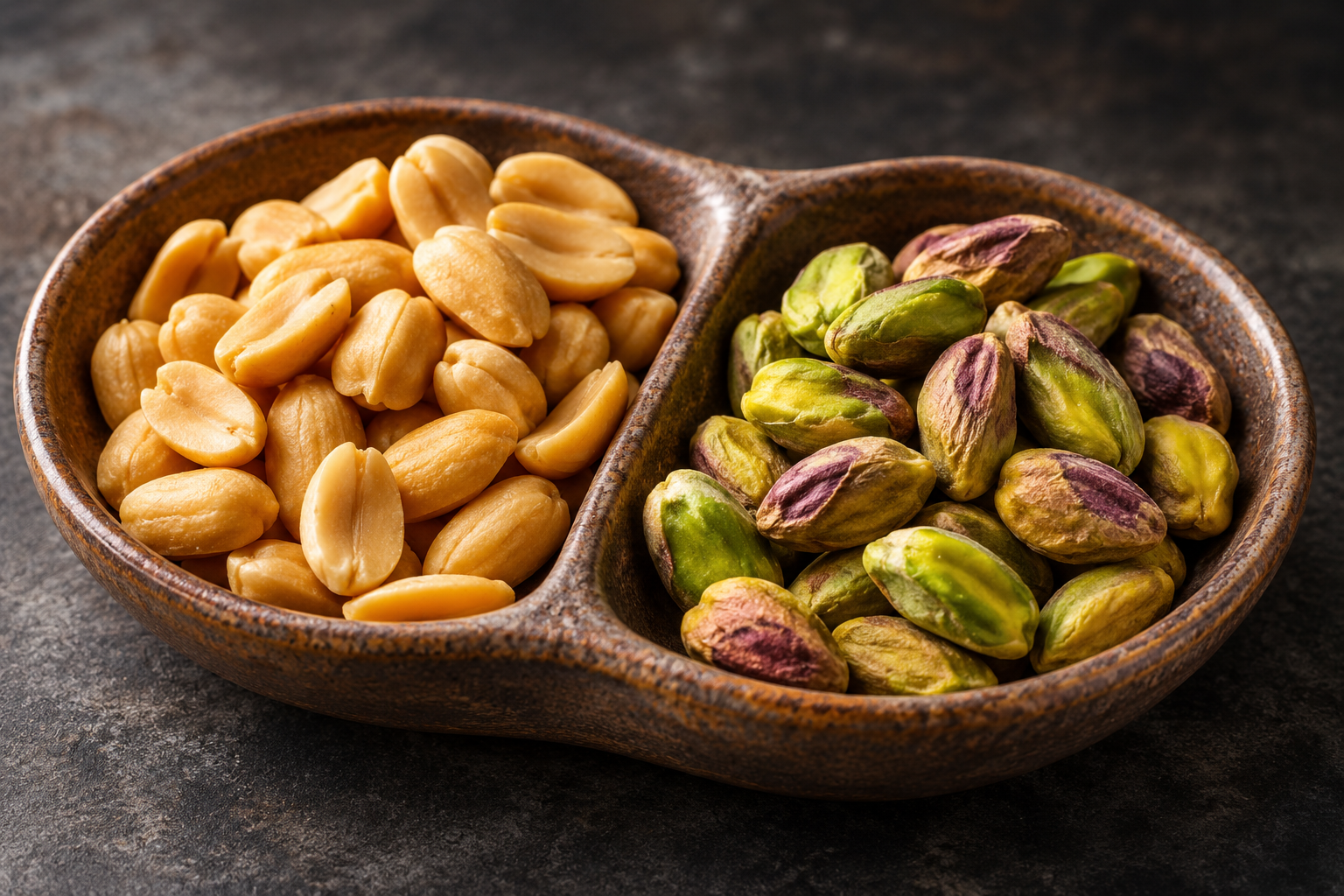
A 2017 systematic review in Nutrients classified peanuts as legume seeds and pistachios as tree nuts. The review reported that both contain monounsaturated and polyunsaturated fatty acids, protein, soluble and insoluble fiber, vitamins E and K, folate, thiamine, minerals such as magnesium, copper, potassium and selenium, carotenoids, antioxidants and phytosterols. It also noted that each nut type has a distinct composition.
What Is Directly Compared, and What Is Not?
- Protein and fiber: The head-to-head statement covers one-ounce servings of peanuts and pistachios. Peanuts lead on protein, and pistachios lead slightly on fiber.
- Calories, fat and micronutrients: The broader Cleveland Clinic page describes nuts generally. It says one ounce contains 160 to 200 calories, with 80% to 90% coming from fat. It does not provide a separate calorie or fat value for peanuts and pistachios.
- Coronary heart disease research: The Linus Pauling Institute reports a 2014 meta-analysis of 13 prospective cohort studies that found a 34% lower coronary heart disease risk when comparing the highest with the lowest level of nut consumption. It also reports a separate meta-analysis of more than 200,000 participants in which at least five weekly servings were associated with a 20% lower risk than no nut consumption. These analyses concern nuts generally and do not rank peanuts against pistachios.
- Blood pressure research: The nutrition coverage describes an analysis of 143,380 adults across eight prospective studies, including 20,665 hypertension cases during follow-up. The researchers said the observational results do not prove that eating nuts directly prevents high blood pressure. This evidence is not presented as a peanut-pistachio comparison.
- Gut bacteria: A 2023 review in Foods said peanuts and pistachios may promote beneficial gut bacteria that produce short-chain fatty acids. For peanuts, the review associated possible microbiota changes with improvements in metabolic syndrome risk factors and an inflammatory process triggered by a high-fat diet.
How Should You Compare the Label?
Start with the serving description rather than assuming that one ounce means the same edible amount in every package. In-shell pistachios are a practical example because the listed one-ounce serving refers to the edible nuts rather than shell weight. Compare protein, fiber, sodium and added sugar on the same labeled serving basis.
Preparation also changes the product. Whole nuts without added salt or sugar retain the basic form of the food, while flavored versions can add sodium or sugar. For people tracking total daily fiber rather than choosing one snack, the cited nutrition coverage favors rotating peanuts and pistachios into meals and snacks rather than treating the comparison as a verdict.
What Allergy Guidance Says
The Linus Pauling Institute states that peanuts and tree nuts can cause life-threatening allergic reactions. People managing allergies should consult current medical guidance before serving either food.
Health Benefits of Nuts (2023)
The Cleveland Clinic overview reports that two large epidemiological studies assessed the diets of more than 110,000 people. People who ate five or more ounces of nuts per week had a substantially lower risk of heart disease and death, with reported risk reductions of 35% to 50%. The overview describes nuts as sources of dietary fiber and protein, along with vitamin E, folic acid, niacin, magnesium, vitamin B6, zinc, copper and potassium.
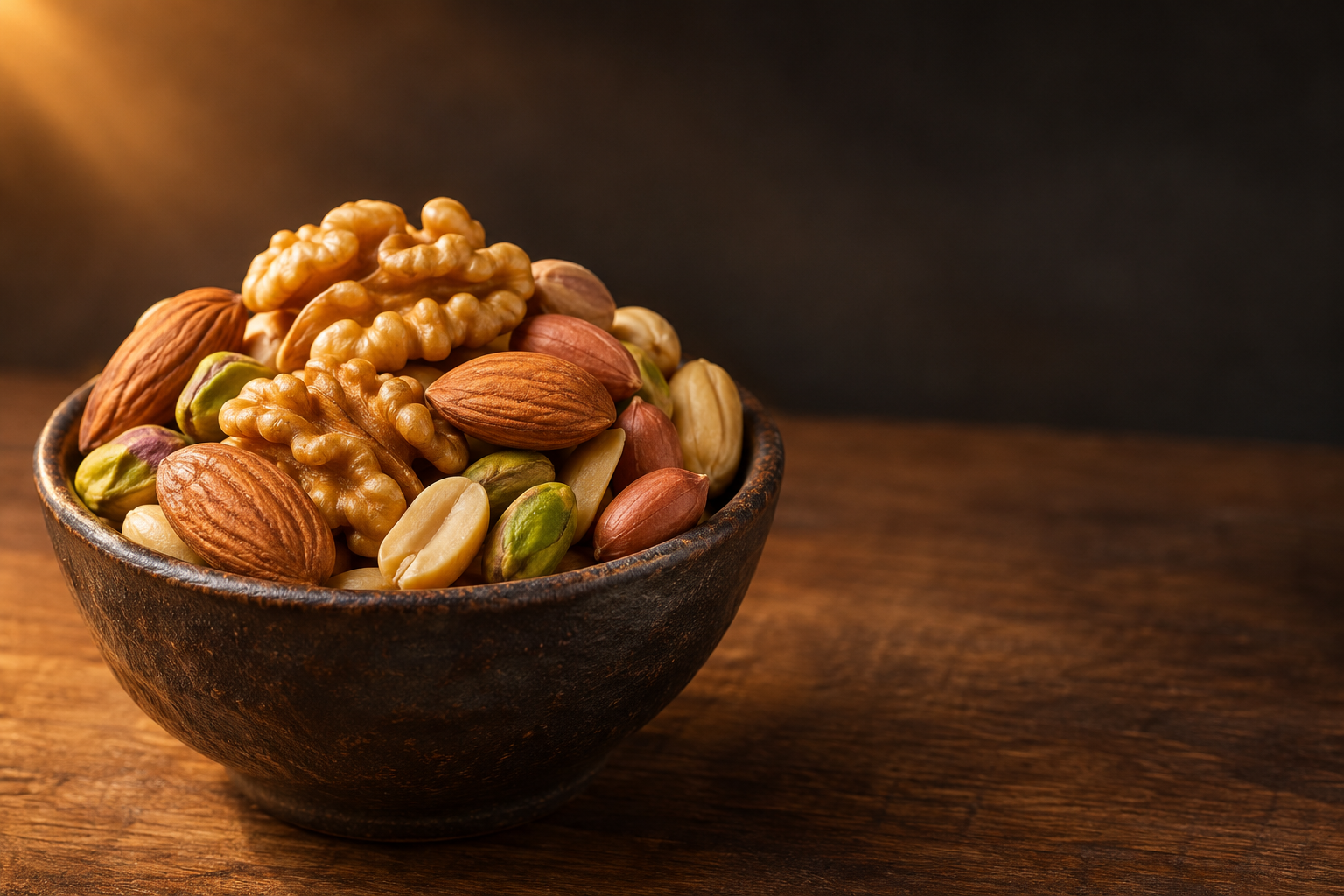
The same overview states that one ounce of nuts contains 160 to 200 calories, with 80% to 90% coming from fat. Registered dietitian Devon Peart advises substituting nuts for foods high in saturated fat and describes one ounce as roughly a handful. Its serving table lists 35 peanuts for one ounce, but the displayed table does not provide a corresponding pistachio count, so the figures should not be used for a head-to-head serving comparison.
What to Do Now
- Compare the Nutrition Facts labels for protein, fiber, sodium and added sugar.
- Match the labeled serving size and edible portion before comparing products.
- Check whether the package is plain or flavored.
- Review current medical guidance before serving peanuts or pistachios to someone with a relevant allergy.
Label Comparison Checklist for Nuts
- Compare products using the same labeled serving and edible portion.
- Read the Nutrition Facts serving description.
- Review sodium and added sugar separately.
- Consult current medical guidance before serving peanuts or pistachios to someone with a relevant allergy.
FAQ
Which Has More Protein per Labeled Serving?
Peanuts have more protein in the cited one-ounce comparison. Compare the package label for the exact product and serving size.
Which Has More Fiber?
Pistachios have slightly more fiber in the cited one-ounce comparison. The difference is described as modest.
Are Peanuts and Pistachios the Same Type of Food?
Peanuts are legume seeds, while pistachios are tree nuts. A 2017 systematic review classified them that way.
Do Pistachios Provide More Protein Quality?
The nutrition coverage describes pistachios as offering a protein-quality distinction rather than a protein-quantity advantage. It does not provide a numerical protein-quality measure for either food.
Which Has Less Sodium or Added Sugar?
The supplied information does not give specific sodium or added-sugar amounts for either food. Compare the Nutrition Facts labels for the products being considered.