The Mediterranean diet may boost tiny proteins that protect the heart and brain, according to a small observational study that linked stronger dietary adherence with higher blood levels of humanin and SHMOOSE. The finding offers a possible biological explanation for part of the established Mediterranean diet pattern, but it does not show that the diet prevents heart disease or Alzheimer’s disease.
The research was led by Roberto Vicinanza, USC Leonard Davis Instructional Associate Professor of Gerontology, with Pinchas Cohen, USC Leonard Davis School Dean and USC Distinguished Professor, as senior author. The full paper, Mediterranean diet adherence is associated with mitochondrial microproteins Humanin and SHMOOSE, was published in Frontiers in Nutrition in 2026. Its PubMed record lists the journal reference and DOI, 10.3389/fnut.2025.1727012. The USC institutional release provides an accessible summary of the authors’ work.
What the study found
The researchers analyzed blood samples from 49 patients with an average age of 78.4 years. All participants had been selected from an observational study of non-valvular atrial fibrillation conducted at Sapienza University of Rome, so the sample was not a general population group. The paper reports that 57% of the participants were women.
Dietary adherence was measured with the 9-item Med-Diet questionnaire. It asks about how frequently participants ate foods from nine categories: fruit, vegetables, meat, cereals, dairy, alcohol, olive oil, legumes and fish. The paper grouped scores of 7 to 9 as high adherence and 0 to 6 as low-to-medium adherence. Twenty participants, or 40.8%, were in the high-adherence group, while 29, or 59.2%, were in the low-to-medium group.
Participants with high adherence had higher plasma levels of SHMOOSE, with a reported p value of 0.046, and Humanin, with a p value of 0.045. These were measurements of circulating proteins in blood. The paper did not demonstrate that higher Humanin or SHMOOSE levels translated into better heart or brain outcomes.
The authors also measured two oxidative-stress markers: soluble Nox2-derived peptide and plasma 8-iso-prostaglandin F2alpha. Humanin was inversely associated with both markers. Its relationship with soluble Nox2-derived peptide remained significant after adjustment for sex and body mass index.
Nox2 is an enzyme that produces reactive oxygen species. Although reactive oxygen species have roles in cell signaling and immune defense, excessive production can contribute to oxidative stress. The study therefore proposed a possible pathway in which diet, microprotein levels and Nox2 activity are connected. That pathway remains a mechanism proposed by the authors, not a proven chain of cause and effect.
What foods were associated with the microproteins?
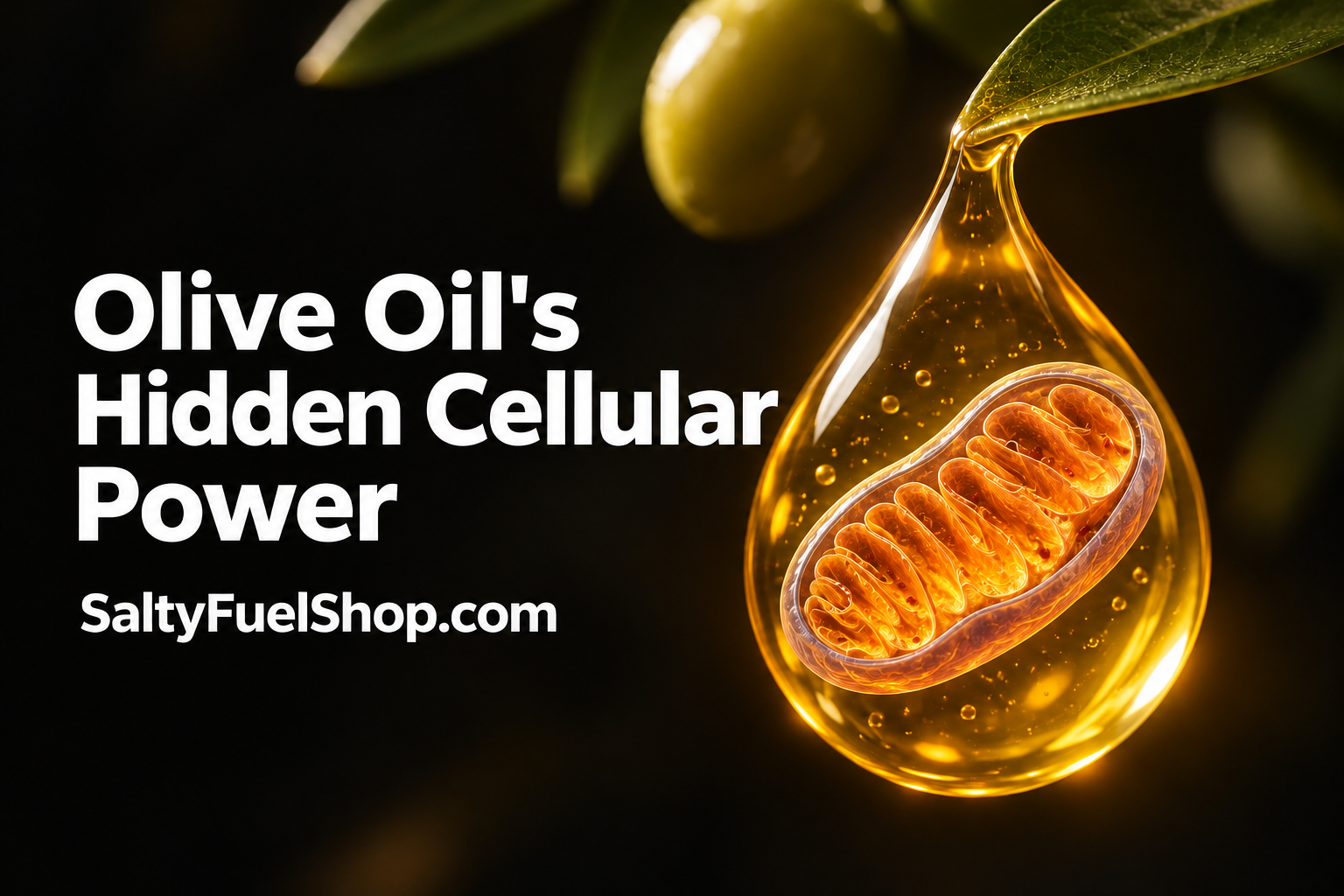
The food-specific results differed by protein. SHMOOSE was higher among people who reported more olive oil consumption and a lower intake of refined bread. Humanin was positively associated with olive oil, fish and legumes.
- Humanin and olive oil: p = 0.0069
- Humanin and fish: p = 0.038
- Humanin and legumes: p = 0.0282
- SHMOOSE and olive oil: p = 0.020
- SHMOOSE and low refined-bread intake: p = 0.029
The study assessed an overall eating pattern and then examined dietary components. It did not test the effects of eating one food in isolation. For broader practical information about a food in this pattern, see our separate article on lentils in the daily diet.
What it does not prove
It was a cross-sectional analysis, so it measured diet and blood markers at the same point. Adults who followed the diet more closely also differed in other ways that could have influenced their Humanin and SHMOOSE levels, including health and lifestyle factors. The researchers called for further studies to determine causality.
Previous findings about Humanin, SHMOOSE and disease come from separate research. In the USC summary, Humanin has been linked with improved insulin sensitivity, cardiovascular protection, longevity and preservation of cognitive function. A genetic variant of SHMOOSE has been associated with an increased risk of Alzheimer’s disease, while the normal form appears to help protect neurons from damage involving amyloid.
These separate lines of evidence make the microproteins worth studying. They do not make this 49-person analysis a clinical trial. It did not show that changing a person’s diet raises either protein or improves heart function, memory, or protection against Alzheimer’s disease.
Humanin and SHMOOSE are also called mitochondrial microproteins. They originate from small open reading frames in mitochondrial DNA. Humanin was first identified by Cohen and colleagues in 2003, and Cohen’s team identified SHMOOSE more recently. USC describes this work as part of a research program on mitochondrial microproteins that has continued for more than 20 years.
The paper proposes Humanin and SHMOOSE as possible biomarkers for Mediterranean diet adherence. A biomarker is a measurable biological indicator that can provide information about a health or physiological state. The USC summary quotes USC Leonard Davis School Dean and USC Distinguished Professor Pinchas Cohen saying that Humanin and SHMOOSE could serve as biomarkers for adherence to the Mediterranean diet and have clinical significance.
Evidence summary
| Finding | Evidence type | What it supports |
|---|---|---|
| Higher adherence was associated with higher Humanin and SHMOOSE in blood | Association from a 49-person cross-sectional study | A relationship between the measured diet score and circulating protein levels |
| Olive oil, fish and legumes were associated with higher Humanin | Food-component association | Further testing of particular foods and their relationship with Humanin |
| Olive oil and lower refined-bread intake were associated with higher SHMOOSE | Food-component association | Further testing of particular foods and their relationship with SHMOOSE |
| Higher Humanin was associated with lower Nox2-related activity | Proposed mechanism | Laboratory and longitudinal research on a possible diet-protein-enzyme pathway |
| Humanin and SHMOOSE have been linked with cardiovascular or neurodegenerative outcomes in separate research | Prior observational or preclinical evidence | A rationale for further study, rather than proof of disease prevention from this diet |
What to do now
- Consider how your usual pattern compares with the study’s Mediterranean-style foods, including olive oil, fish, legumes, fruits and vegetables.
- Look at the overall food pattern, because the study measured adherence across nine food categories and also examined individual components.
- Olive oil, fish and legumes were associated with Humanin, while olive oil and lower refined-bread intake were associated with SHMOOSE.
- Choose the version of this eating pattern that fits your preferences and budget.
- Keep the findings in proportion. Humanin and SHMOOSE remain proposed biomarkers, and the study does not establish that a dietary change will raise them or prevent a disease.
Related reading
These are separate articles about other foods and nutrition topics, not additional evidence from the USC study:
- Lentils in the daily diet covers practical plant-protein context.
- Blueberries linked with gut, brain and heart health reviews fruit-based research.
FAQ
Does the Mediterranean diet increase humanin and SHMOOSE?
The observational study found that people with higher Mediterranean diet adherence tended to have higher blood levels of Humanin and SHMOOSE. It could not determine whether the diet caused those higher levels.
Which Mediterranean diet foods were linked with the microproteins?
Olive oil, fish and legumes were associated with higher Humanin levels. Olive oil and eating fewer refined carbohydrates were associated with higher SHMOOSE levels.
Does the study prove that the Mediterranean diet prevents heart disease or Alzheimer’s disease?
No. The small cross-sectional study identified associations between diet, microprotein levels and oxidative-stress markers. The researchers said further research is needed to establish causality and measure outcomes such as cardiovascular health, brain function and disease risk.