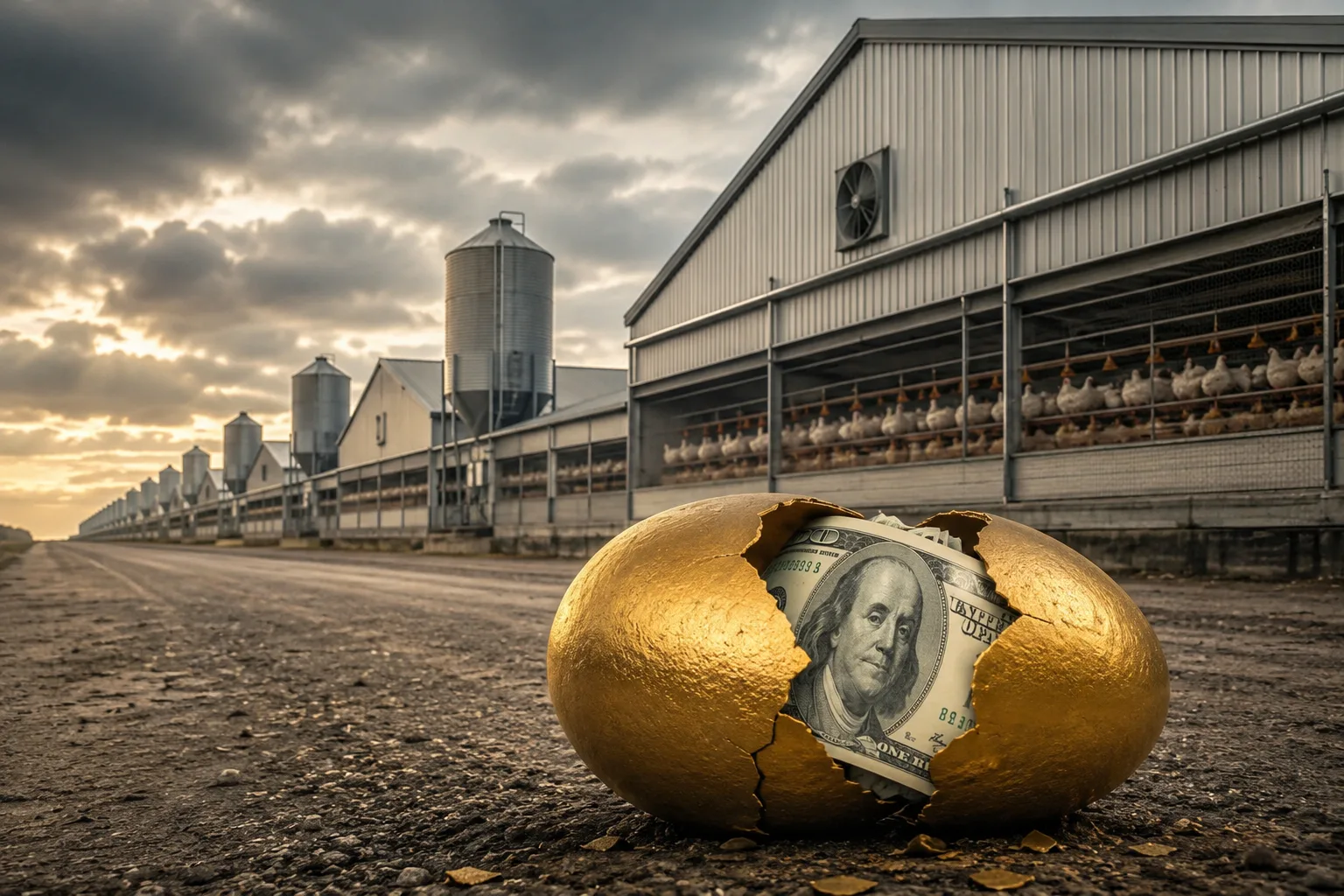
Cal-Maine Foods, Versova Holdings, and Hickman’s Egg Ranch have agreed to pay a total of $3.3 million to resolve a Department of Justice civil case alleging that the three largest U.S. egg producers conspired to artificially inflate egg prices during the bird flu epidemic. The settlement, announced on June 30, 2026, also requires the companies to donate 53 million eggs to food banks across the country. None of the companies were charged, and each denied wrongdoing.
What the DOJ alleged
Federal investigators alleged that the producers coordinated to reduce the supply of eggs and fix prices at a time when retail prices exceeded $6 per dozen in early 2025. The investigation covered a period when the bird flu epidemic had forced the slaughter of more than 166 million birds, primarily egg-laying hens, according to the Justice Department.
How the settlement is split
Under the agreement, Cal-Maine Foods will pay $1.5 million, Hickman’s Egg Ranch will pay $1 million, and Versova Holdings will pay $800,000. The Justice Department said the payments resolve civil claims of price-fixing under the Sherman Act.
Cal-Maine CEO Sherman Miller stated that the agreement allows the company “to focus on delivering affordable eggs to consumers.” Versova called the settlement “a decision to put the matter behind them.” Hickman’s Egg Ranch, now owned by Brazil-based Mantiqueira USA, an affiliate of JBS, did not respond to a request for comment.
Bird flu, USDA reimbursements, and industry profits
Since 2020, the three egg producers have received a combined $193 million in indemnity payments from the U.S. Department of Agriculture for flocks culled due to bird flu, nearly 60 times the $3.3 million settlement amount. The USDA has paid approximately $1.5 billion in total to all egg producers since 2020. During the same period, Cal-Maine alone reported over $1 billion in profit in its 2025 fiscal year.
The companies had attributed rising egg prices to supply disruptions caused by the bird flu, but the DOJ’s case alleged that market manipulation went beyond the legitimate effects of the epidemic.
Why critics call the penalty inadequate
Former poultry farmer Reid Phifer told reporters that the fine amounts to “the cost of doing business” and argued that such settlements encourage repeat behavior. “When penalties are a fraction of the profits gained from illegal conduct, there is no real deterrent,” Phifer said.
Antitrust expert Austin Frerick noted that because the companies admitted no wrongdoing, consumers who overpaid for eggs cannot pursue civil lawsuits for damages. Animal law director Delcianna Winders described the gap between the companies’ profits and the settlement as “a mockery of justice.” The case adds to a long history of corporate price-fixing in the U.S., where companies have paid nearly $100 billion in fines and settlements since 2000 to resolve anti-competitive practice allegations.
What happens next
The $3.3 million settlement resolves the DOJ’s allegations without an admission of guilt. The donation of 53 million eggs is intended to partially offset the harm to consumers, though critics argue the remedy falls short of the injury inflicted. Without stricter penalties and the possibility of private lawsuits, observers warn that corporate price-fixing may remain a profitable strategy in concentrated food markets.
FAQ
Which egg producers are involved in the $3.3 million price-fixing settlement?
The settlement involves the three largest U.S. egg producers: Cal-Maine Foods, Versova Holdings, and Hickman’s Egg Ranch. Hickman’s is now owned by Brazil-based Mantiqueira USA, an affiliate of JBS.
What did the DOJ accuse the egg producers of doing?
The Department of Justice alleged that the companies conspired to reduce the supply of eggs and fix prices during the bird flu epidemic, a period when retail prices exceeded $6 per dozen in early 2025 and more than 166 million birds, primarily egg-laying hens, had been slaughtered.
Why are critics calling the egg price-fixing settlement too small?
Critics point out that the $3.3 million total is roughly 60 times smaller than the $193 million in combined USDA indemnity payments the three companies received since 2020 for bird flu culls, and that Cal-Maine alone reported over $1 billion in profit in its 2025 fiscal year. Because the companies denied wrongdoing, consumers who overpaid for eggs cannot pursue private lawsuits for damages.