Why Creatine Is Drawing More Women Over 30
Women over 30 are increasingly turning to creatine supplements to build and preserve muscle, according to a July 17, 2026 article written by registered dietitian Molly Knudsen. Age-related muscle loss, known as sarcopenia, begins in the 30s, with the body losing 3 to 5 percent of its muscle mass each decade. Many women enter perimenopause in their late 30s or early 40s, which complicates body composition further because of hormonal shifts.
A 2021 comprehensive review published in the Journal of the International Society of Sports Nutrition found that creatine supplementation is beneficial at every life stage for women, with very low risk. The same review reported that creatine supplies energy to muscles and supports cognition and memory.
How Hormonal Changes Shift the Equation
The process of building new muscle, called muscle protein synthesis, slows with age. During perimenopause, declining estrogen negatively affects body composition, while rising cortisol can promote fat storage. These changes make it harder for women to maintain lean mass through diet and exercise alone.
A separate research review published in the journal Nutrients and reported in May 2026 indicated that combining exercise with creatine supplementation improves blood sugar control and muscle health in older adults. That review highlighted the role of creatine in addressing age-related metabolic decline.
What the Numbers Show for Muscle and Body Composition
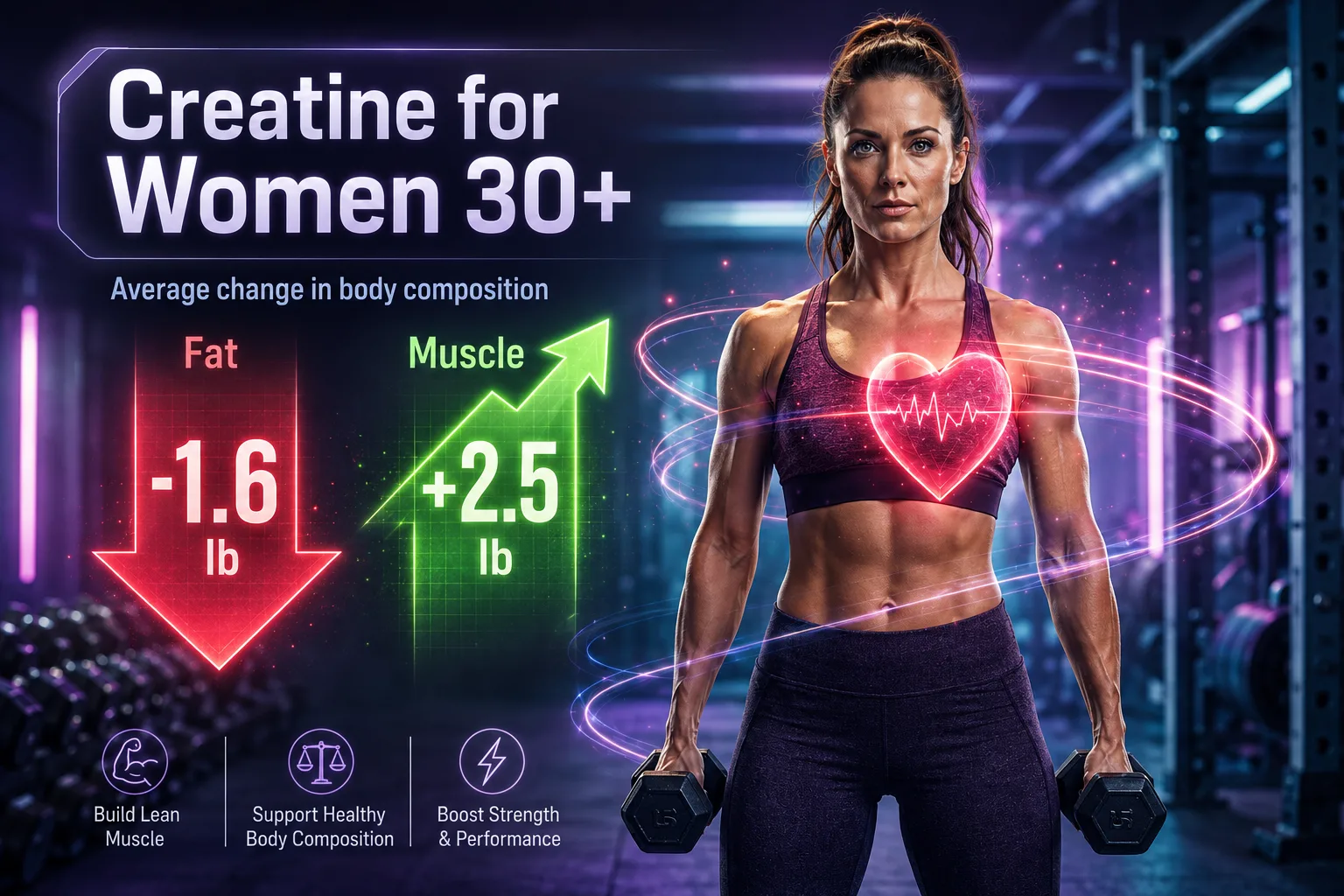
A 2024 review of adults under 50 found that participants who took creatine alongside a strength training routine gained an average of 2.5 pounds of muscle mass and lost an average of 1.6 pounds of fat mass, compared with those who exercised without supplementation. The 2021 review also noted cognitive and memory benefits beyond muscle performance.
Emerging research published in 2025 and 2026 has pointed to additional benefits for brain function, bone health, and healthy aging, particularly for women and older adults. A narrative review in Nutrients by Antonio and colleagues at Nova Southeastern University and Keiser University (2024) classified creatine as one of the most studied ergogenic aids, reporting that it increases phosphocreatine stores in skeletal muscle, improves ATP production during high-intensity exercise, and enhances muscle mass, strength, and muscular endurance at typical doses of 3 to 5 grams per day.
Bulking Myths and How Creatine Actually Works
Contrary to a common belief, most women will not develop large, bulky muscles from resistance training, and the same principle applies to creatine supplementation, according to the textbook “Concepts of Fitness and Wellness” by Charles B. Corbin. Creatine is derived from the amino acids arginine, glycine, and methionine, and approximately 5 grams of creatine is found in every 1 kilogram (2.2 pounds) of meat, according to “Avery’s Sports Nutrition Almanac” by Burke and Gastelu. That ratio explains why hitting therapeutic doses through diet alone is difficult without supplementing.
Practical Dosing and Forms
The article recommended a 5 gram daily dose of creatine monohydrate, often combined with taurine for muscle recovery and energy. Users quoted in the piece reported visible changes: Diane M. said, “I feel stronger, feel BETTER, and I look leaner.” Melanie B., a nearly 50-year-old certified group fitness instructor who lifts three times a week, said the product was tasteless and easy to mix with any pre- or post-workout drink.
Safety Considerations Worth Knowing
The 2021 review cited above characterized creatine as carrying very little risk at standard doses. A 2025 narrative review on plant-based diets in pregnancy and lactation by Herrero Jiménez and colleagues, published in Nutrition, flagged creatine as a nutrient of concern during pregnancy and breastfeeding because demands rise and dietary intake may fall short. Anyone pregnant, nursing, or taking medications should consult a doctor before starting supplementation.
FAQ
Why are women over 30 using creatine?
Creatine helps offset age-related muscle loss, which begins in the 30s and accelerates during perimenopause due to hormonal shifts. A 2021 review in the Journal of the International Society of Sports Nutrition found it beneficial at every life stage for women, with very low risk.
How much muscle can women expect to gain with creatine?
A 2024 review of adults under 50 found that participants who added creatine to strength training gained an average of 2.5 pounds of muscle and lost an average of 1.6 pounds of fat, compared with exercise alone.
What is the typical creatine dose for women?
The article recommended 5 grams of creatine monohydrate per day, often paired with taurine for recovery and energy. The 2024 narrative review in Nutrients lists a typical range of 3 to 5 grams per day as safe for long-term use.