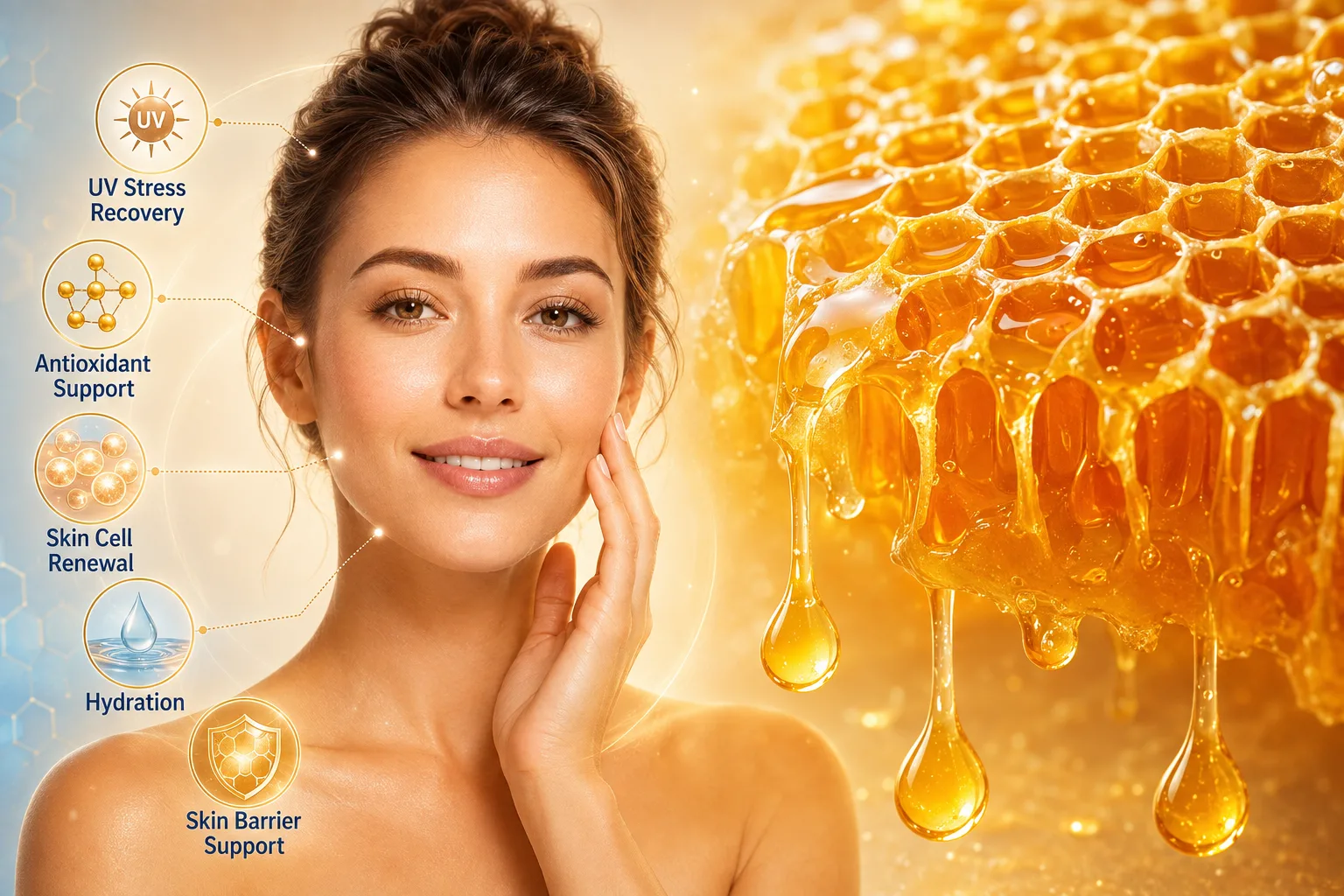
Researchers in Italy reported that human skin cells treated with multifloral honey showed increased antioxidant activity and stronger markers of recovery after exposure to ultraviolet light, according to a new study published in the journal Antioxidants. The study focused on fibroblasts, keratinocytes, and skin stem cells grown in the laboratory, and a subset of cells was treated with a small amount of honey for two days before UV exposure. The study’s authors emphasized that the findings come from isolated cells under laboratory conditions and do not prove that honey-based skincare products provide the same benefits in humans.
What did the researchers actually test?
The team treated several types of human skin cells with multifloral honey for two days before exposing them to ultraviolet light. The cell types included fibroblasts, keratinocytes, and skin stem cells, which together maintain the structure of skin and help it repair itself after injury. Measurements covered markers of oxidative stress, antioxidant activity, and inflammation, along with genes involved in cell repair, aging, and regeneration. The researchers designed the study to assess whether honey could help skin cells maintain resilience to UV-related stress rather than to evaluate wrinkle reduction.
What did the study find about antioxidant activity and stem cell renewal?
Honey-treated cells showed greater antioxidant activity and produced less nitric oxide, a compound that can contribute to cellular stress when present in excess. Genes associated with cellular aging showed lower activity in honey-treated cells, while genes involved in protecting cells from stress showed increased activity. Skin stem cells treated with honey maintained stronger activity of genes associated with self-renewal after UV exposure. The repair response was described as balanced rather than excessive, helping cells respond to stress without triggering an overactive repair process.
How do honey’s properties connect to skin healing?
The findings align with existing research showing that honey contains antioxidant and anti-inflammatory compounds, and medical-grade honey has been used for years to help wounds heal. A 2011 review in the Asian Pacific Journal of Tropical Biomedicine by Mandal and Mandal documented that honey has been described in the world’s oldest medical literature for its antimicrobial and wound-healing properties. The review noted that the healing property of honey comes from its antibacterial activity, its ability to maintain a moist wound condition, and its high viscosity, which provides a protective barrier against infection. Manuka honey, in particular, displays significant antibacterial effects even when hydrogen peroxide activity is blocked, according to the review, with its mechanism related to low pH and high sugar content.
What limitations did the researchers flag?
The study was conducted in isolated human skin cells grown in the laboratory, a method the researchers said is valuable for understanding biology but does not confirm effects in real people. The study’s authors cautioned that honey should not be treated as a substitute for sunscreen or established skincare practices. Honey has a history of use in skincare, and raw honey has been used as an exfoliating mask that loosens dead skin cells, attracts moisture to skin, and reduces blemish-causing bacteria. Manuka honey has also been used topically as part of wound-healing protocols.
What do the findings mean for skincare and skin resilience?
The research reflects a shift in skincare science toward supporting the skin’s ability to repair itself after everyday damage from sunlight, pollution, and inflammation. Topical approaches have been described as capable of lessening photoaging and alleviating inflammation and oxidative stress. Future skincare products may use compounds from honey in more advanced ways, but that science remains in early stages. Established foundations for healthy skin aging remain unchanged: daily sunscreen use, avoiding unnecessary UV exposure, consuming antioxidant-rich foods, getting adequate sleep, not smoking, and maintaining the skin barrier with moisturizer. Antioxidants including vitamins A, C, and E, carotenoids, and polyphenols have been linked to protection against wrinkles, which result from collagen depletion triggered by sun exposure, chronic stress, and smoking. According to Veena Vanchinathan, a board-certified dermatologist, “After sun exposure, the goal is to calm inflammation, restore moisture, and support healing.”
Where does the broader skincare field go from here?
Honey may support this process, though researchers are still determining which ingredients work best.
FAQ
What type of honey was used in the study?
The researchers used multifloral honey, which comes from the nectar of multiple flower sources.
Does this study prove honey works as sunscreen?
No. The study’s authors cautioned that honey should not be treated as a substitute for sunscreen or established skincare practices, and the findings come from isolated cells under laboratory conditions.
What skin cells were tested in the study?
The study involved fibroblasts, keratinocytes, and skin stem cells grown in the laboratory, which together maintain the structure of skin and help it repair itself after injury.