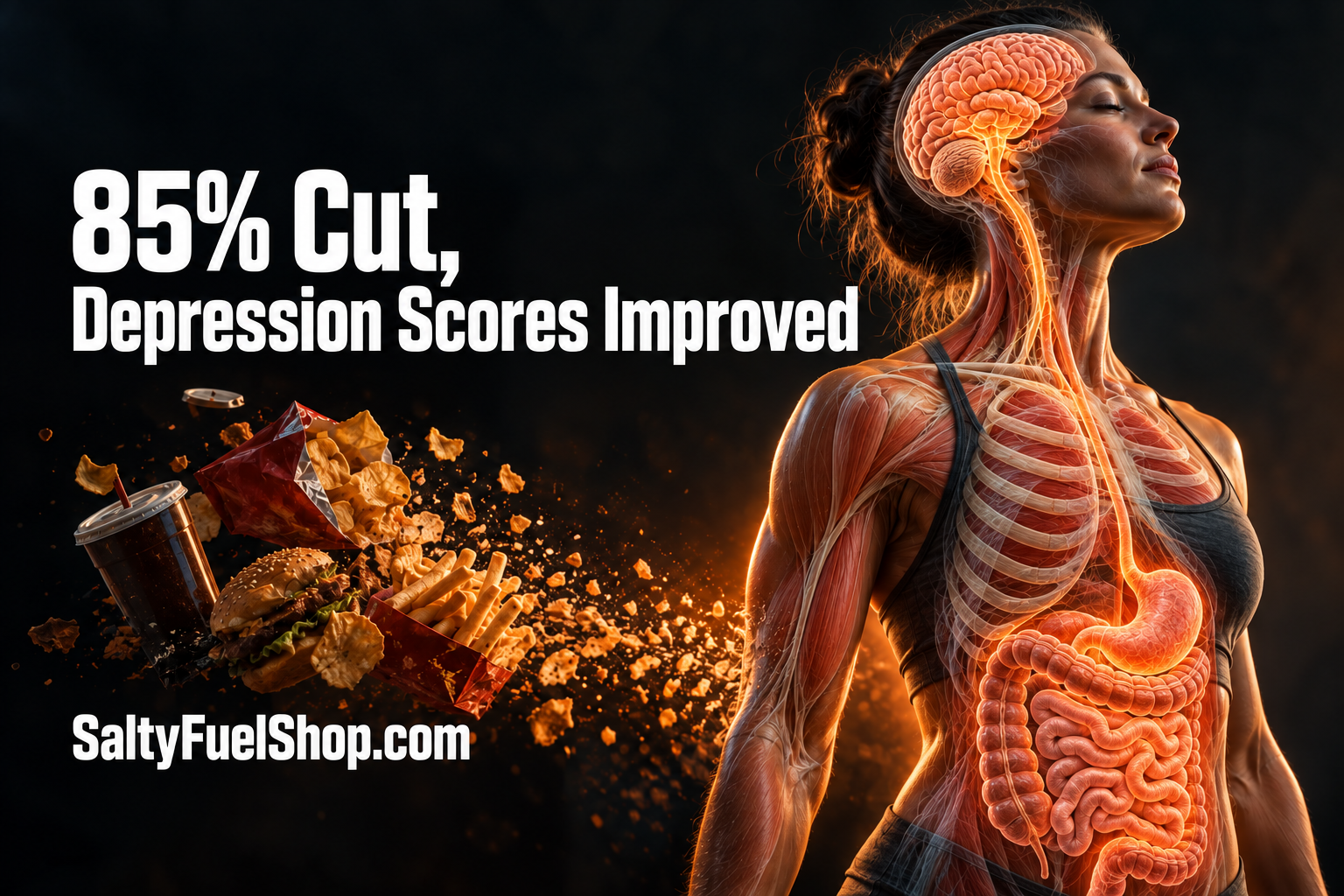
Cutting ultra-processed foods by more than 85% led to moderate to large improvements in depression symptoms in a small pilot study from UC San Francisco, published Sept. 23, 2026 in JAMA Psychiatry. The same participants also showed modest gains in anxiety scores, pointing toward diet as a lever worth pulling in depression care.
What the study tested
Twenty adults with depression took part in the crossover trial, which compared each person against their own baseline rather than against a separate control group. The average age was 44, 70% were female, and everyone in the study had a high BMI plus at least one metabolic issue such as hypertension, diabetes, or high LDL cholesterol. Fourteen of the 20 participants also had anxiety.
Researchers split the group in two. One half stayed on their usual diet for four weeks while the other half switched to a diet low in ultra-processed foods, with guidance from the research team on what to buy. After four weeks, the groups swapped diets, so every participant eventually spent time on both eating patterns. The crossover design let each person serve as their own comparison point.
What changed after the diet shift
When participants cut their ultra-processed food intake by more than 85%, they showed moderate to large improvements across three different measures of depression. Anxiety scores improved modestly during the same window. The researchers described the pilot as a proof of concept that this kind of trial can work at a larger scale, not as a final answer on the diet-depression link.
Why ultra-processed foods might affect the brain
Ultra-processed foods include packaged snacks, fast food, sugary drinks, and other industrially manufactured products that often contain preservatives, artificial coloring, flavor enhancers, and emulsifiers. The research team pointed to a few reasons these foods may be hard on mood:
- Palatability engineering. Food companies work with scientists to tune the sugar, salt, and fat levels that drive cravings. Eating ultra-processed food triggers dopamine, the pleasure hormone, which keeps people coming back for more.
- Gut lining damage.
- Chronic inflammation from a damaged gut can trigger or worsen depression.
That gut-to-brain pathway is the leading explanation the researchers offered, though the pilot was not designed to prove it.
What the study did not do
The sample was small, only 20 people, and the participants were selected for high BMI and metabolic issues, so the results may not generalize to everyone with depression. The trial was also open-label, meaning participants knew which diet they were on, which can shape self-reported symptoms. A larger phase 2 trial is planned, with enrollment expected to begin in 2028.
What counts as ultra-processed food
Ultra-processed foods are industrial formulations made mostly from ingredients and additives with little or no intact whole food.
- Packaged snacks such as chips, cookies, and crackers
- Fast food and ready-to-eat meals
- Sugary drinks including sodas and sweetened juices
- Reconstituted meats, including hot dogs and many deli products
- Industrial breads, packaged pastries, and frozen desserts
Cutting these foods by 85% is a steep reduction, and the research team acknowledged that doing it in everyday life is hard because the products are cheap, convenient, and engineered to be hard to resist.
Funding and source
The study was published in JAMA Psychiatry on Sept. 23, 2026 and funded by the National Institutes of Health through UCSF’s Clinical and Translational Science Institute, with additional support from the National Heart, Lung, and Blood Institute, the National Institute of Mental Health, and the UCSF Weill Institute for Neurosciences. The research team included faculty from UCSF, the University of Queensland, the Mayo Clinic, and Emory University.
FAQ
What did the UCSF study on ultra-processed foods find about depression?
The pilot study of 20 adults with depression found that cutting ultra-processed food intake by more than 85% led to moderate to large improvements across three measures of depression, plus modest improvements in anxiety scores. The findings were published in JAMA Psychiatry on Sept. 23, 2026.
How might ultra-processed foods affect depression?
Researchers at UCSF proposed that ultra-processed foods may damage the lining of the gut, allowing low-grade chronic inflammation to spread through the body. That inflammation may trigger depression directly or make the brain more vulnerable to it. The pilot was not designed to confirm this gut-brain mechanism.
Is there going to be a larger study on ultra-processed food and depression?
Yes. The UCSF team plans a phase 2 trial with a larger group of participants. Enrollment for that trial is expected to begin in 2028, which will help clarify whether the pilot results hold up at scale.