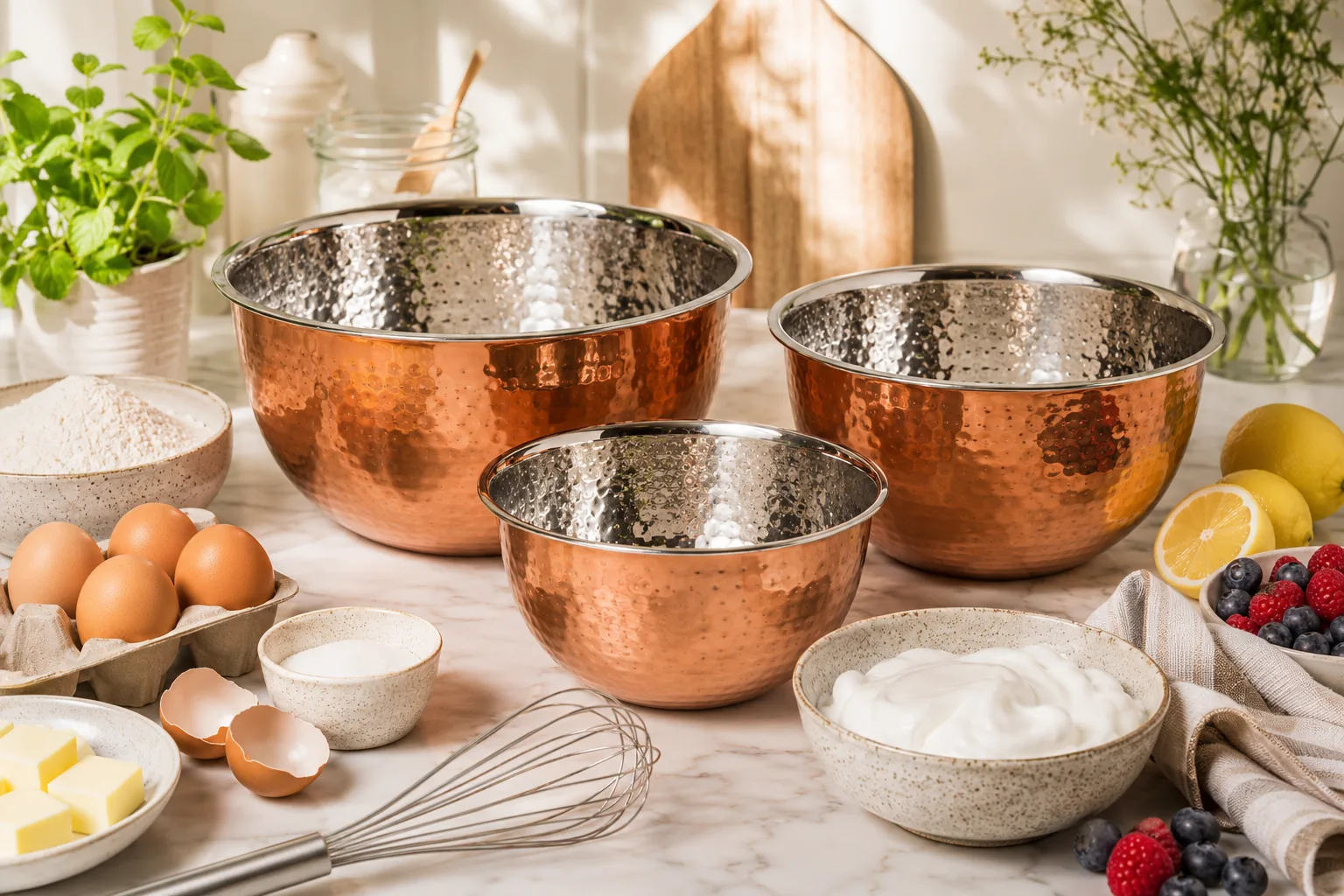
Copper mixing bowls have become a go-to tool for serious bakers because the metal actively regulates the temperature of butter and eggs, and stabilizes whipped egg whites through a well-documented chemical reaction. The result is glossy, silky meringues, soufflés, and angel food cakes with a wider window for reaching the right texture before the foam breaks down. A thick, solid copper bowl can also last for decades, making it a long-term investment in kitchen equipment.
How copper regulates temperature during mixing
Copper is one of the most thermally conductive metals used in cookware. When egg or butter mixtures are whipped, friction and ambient warmth can push their temperature upward, which destabilizes emulsions and protein structures. A solid copper bowl pulls heat away from those ingredients as they are beaten, whether by hand or with a stand mixer such as a KitchenAid, keeping the mixture closer to its ideal working temperature. If ingredients are slightly cold, the metal also helps bring them toward room temperature more evenly.
This thermal stability matters most for recipes that depend on emulsified butter or on egg whites that need to hold their structure. Glass and ceramic bowls, which are perfectly adequate for tasks like mashing avocados or mixing muffin batter, do not move heat as efficiently.
The chemistry behind copper and egg whites
Whipped egg whites are a foam built from unfolded proteins trapping air bubbles. The proteins form two kinds of bonds during whipping: weak ionic bonds and much stronger disulfide bonds. As more disulfide bonds form, the protein network tightens, squeezes out moisture, and turns the foam gritty, dry, and grainy. That is the overwhipped texture bakers try to avoid.
Copper intervenes at this exact step. As a whisk strikes the inside of a copper bowl, microscopic traces of copper enter the egg whites. Copper ions have a strong chemical affinity for sulfur and bind to the sulfur-bearing groups on the egg white proteins. By occupying those sulfur sites, copper prevents the proteins from forming the tight disulfide bonds that lead to overwhipping. Egg whites beaten in a copper bowl therefore stay glossy, firm, and silky for noticeably longer, giving bakers more time to reach the perfect texture.
Why thickness and weight matter
A solid copper mixing bowl is heavier and more expensive than thin copper-plated alternatives. The weight is functional, not just decorative. Thick, heavy-gauge copper resists denting and scratching under the repeated impact of a whisk, and it holds its shape through decades of use. Unlike ceramic or glass, it will not crack, chip, or shatter when dropped, and unlike many ferrous metals, it does not rust.
Thinner copper bowls are more vulnerable to warping and surface damage, and any deep scratches can interrupt the smooth surface that lets the whisk interact evenly with the metal. For bakers who plan to use the bowl for meringues, where copper-to-egg-white contact is the point, heavier construction is the safer choice.
What copper does not solve
Copper is a specialty tool, not a universal upgrade. For thick batters, doughs, and other heavy mixtures, a standard stainless steel or ceramic bowl works fine. The benefits of copper show up most clearly in recipes built on whipped egg whites: meringues, soufflés, angel food cakes, pavlovas, and similar airy desserts. For everything else, the thermal and chemical advantages are largely irrelevant.
Copper also requires some care. Most solid copper bowls are not dishwasher safe and benefit from occasional polishing to maintain their finish. Bakers who want the look of copper without the maintenance can choose bowls with a tin or stainless steel lining on the interior, though only unlined copper delivers the direct chemical contact that stabilizes egg whites.
Using cream of tartar as an alternative
Bakers who do not want to invest in a copper bowl can approximate its effect on egg whites with cream of tartar, the potassium acid salt of tartaric acid. A small amount added to egg whites lowers their pH, creating a slightly acidic environment that reduces the formation of disulfide bonds in the same way copper ions do. The foam that results is more stable and less likely to turn gritty during whipping.
Cream of tartar does not replicate copper’s thermal conductivity, so it will not pull heat out of a butter or egg mixture the way a copper bowl does. It is specifically an egg-white stabilizer, and it works best when combined with a cool mixing environment and room-temperature eggs.
How to choose a copper mixing bowl
- Look for solid, heavy-gauge copper. Thicker bowls resist dents and last longer.
- Decide on lining. Unlined copper delivers the full chemical benefit for egg whites. Lined bowls are easier to maintain and better for acidic ingredients.
- Check the weight. A quality copper bowl should feel substantial in the hand.
- Match the size to the task. Smaller bowls suit single-egg meringues; larger bowls handle multi-egg batches and cake batters.
- Plan for care. Hand washing and periodic polishing keep the finish looking its best.
FAQ
Do copper mixing bowls really make a difference for meringue?
Yes. Copper ions bind to sulfur groups in egg white proteins and prevent the tight disulfide bonds that cause overwhipping. Egg whites beaten in a copper bowl stay glossy and stable for longer than those beaten in glass or stainless steel.
Can cream of tartar replace a copper bowl?
For egg whites, cream of tartar lowers the pH and reduces disulfide bond formation in much the same way copper does. It does not, however, replicate copper’s heat-conducting properties for butter or egg mixtures.
How long does a solid copper mixing bowl last?
A solid copper bowl can last for years with regular use. It is rust-proof and more resistant to cracking and shattering than ceramic or glass.