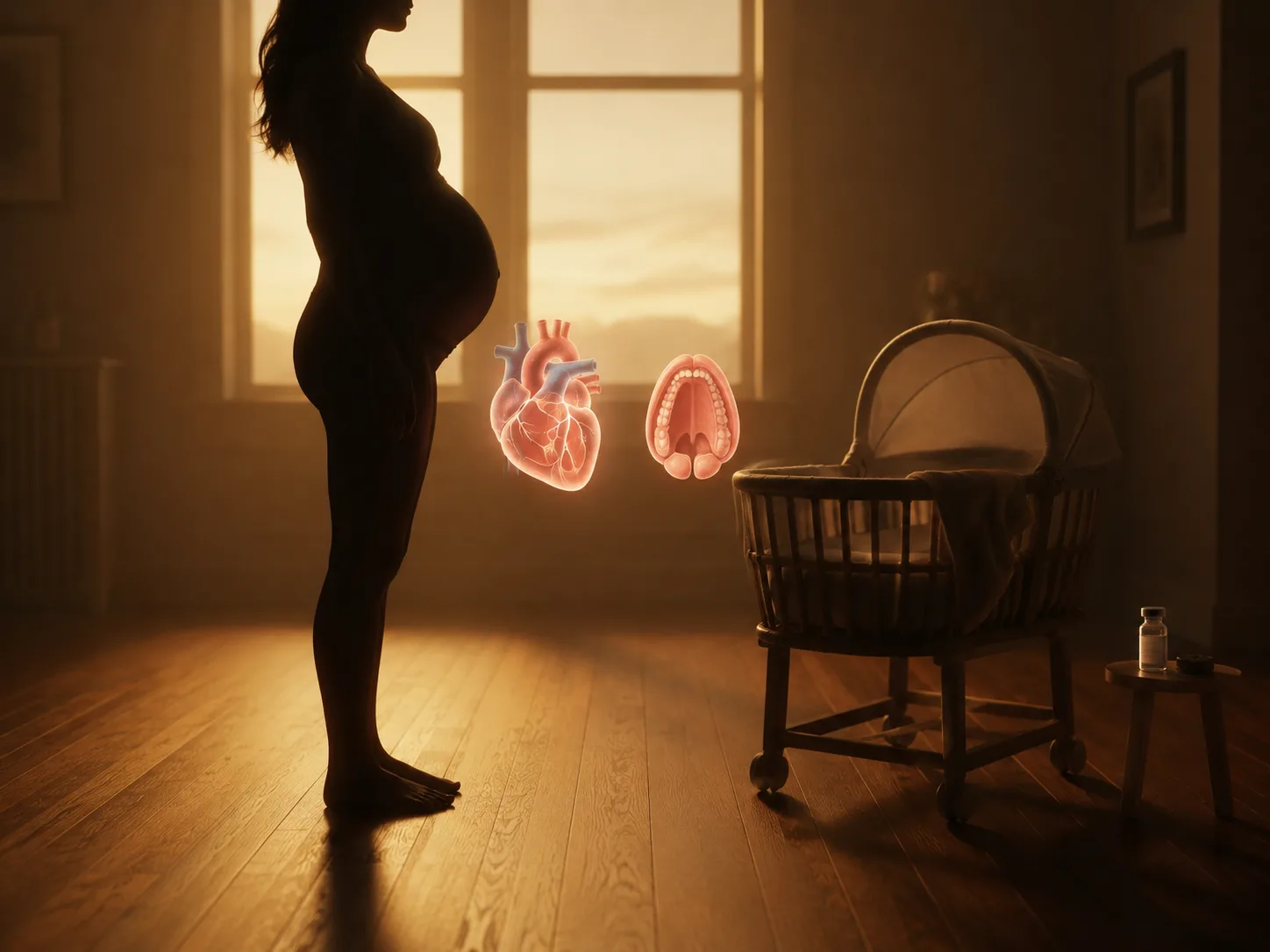
An Iranian study reports higher rates of two specific birth defects, atrioventricular septal defects and cleft palate, among infants whose mothers received an aluminum-adjuvanted COVID-19 vaccine during the first 12 weeks of pregnancy, compared with women vaccinated later or not at all. The authors describe the absolute risk as low but the relative increase as notable, and call for further research and a reassessment of first-trimester vaccination policy. The findings sit in tension with current CDC and WHO recommendations that COVID-19 vaccination during pregnancy is safe and beneficial, and with larger observational studies that have not identified safety signals.
What did the Iranian study find?
The study examined infants born to women who received an aluminum-adjuvanted COVID-19 vaccine during the first 12 weeks of pregnancy. Researchers reported higher rates of two specific birth defects in this group compared with women vaccinated later in pregnancy or not at all: atrioventricular septal defects, a hole in the wall separating the heart’s chambers, and cleft palate, an opening in the roof of the mouth.
The association remained statistically significant after adjustment for maternal age, comorbidities, and other potential confounders. The authors reported that the absolute risk of these defects remained low, while the relative increase compared with other groups was notable. They recommended caution and called for additional research to confirm the findings.
How was the study reported?
The findings were summarized by Children’s Health Defense, an organization critical of vaccine mandates. The group stated that the results raise questions about the safety of administering COVID-19 vaccines during early pregnancy and called for a reassessment of current guidelines. Dr. A researcher associated with Children’s Health Defense has previously called for a moratorium on vaccinating pregnant women until more safety data are available.
What other evidence conflicts with the Iranian study?
Other experts have urged caution about drawing causal conclusions from a single observational study. An early postmarketing analysis published in The New England Journal of Medicine reviewed outcomes among more than 35,000 pregnant women who received the Pfizer or Moderna vaccines and found no obvious safety signals.
Other analyses cited in coverage of vaccine safety have produced different conclusions. According to NaturalNews.com, an analysis of 1.3 million women allegedly found associations between COVID-19 vaccination and increased rates of miscarriages and stillbirths. A book on mRNA vaccine toxicity cites a review of Vaccine Adverse Event Reporting System (VAERS) data, a passive reporting system whose submissions do not establish causal rates, as reporting higher numbers of fetal malformations and other pregnancy-related adverse events following COVID-19 vaccination. The same book noted that Pfizer pregnancy surveillance data, as self-reported through a passive surveillance system, recorded 56 fetuses and infant deaths among 54 pregnancy cases that did not result in live birth, though the vaccine was not authorized for use in pregnancy at the time of data collection.
What do the CDC and WHO currently recommend?
Current CDC and World Health Organization guidelines recommend COVID-19 vaccination during pregnancy, citing monitoring data and the higher risk of severe COVID-19 in this population. A spokesperson for the CDC, when asked about the Iranian study, reiterated the agency’s position that COVID-19 vaccination is recommended during pregnancy based on the benefits of preventing severe illness, and that no causal link between vaccination and birth defects has been established. The same response noted that a direct statement from the CDC on this specific study was not located in available sources.
How has U.S. vaccine policy shifted recently?
U.S. vaccine policy has shifted in recent months. In June 2025, Health and Human Services Secretary Robert F. Kennedy Jr. dismissed all 17 sitting members of the CDC’s Advisory Committee on Immunization Practices (ACIP). The reconstituted committee subsequently voted not to recommend COVID-19 vaccines as a prescription but unanimously endorsed individual decision-making for all age groups. At a later ACIP meeting, members pushed back on the CDC’s safety claims regarding COVID-19 vaccines and questioned the methodologies used to assess adverse events.
What do the study authors recommend?
The authors of the Iranian study urged regulatory agencies to reassess the risk-benefit calculations for vaccination in the first trimester and called for longer follow-up studies with larger sample sizes. Pregnant women are advised to consult with their healthcare providers regarding vaccination decisions, weighing individual risk factors for COVID-19 against any concerns about vaccine safety.
FAQ
What birth defects were linked to first-trimester COVID-19 vaccination in the Iranian study?
The study reported higher rates of atrioventricular septal defects, a hole in the wall separating the heart’s chambers, and cleft palate, an opening in the roof of the mouth, among infants of women vaccinated in the first 12 weeks of pregnancy.
Do the CDC and WHO recommend COVID-19 vaccination during pregnancy?
Yes. Current CDC and World Health Organization guidelines recommend COVID-19 vaccination during pregnancy, citing monitoring data and the higher risk of severe COVID-19 in this population. The CDC stated that no causal link between vaccination and birth defects has been established.
What did the authors of the Iranian study recommend?
The authors urged regulatory agencies to reassess the risk-benefit calculations for vaccination in the first trimester and called for longer follow-up studies with larger sample sizes. They described the absolute risk of the defects as low while noting the relative increase compared with other groups was notable.
Related coverage
- Iranian Study Examines Aluminum-Adjuvanted COVID-19 Vaccines and First-Trimester Birth Defects
- HHS Proposes COVID-19 Vaccine Injury Table to Expand Compensation Access