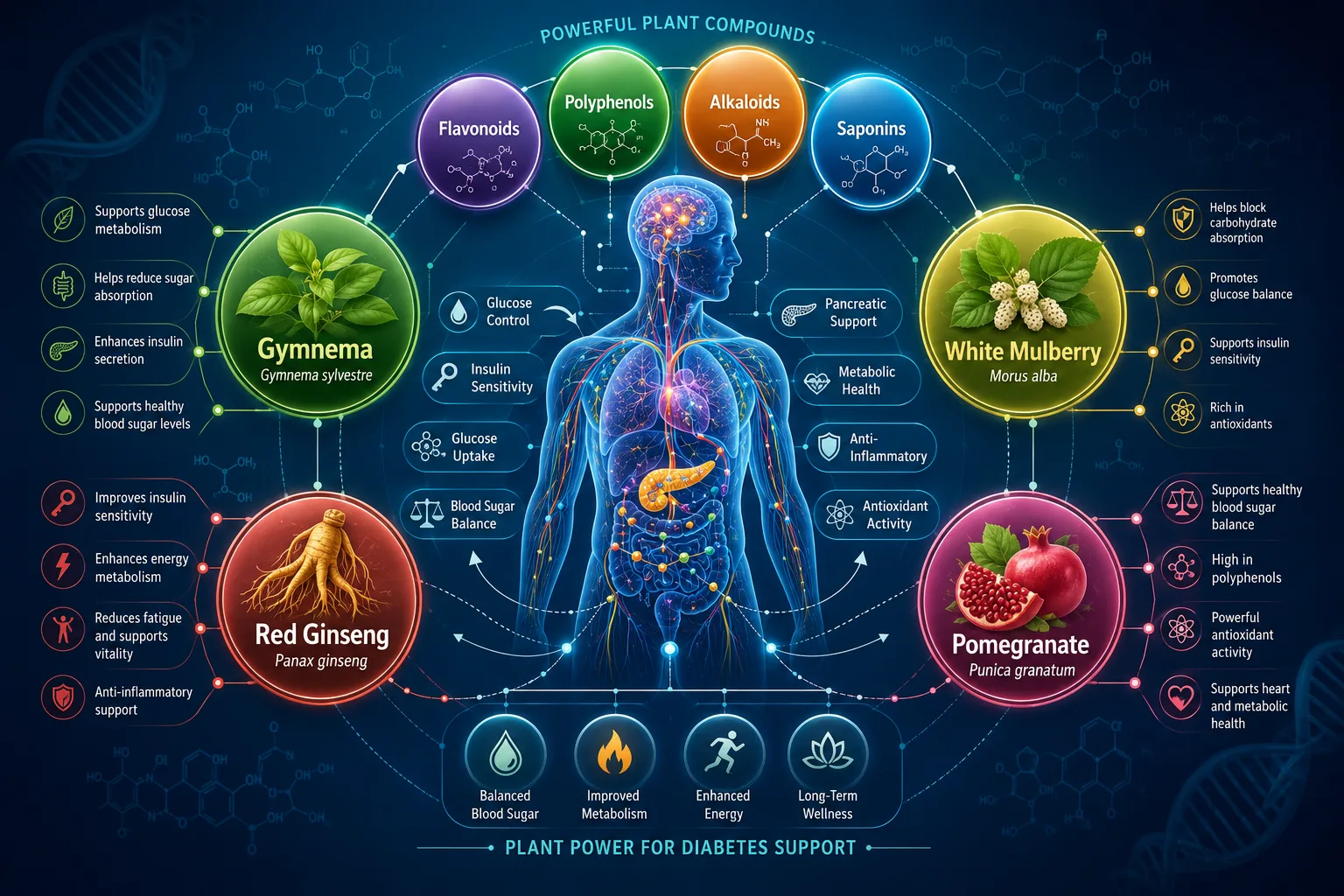
A review published June 3, 2026 in The Open Biochemistry Journal analyzed 54 papers covering 16 medicinal plants with documented molecular evidence of anti-diabetic activity, and identified four species with the strongest case: Gymnema sylvestre, white mulberry, red ginseng, and pomegranate. The work was led by Sara Ouari of University Ferhat Abbas Sétif 1 in Algeria with colleagues in Algeria and Greece, drew on Scopus, ScienceDirect and Google Scholar records from 2000 to 2025, and received no outside funding.
Why researchers keep looking at plants for blood sugar
Diabetes now affects roughly 589 million adults worldwide, according to 2024 estimates from the International Diabetes Federation, with more than 80 percent of cases in low- and middle-income countries where standard treatment is often out of reach. Conventional drugs sometimes help, but they come with side effects and costs many patients cannot absorb. That gap is part of why researchers keep returning to the plants people used long before there was a pharmaceutical industry to sell them anything.
The review started from nearly 1,250 initial records and kept 54 studies that met its criteria. The 16 species come from very different botanical families, yet the review found them converging on the same handful of biological targets. Their active compounds, including flavonoids, polyphenols, alkaloids and saponins, interfere with the gut enzymes that break carbohydrates into sugar, strengthen the insulin signals that tell cells to pull glucose out of the blood, and blunt the oxidative damage that wears on the pancreas, liver and kidneys.
What did the review actually find?
Four plants earned the review’s top evidence rating.
Gymnema sylvestre, also called Gurmar
Among the most thoroughly studied of the group. Its gymnemic acids appear to curb glucose absorption, prompt insulin release, and shield the pancreatic beta cells that produce insulin.
White mulberry
Carries two compounds, rutin and quercetin-3-O-?-D-glucoside, that switch on the AMPK and Akt pathways governing glucose uptake.
Red ginseng
Steamed and dried Panax ginseng. Supplies ginsenosides that improve insulin sensitivity and help regulate oxidative stress.
Pomegranate
Rounds out the list on the strength of its phenols, tannins and triterpenoids. Flower extracts lowered blood glucose in animal studies, while peel extracts restored the body’s own antioxidant defenses.
What does this mean at the grocery store?
One honest caveat first: nearly all of this evidence comes from cell cultures and lab animals, not people. The authors say clinical studies are lacking for most of the plants reviewed, and the doses that worked in a lab may exceed anything a tea or capsule delivers. Promising is not the same as proven, and no one should drop a prescription over a mouse study.
That said, three of these four plants are food, and there is no risk in eating well. Fresh pomegranate seeds go into yogurt or a salad, and 100 percent juice with no added sugar works too. White mulberry comes as dried berries, tea or leaf extract. Red ginseng makes a calming tea. Gymnema is mostly sold as a supplement, though it also brews into a grassy, herbal tea.
The broader point holds regardless of what future trials show: a diet built on fiber, protein, and polyphenol-dense plants remains the most reliable foundation identified for blood sugar control.
Why is so little of this research being funded?
Sixteen plants with credible molecular evidence, converging on the same biological pathways as billion-dollar drugs, and the work of cataloguing them fell to a small team of academics working without external funding. There is no patent on a pomegranate. There is no revenue model in telling a diabetic to eat better, and no sales force for a mulberry leaf. The standardized extracts, real dosing data, and human clinical trials that would settle these questions are exactly the studies no company has an incentive to pay for.
Patients are owed an answer to these questions and an explanation of why one is not being provided.
FAQ
Which four plants had the strongest anti-diabetic evidence in the review?
The review identified Gymnema sylvestre (Gurmar), white mulberry, red ginseng, and pomegranate as the four plants with the strongest molecular evidence for anti-diabetic activity among the 16 species it analyzed.
How many studies did the review cover?
The team reviewed 54 studies covering 16 medicinal plants, selected from nearly 1,250 initial records pulled from Scopus, ScienceDirect, and Google Scholar for papers published between 2000 and 2025.
Is there human trial evidence for these plants?
No. The review’s authors note that nearly all of the evidence comes from cell cultures and lab animals, and that clinical studies in humans are lacking for most of the plants reviewed.