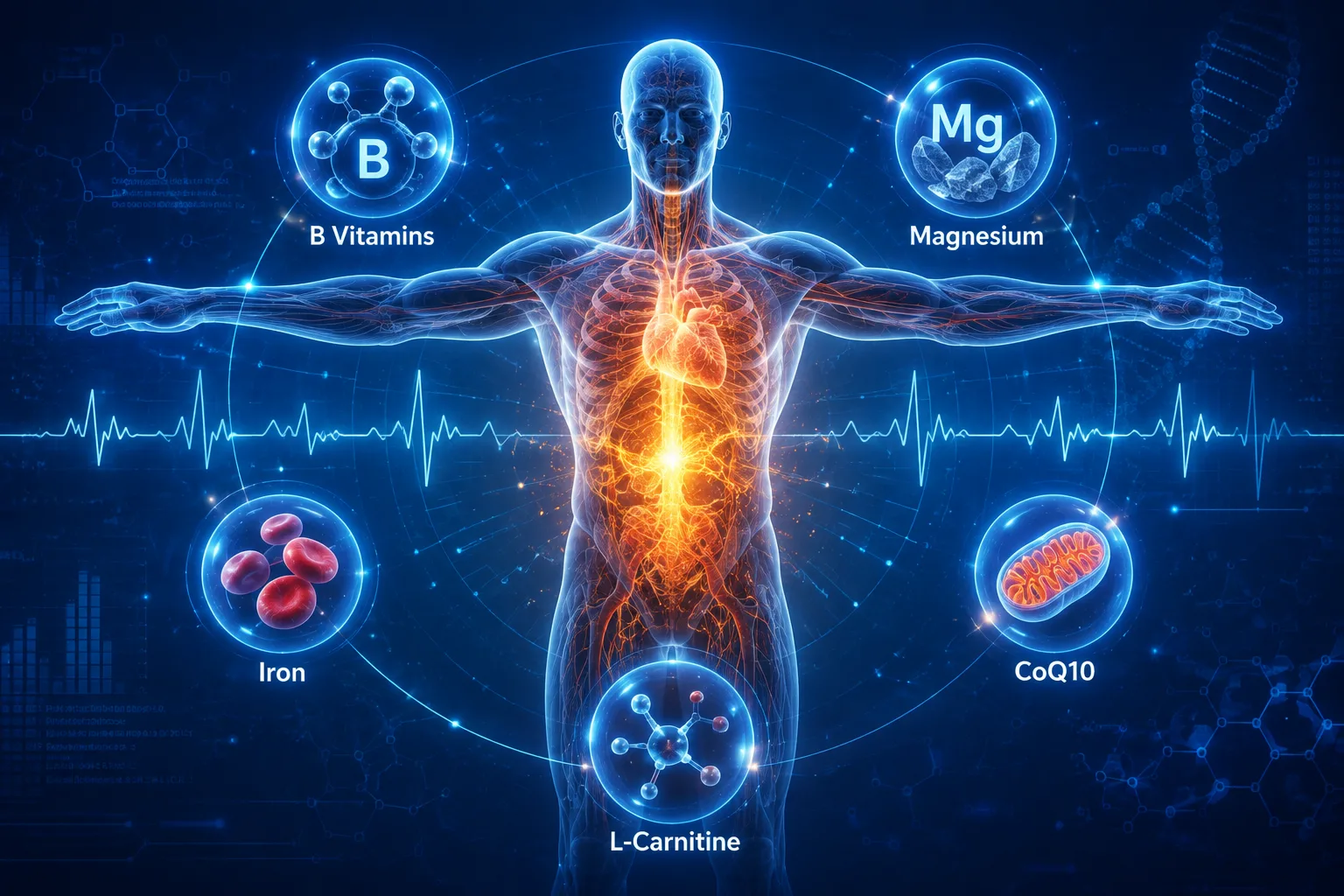
A report published on August 4, 2026, identifies five nutrients that the body relies on to convert food into usable energy: magnesium, B vitamins, creatine, iron, and vitamin D. The report’s author, registered dietitian nutritionist Molly Knudsen, M.S., RDN, said caffeine is not the only way to support energy levels, and that a steady supply of these nutrients keeps cells, muscles, and the brain functioning properly.
Why dietary changes are often the first step for low energy
Dietary modifications are frequently recommended as a first-line strategy for fatigue, and millions of people struggle with low energy because of poor dietary choices, dehydration, and nutrient deficiencies. Even people who eat regular meals may fall short of key micronutrients, particularly when ultraprocessed foods make up a large share of the diet. Research has linked ultraprocessed food intake to lower intakes of sleep-supporting nutrients such as tryptophan, fiber, magnesium, and antioxidants.
Magnesium: the mineral behind more than 300 reactions
According to Knudsen, magnesium is involved in more than 300 biochemical reactions, including the production of ATP, the molecule cells use as their primary source of energy. “Your body needs magnesium to convert the food you eat into ATP,” she said. A separate report, “The Magnesium Fix,” described magnesium as “the master mineral” that orchestrates over 300 enzymatic reactions and is essential for energy production. A 2022 clinical trial cited in earlier reporting found that magnesium supplementation reduced pain and stress in fibromyalgia patients, and that magnesium regulates nerve function, muscle relaxation, and ATP production.
B vitamins: breaking down food and moving oxygen
B vitamins help the body break down carbohydrates, fats, and protein and convert them into usable energy. Several B vitamins also support healthy red blood cell formation, which helps transport oxygen throughout the body. Biotin, one of the B vitamins, plays a role in the conversion of food into energy and supports healthy skin, hair, and eyes. A study published in March 2026 in the journal Nutrients identified a link between vitamin B12 and folate deficiencies and persistent fatigue.
What does this mean for fatigue?
When B12 or folate intake is low, the body struggles to produce red blood cells efficiently and to extract energy from food. A March 2026 study in Nutrients reported an association between deficiencies of these two vitamins and ongoing tiredness in study participants.
Creatine and iron: energy regeneration and oxygen delivery
Creatine helps regenerate ATP during periods of increased energy demand, such as intense exercise. The body produces some creatine on its own and obtains more from foods like meat and seafood, but supplementation is the most reliable way to increase creatine stores. A 2000 paper in Annals of Neurology described creatine as potentially acting as “a temporal or spatial energy buffer” for cells with high and variable energy demands.
Iron is a component of hemoglobin, the protein in red blood cells that carries oxygen throughout the body. When iron levels are low, the body has a harder time delivering oxygen to tissues, which can affect energy. Iron deficiency is not uncommon, particularly among pre-menopausal women, and women are more likely than men to have low iron because of monthly menstrual blood loss.
Vitamin D and the mitochondria
Vitamin D receptors are found in many tissues, including muscle cells and mitochondria, the energy-producing structures inside cells. Research has found that low vitamin D status is associated with fatigue and lower energy levels. Reporting from July 28, 2026, noted that approximately 25% of U.S. adults have moderate or severe vitamin D deficiency and that 41% exhibit insufficient levels. Knudsen was quoted as saying, “Vitamin D helps support mitochondria, which generate energy.” Vitamin D can be obtained from sun exposure, food, or supplementation, and maintaining adequate levels can support the body’s natural energy processes. Some research has also suggested that sunlight enhances the absorption of nutrients, which may help explain why certain supplements appear more effective for some users.
What this looks like in practice
Knudsen said energy levels depend on more than how much sleep a person gets or how much coffee they drink. The body also needs magnesium, B vitamins, iron, creatine, and vitamin D to convert fuel into usable energy. “Prioritizing a nutrient-rich diet and filling any gaps can help support your body’s natural energy production from the inside out,” the report stated.
Some vitamin, mineral, and herbal supplements are helpful and appropriate for certain groups at specific times, but supplements are not necessary for everyone all the time. The report advised consulting a health care provider before starting a supplement routine, especially for those who are pregnant, breastfeeding, or taking medications.
FAQ
What are the five nutrients needed for energy production?
The five nutrients identified by registered dietitian nutritionist Molly Knudsen, M.S., RDN, are magnesium, B vitamins, creatine, iron, and vitamin D.
How does magnesium help the body produce energy?
Magnesium is involved in more than 300 biochemical reactions, including the production of ATP, the molecule cells use as their primary source of energy.
Why is vitamin D linked to fatigue?
Vitamin D receptors are found in muscle cells and in mitochondria, the energy-producing structures inside cells. Low vitamin D status has been associated with fatigue and lower energy levels.