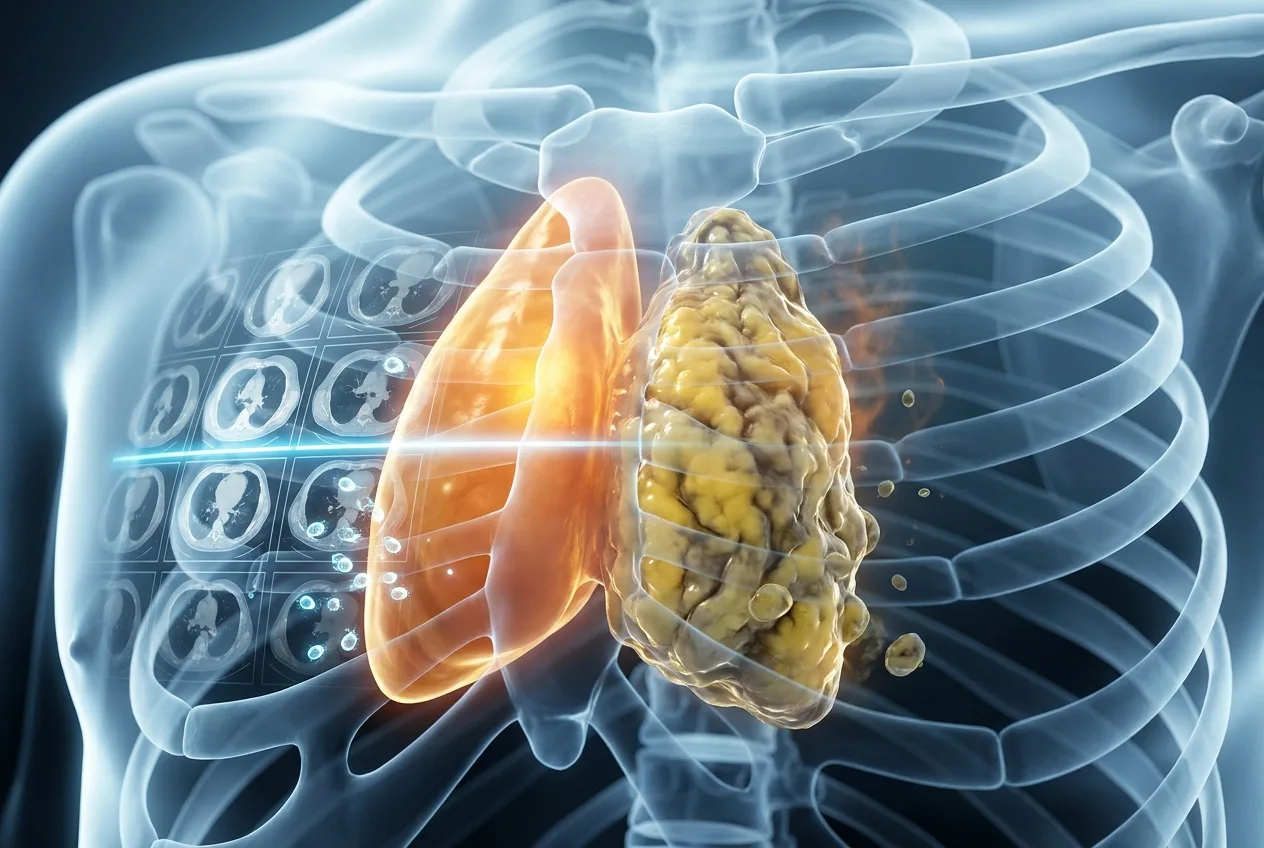
Your thymus isn’t finished after puberty. A small gland tucked behind your breastbone, the thymus has long been dismissed as a childhood trainer that fades into irrelevance once you hit your teens. But a pair of studies published in Nature in March 2026 argue we’ve been overlooking a powerful lever on how fast we age — and the data is forcing even the most skeptical researchers to take a fresh look at this forgotten organ.
Why It Matters
Immune aging — immunosenescence — sits behind a staggering share of late-life disease. The Centers for Disease Control and Prevention reports that adults 65 and older account for 70% to 90% of seasonal flu deaths and 50% to 70% of flu-related hospitalizations, a burden driven largely by an immune system that loses its sharpness over time. When your body can’t mount a strong defense against pathogens or clear out rogue cells efficiently, the door opens for infections, chronic inflammation, and malignancies.
For decades the conversation centered on T-cells, the defenders that coordinate immune attacks. What got less attention was where those T-cells are educated: the thymus. When your thymus shrinks — a process called thymic involution that accelerates after puberty — the diversity of your T-cell army quietly collapses. a href=”https://www.nia.nih.gov/health/immunosenescence” rel=”noopener”>According to the National Institute on Aging, the thymus loses roughly 3% of functional tissue per year; by age 75 it is mostly fat. If that decline could be slowed, the downstream effects on infection risk, cancer surveillance, and overall vitality could be immense.
What's New / How It Works
A cross-institutional team from Mass General Brigham and Harvard Medical School trained a deep-learning model to read chest CT scans — the kind millions of adults get for lung cancer screening or cardiac calcium scoring — and assign a thymic health score. The model looked beyond simple size and gauged the organ’s shape, density, and fatty infiltration, giving a far more precise picture of immune capacity than a radiologist’s routine glance.
The researchers ran the algorithm through CTs from over 25,000 participants in the National Lung Screening Trial and more than 2,500 in the Framingham Heart Study, linking those scores with long-term health records. Hugo Aerts, PhD, director of the Artificial Intelligence in Medicine Program at Mass General Brigham, summarized the shift in perspective bluntly:
“The thymus has been overlooked for decades and may explain why people age so differently.”
Hugo Aerts, PhD, Harvard Medical School / Mass General Brigham (source: Harvard Medical School News)
A healthier, less-fatty thymus produces a more diverse pool of T-cells. When the thymus shrinks early from the same metabolic and lifestyle factors that age other organs, the T-cell reserve is depleted.
The Numbers
- Over 25,000 adults had their chest CTs analyzed by AI to generate a thymic health score.
- Participants with the healthiest thymus glands showed a 50% lower risk of death from any cause and a 63% lower risk of cardiovascular death compared to those with low scores (Harvard Medical School).
- Higher thymic scores were linked to a 36% lower risk of developing lung cancer and a markedly better response to cancer immunotherapy — a 37% lower risk of progression and a 44% lower risk of death in treated patients (Harvard Medical School).
- Smoking, obesity, uncontrolled blood sugar, and chronic inflammation each independently predicted worse thymic health, suggesting the decline is not purely genetic but heavily modifiable.
- By age 60, the average thymus has lost more than 80% of its functional tissue, according to the National Institute on Aging.
Your thymus isn’t a childhood relic; it’s a lifelong barometer of immune resilience that you can influence through daily habits.
What Comes Next
The imaging tool is not yet ready for routine clinic use. The researchers want to validate it in more diverse populations and determine whether a thymic health score adds predictive value beyond standard risk calculators. Ongoing work is also examining whether unintended radiation exposure to the thymus during repeated chest CTs might accelerate its decline — a worry worth tracking as medical imaging use climbs. For now, the immediate takeaway is that thymic aging is measurable and linked to the same lifestyle factors that drive heart disease and diabetes.
What This Means for You
This is not about chasing a lab test that doesn’t exist yet. It’s about recognizing that everyday choices like what you eat, how you move, and the inflammation you allow to continue shape the healthspan of your immune system. Some habits linked to heart and waistline health may also slow thymic decay.
Nutritionally, a handful of micronutrients stand out for their direct roles in thymus function and T-cell maturation. Zinc is a non-negotiable: the thymus uses it to produce thymulin, a hormone that steers T-cell development. Vitamin D receptor sites sit on immune cells, and vitamin D sufficiency is repeatedly tied to better outcomes in infection and autoimmunity. Omega-3 fatty acids tamp down the systemic inflammation that speeds thymic fatty replacement. Curcumin, the active compound in turmeric, has shown an ability to dial back inflammatory signaling and may help preserve lymphoid architecture as we age.
You can think of these as foundational immune-support nutrients — not magic bullets, but tools that keep the tissue responsive. If your diet is spotty, a high-quality multivitamin or targeted mineral supplement can help close gaps. Our vitamin line — including zinc picolinate, K2+D3, and turmeric with BioPerine — covers several of the nutrients directly implicated in thymic biology. Browse the vitamin section for formulations built on evidence, not hype.
Turmeric gummies offer an easy daily anti-inflammatory layer for those who dislike capsules. Explore our gummies to see options that fit into a real routine. And because a healthy gut supports a balanced immune system — the gut-associated lymphoid tissue is your largest immune interface — keeping the microbiome in check matters. Our PROBIOTIC 40 Billion CFU formula is designed with that axis in mind.
If you’re starting from scratch on the vitamin front, check out our guide to sorting substance from marketing: The Role of Vitamins in a Balanced Diet: Are Supplements Necessary?
The Bigger Picture
You can’t stop the clock, but evidence is growing that you can influence how loudly the alarm rings.
Frequently Asked Questions
What is the thymus gland and why is it important for aging?
How did researchers measure thymus health in the new study?
Can I get my thymus health score checked today?
What lifestyle factors damage the thymus the fastest?
Which nutrients support thymus function?
Does improving thymus health actually lower mortality risk?
Sources
- Harvard Medical School News: AI scans reveal thymus role in aging
- National Institute on Aging: Immunosenescence