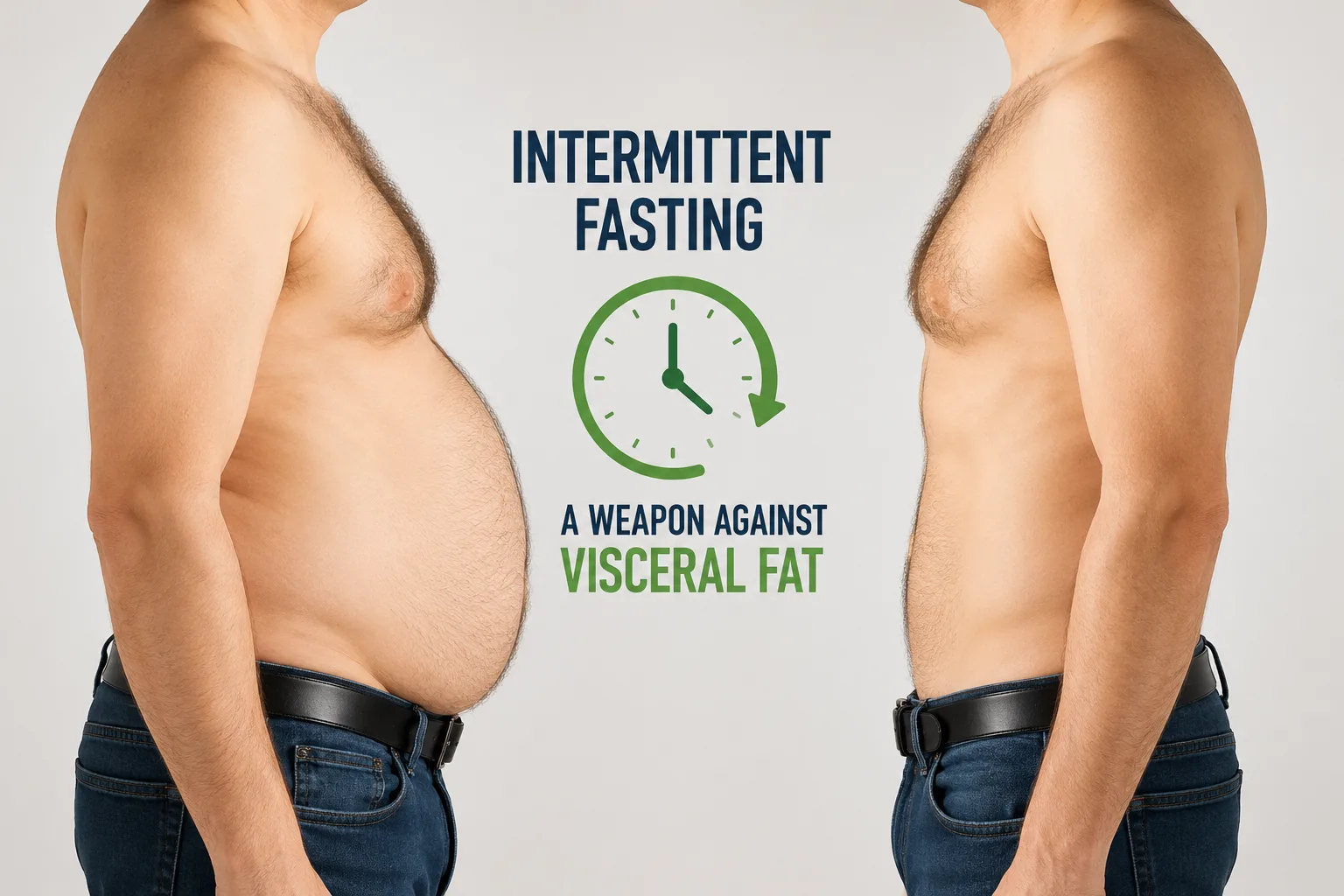
A growing body of research finds that intermittent fasting, particularly the 16:8 time-restricted eating method, can reduce visceral fat, the metabolically active fat that surrounds internal organs and is tied to Type 2 diabetes, heart disease and chronic inflammation. A 2020 study found an 11.1 percent reduction in visceral fat after 12 weeks of the 16:8 protocol, though a 2022 trial comparing time-restricted eating with traditional calorie restriction over 12 months produced similar fat loss, pointing to calorie deficit as the decisive factor behind the benefit.
Why visceral fat is more dangerous than subcutaneous fat
Visceral adipose tissue is the deep abdominal fat that wraps around the liver, pancreas and intestines, distinct from the subcutaneous fat that sits just under the skin. Its cells are metabolically active, releasing inflammatory compounds and hormones that disrupt normal function. Because of its location, visceral fat is directly linked to insulin resistance, systemic inflammation and higher cardiovascular risk. Researchers describe it less as stored energy and more as a dysfunctional organ that secretes harmful chemicals.
How intermittent fasting targets belly fat
Intermittent fasting is an umbrella term for eating patterns that cycle between fasting and eating windows. The most commonly studied form is time-restricted feeding, often labeled TRF. The 16:8 method involves consuming all daily calories within an eight-hour window, such as between 11 a.m. and 7 p.m., and fasting for the remaining 16 hours. Other approaches include alternate-day fasting, which alternates normal eating days with sharply reduced-calorie days, and the 5:2 method, which limits intake to about 500 calories on two nonconsecutive days per week.
These schedules give the digestive system a longer break than the typical three-meals-plus-snacks pattern. A 2020 study of participants with overweight who followed the 16:8 protocol daily for 12 weeks found an average 11.1 percent reduction in visceral fat from baseline, with greater overall weight and visceral fat loss than a control group eating without time restrictions.
Why calorie deficit still matters most
A 2022 study in people with obesity compared time-restricted feeding against traditional daily calorie restriction and found that both produced similar reductions in visceral fat and overall body fat over a 12-month period. The authors concluded that calorie reduction could account for most of the fat-loss benefit attributed to fasting. Intermittent fasting appears to work primarily because a compressed eating window tends to reduce total calorie intake naturally, rather than through any unique metabolic mechanism beyond the deficit it creates.
For people who find calorie counting tedious, fasting offers structure without constant tracking, as long as overall intake drops enough to create a deficit.
Health benefits that come with shrinking visceral fat
Shrinking fat mass slows the release of inflammatory compounds, which can reduce chronic inflammation linked to heart disease, certain cancers and autoimmune conditions.
Modern relevance and practical guidance
Obesity and metabolic disease rates in the United States remain high, with more than 40 percent of adults classified as obese and nearly half living with prediabetes or Type 2 diabetes, according to figures cited in the source article. Intermittent fasting is positioned as a return to an older eating pattern that aligns with how humans ate for most of history, before constant snacking became the norm, and as a low-cost alternative to expensive weight-loss drugs and surgery.
Experts cited in the source suggest that beginners start with the 16:8 method, skipping breakfast and eating between roughly 11 a.m. and 7 p.m., a schedule that fits typical work and social routines. Food quality during the eating window remains critical; processed snacks and sugary drinks will undermine results regardless of timing. BrightU.AI’s Enoch is quoted as defining fasting as “the voluntary abstention from some or all food and drink for a set period of time,” an ancient practice used for spiritual, health or medical reasons, often to promote detoxification or mental clarity by giving the digestive system a rest.
Talk to a qualified professional before starting, since fasting isn’t suitable for everyone. The best approach is whichever one a person can maintain long-term while eating well and staying active.
FAQ
What is visceral fat and why is it dangerous?
Visceral fat is the deep abdominal fat that surrounds organs such as the liver, pancreas and intestines. Unlike subcutaneous fat under the skin, it is metabolically active and releases inflammatory compounds and hormones that contribute to insulin resistance, Type 2 diabetes, heart disease and chronic inflammation.
Does intermittent fasting actually reduce visceral fat?
A 2020 study found that following the 16:8 protocol for 12 weeks led to an average 11.1 percent reduction in visceral fat compared with baseline, and greater loss than an unrestricted-eating control group. A separate 2022 study found that time-restricted eating produced similar fat loss to traditional calorie restriction over 12 months.
Is the timing of meals more important than calorie intake?
According to the 2022 study, calorie reduction appears to account for most of the fat-loss benefit associated with intermittent fasting. The compressed eating window tends to reduce overall calorie intake naturally, and researchers concluded that creating a calorie deficit is the decisive factor in shrinking visceral fat.