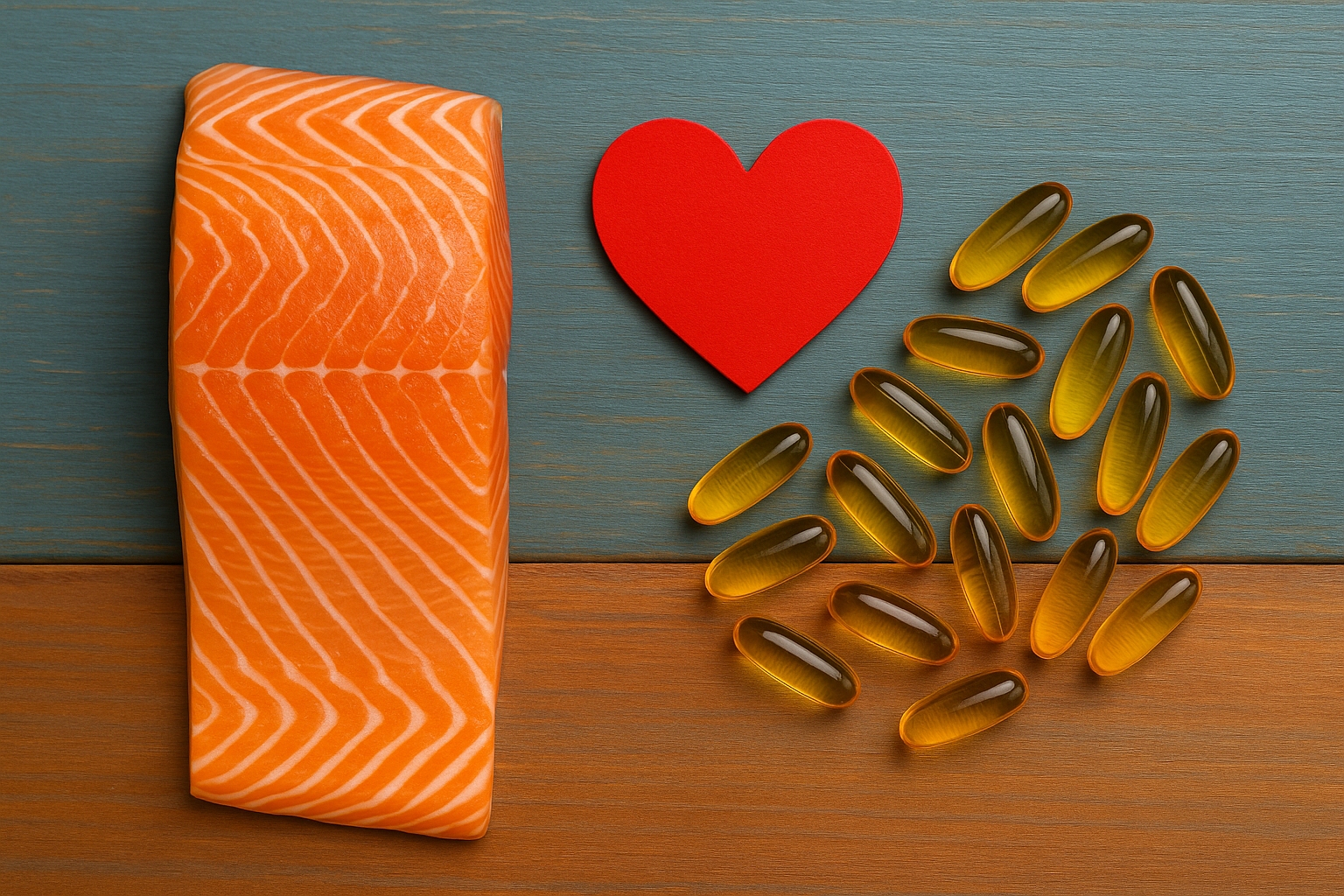
Omega-3 fatty acids, especially EPA and DHA from fatty fish and fish oil, are among the most studied nutrients for cardiovascular health. At doses of 2 to 4 grams per day they can lower triglycerides by 20 to 50%, and the 2018 REDUCE-IT trial showed that 4 grams of pure EPA cut major cardiovascular events by 25% in high-risk patients already on statins. Higher doses, however, have been linked to an increased risk of atrial fibrillation (AF), so medical guidance matters for supplementation beyond routine dietary intake.
What Are Omega-3 Fatty Acids?
Omega-3 fatty acids are a family of polyunsaturated fats that are essential for human health but cannot be produced by the body in adequate amounts. They must be obtained through diet or supplementation. The three most biologically important types are:
- EPA (eicosapentaenoic acid): A 20-carbon fatty acid with potent anti-inflammatory properties, primarily found in fatty fish, algae, and fish oil supplements.
- DHA (docosahexaenoic acid): A 22-carbon fatty acid that is a major structural component of the brain, eyes, and cell membranes, also primarily from marine sources.
- ALA (alpha-linolenic acid): An 18-carbon plant-derived omega-3 found in flaxseed, chia seeds, walnuts, and hemp seeds. The body converts ALA to EPA and DHA, but the conversion rate is inefficient, typically less than 10% to 15%, making direct consumption of EPA and DHA far more reliable for achieving therapeutic tissue concentrations.
Heart disease remains the leading cause of death globally, and omega-3 fatty acids have been studied more extensively in the context of cardiovascular health than any other natural compound. The research spanning more than five decades has produced a nuanced picture: omega-3s are genuinely protective, but the magnitude of their benefit depends on dose, formulation, individual health status, and the specific cardiovascular outcome being measured.
How Do Omega-3s Support Heart Health?
Understanding why omega-3s benefit the cardiovascular system requires understanding the multiple pathways through which they act. A 2025 updated review published in PMC on EPA, DHA, and cardiovascular health identified the following key mechanisms:
Triglyceride Reduction
The most well-established and potent cardiovascular effect of omega-3s is their ability to reduce serum triglycerides. Triglycerides are a type of blood fat that, when chronically high, increase the risk of atherosclerosis (plaque buildup in arteries), heart attack, and stroke. Omega-3s reduce triglycerides by decreasing hepatic production of VLDL (very-low-density lipoprotein) particles and increasing triglyceride clearance from the bloodstream.
At doses of 2 to 4 grams of EPA and DHA per day, omega-3s reduce triglycerides by 20 to 50% depending on baseline levels. This effect is so well-established that prescription omega-3 medications (Lovaza at 4 g/day and Vascepa, a pure EPA formulation at 4 g/day) are FDA-approved specifically for the treatment of severe hypertriglyceridemia.
Anti-Inflammatory Effects
Chronic low-grade inflammation is now recognized as a central driver of atherosclerosis and cardiovascular disease. EPA and DHA are precursors to a class of anti-inflammatory signaling molecules called resolvins, protectins, and maresins, which actively resolve inflammation and reduce oxidative stress in arterial walls. They also compete with arachidonic acid for the enzymes that produce pro-inflammatory eicosanoids, reducing the overall inflammatory tone.
Blood Pressure and Endothelial Function
A meta-analysis of over 70 randomized controlled trials found that omega-3 supplementation produces small, consistent reductions in systolic and diastolic blood pressure, especially in people with hypertension or high baseline blood pressure. Omega-3s also improve endothelial function, the ability of blood vessel walls to dilate and regulate blood flow, by increasing nitric oxide production and reducing oxidative stress in the endothelium.
Platelet Function and Anti-Thrombotic Effects
Omega-3s reduce platelet aggregation and adhesion, lowering the tendency for blood clots to form on arterial plaques. This anticoagulant effect contributes to the reduced risk of heart attack and stroke observed in high omega-3 populations, though it also means high-dose supplementation warrants discussion with a physician for individuals on anticoagulant medications.
Cardiac Rhythm Stabilization
EPA and DHA have electrophysiological effects on heart muscle, stabilizing the electrical membrane of cardiomyocytes (heart muscle cells) and reducing the risk of ventricular arrhythmias. Early research on this mechanism emerged from observations of dramatically lower rates of sudden cardiac death in populations with very high fish consumption, such as Greenlandic Inuit communities. Laboratory and clinical studies have since identified specific ion channel effects of omega-3s that explain the antiarrhythmic mechanism.
What Do the Major Clinical Trials Show?
REDUCE-IT Trial (2018)
The REDUCE-IT trial, published in the New England Journal of Medicine, was one of the most significant cardiovascular supplement trials in recent history. In over 8,000 high-risk cardiovascular patients already on statins, 4 grams per day of icosapentaenoic acid (pure EPA, the drug Vascepa) reduced the primary composite cardiovascular endpoint (heart attack, stroke, cardiovascular death, unstable angina, and revascularization) by a remarkable 25% over nearly five years. Cardiovascular death was reduced by 20%.
These are large and clinically meaningful reductions. The trial demonstrated that high-dose, pure EPA supplementation provides cardiovascular benefits beyond what statins alone achieve in high-risk individuals.
ORIGIN Trial and ASCEND Trial
Not all large omega-3 trials showed the same dramatic results. The ORIGIN trial and ASCEND trial, using standard-dose fish oil (1 gram per day), found no significant reduction in major cardiovascular events compared to placebo. These mixed results highlight an important dose-response relationship: the cardiovascular benefits of omega-3s, particularly for event reduction, appear most consistent at higher doses (2 to 4 grams per day), especially in higher-risk individuals.
Meta-Analyses: The Overall Picture
A 2021 systematic review and meta-analysis published in PMC covering 40 randomized trials concluded that omega-3 supplementation significantly reduced the risk of major cardiovascular events, cardiovascular death, myocardial infarction, and coronary revascularization compared to control. The benefits were greater at higher doses, in trials using EPA-only or EPA-dominant formulations, and in populations with higher baseline cardiovascular risk.
How Concerning Is the Atrial Fibrillation Risk?
An important and much-discussed risk that has emerged from the omega-3 clinical literature is an increased risk of atrial fibrillation (AF), an irregular heart rhythm that itself increases stroke risk. A 2021 meta-analysis found that omega-3 supplementation was associated with a 24% higher relative risk of developing atrial fibrillation, with the risk rising notably at doses of 1.8 grams per day and above.
The REDUCE-IT trial, despite showing large cardiovascular benefits, also found a higher rate of atrial fibrillation in the treatment group compared to placebo. The clinical interpretation of this tradeoff is still being worked through by cardiologists: for high-risk cardiovascular patients, the large overall reduction in events may outweigh the AF risk, but for healthy individuals taking lower-dose fish oil, the AF concern is a reason to avoid very high-dose supplementation without medical guidance.
Dietary Sources vs. Supplements: What Should You Know?
The American Heart Association (AHA) recommends two servings of fatty fish per week as the primary strategy for maintaining cardiovascular health through omega-3 intake. A 3-ounce serving of wild salmon provides approximately 1.5 to 2 grams of combined EPA and DHA. Other high-EPA and DHA sources include mackerel, sardines, herring, anchovies, and albacore tuna.
For those who do not eat fish, algae-based omega-3 supplements are an effective plant-derived alternative. Algae is the original source of EPA and DHA in the marine food chain (fish accumulate omega-3s by eating algae), and algal oil supplements provide directly bioavailable EPA and DHA without the potential contamination concerns (mercury, PCBs) associated with some fish oil products.
Fish oil supplements vary significantly in quality. Key quality considerations include:
- IFOS (International Fish Oil Standards) certification or similar third-party testing for purity and oxidation
- Triglyceride form versus ethyl ester form: triglyceride-form omega-3s absorb 50 to 70% better with meals, making them more efficient at lower doses
- Freshness: Rancid fish oil is a genuine product quality issue that increases oxidative load; refrigerating opened bottles and checking expiry dates is practical
- EPA to DHA ratio: For cardiovascular and anti-inflammatory goals, higher EPA ratios are currently better supported by evidence
What Dosages Are Recommended for Heart Health?
Dosage recommendations vary based on cardiovascular risk level and specific goals:
- General cardiovascular maintenance (low to moderate risk): 500 mg to 1 gram of combined EPA and DHA per day from food or supplements, consistent with AHA guidance. This is achievable through two weekly fatty fish servings.
- Cardiovascular risk or existing heart disease: 1 to 2 grams of EPA and DHA per day, as advised by the AHA for this population, preferably with physician oversight.
- Hypertriglyceridemia: 2 to 4 grams per day of EPA and DHA is supported by both clinical guidelines and FDA-approved prescription use. This dose range requires medical supervision due to potential drug interactions and the AF risk discussed above.
- Anti-inflammatory and mental health applications: 1 to 3 grams per day, with EPA-dominant formulations preferred based on available evidence.
Who Should Be Cautious With Omega-3 Supplementation?
Talk to a healthcare provider before taking high-dose omega-3 supplements if any of the following apply:
- Individuals taking blood thinners including warfarin, clopidogrel, aspirin (at higher doses), or novel anticoagulants, due to additive antiplatelet effects
- Those with a history of atrial fibrillation or at high risk for it, in light of the dose-dependent AF association
- Individuals with fish or shellfish allergies (algae-based supplements are a safe alternative)
- People scheduled for surgery within two weeks, as high-dose omega-3s may increase bleeding time
The Bottom Line
Omega-3 fatty acids represent one of the most extensively studied and consistently supported interventions for cardiovascular health in nutrition science. Their ability to reduce triglycerides, lower blood pressure modestly, reduce inflammation, improve endothelial function, and at high doses in high-risk individuals, reduce major cardiovascular events, is supported by a large clinical literature accumulated over more than five decades.
The practical takeaways are straightforward: aim for two servings of fatty fish per week as a dietary baseline. If supplementing, choose a high-quality product in triglyceride form with third-party purity verification. Keep doses for general cardiovascular maintenance at 1 to 2 grams per day. Reserve higher doses for specific therapeutic goals under medical supervision, particularly in light of the emerging evidence on atrial fibrillation risk at higher doses.
Omega-3s are not a substitute for a heart-healthy diet, regular physical activity, not smoking, and managing blood pressure and blood sugar. But as one component of a comprehensive cardiovascular health strategy, their evidence base is among the strongest in the supplement world.
FAQ
How much omega-3 should I take daily for heart health?
For general cardiovascular maintenance, the AHA recommends 500 mg to 1 gram of combined EPA and DHA per day, achievable through two weekly servings of fatty fish. People with high cardiovascular risk may need 1 to 2 grams per day, while those with hypertriglyceridemia may require 2 to 4 grams per day under medical supervision.
Can omega-3 supplements cause atrial fibrillation?
A 2021 meta-analysis found omega-3 supplementation was associated with a 24% higher relative risk of developing atrial fibrillation, particularly at doses of 1.8 grams per day and above. REDUCE-IT also reported more AF in the treatment group, so high-dose supplementation should be discussed with a physician, especially for those with a history of or risk factors for AF.
Is it better to get omega-3s from food or supplements?
The AHA recommends two servings of fatty fish per week (such as salmon, mackerel, sardines, herring, anchovies, or albacore tuna) as the primary approach; a 3-ounce serving of wild salmon provides about 1.5 to 2 grams of EPA and DHA. Algae-based supplements are a plant-derived alternative that supplies bioavailable EPA and DHA without the contamination concerns associated with some fish oils.
Related coverage