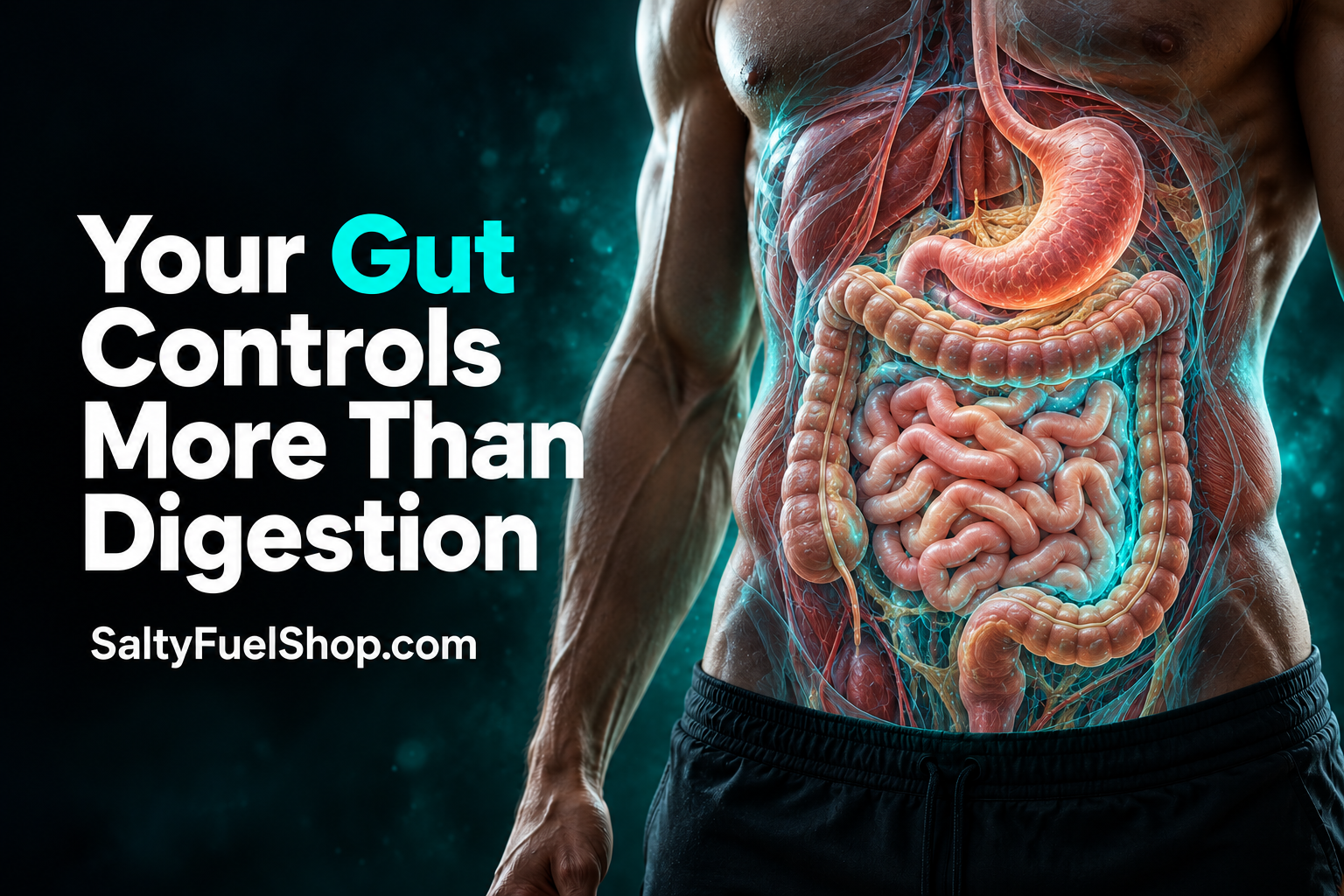
The cited research describes links between the gut microbiome and metabolism, while a separate vitamin D3 trial involved women aged 50 to 65 with confirmed deficiency and should not be generalized. Consider the cited research within the study populations and designs described.
What the reviews actually show
The gut microbiome is the community of microorganisms living in the digestive tract. Dysbiosis is an imbalance in that community. Intestinal permeability describes how readily material crosses the intestinal barrier, while metabolic adaptation refers to the body changing how it uses energy after weight loss. Adiponectin is a hormone involved in metabolic health and insulin sensitivity.
A 2016 peer-reviewed review described gut microbiota as a possible target for obesity therapies because of its role in regulating metabolism. The review described an area of research and possible targets for obesity therapies.
A 2022 systematic review in Gut Microbes examined the relationship between intentional weight loss, gut microbiota and intestinal permeability. Across 30 studies, increasing weight loss was associated with a statistically significant rise in alpha-diversity, a measure of microbial variety. Across 17 studies, it was associated with a reduction in intestinal permeability. Each kilogram of weight loss was associated with an increase of 0.012 in alpha-diversity and a reduction of 0.017 in intestinal permeability.
The same review found clear evidence of increased relative abundance of Akkermansia, but no clear evidence for changes in individual phyla, species or fecal short-chain fatty acids. This distinction matters.
Two broader reviews add useful context. One noted that numerous mechanisms, including the synthesis of short-chain fatty acids, hormone stimulation, and persistent low-grade inflammation, have been postulated to explain the role of gut bacteria in the etiology of obesity. It also noted that changes in microbial diversity and composition can vary by obesity treatment. The authors said more clinical research is needed to establish appropriate probiotic, prebiotic and synbiotic doses, formulations and long-term regimens.
A separate 2020 review in Prev Nutr Food Sci likewise found that the gut microbiome affects nutrient metabolism and energy expenditure. It said supplementation studies suggest possible changes in hormones, neurotransmitters and inflammatory factors, but that further clinical studies are needed to determine appropriate doses, compositions and regimens for long-term weight control.
What each source contributes
| Source | Design and population | Outcome examined | Main limit |
|---|---|---|---|
| The Gut Microbiota: The Gateway to Improved Metabolism | Peer-reviewed review published in 2016 | Microbiota’s role in regulating metabolism and possible obesity treatments | Review of an active research area, not a treatment trial |
| Weight loss, microbiota and intestinal permeability | Systematic review and meta-analysis published in Gut Microbes in 2022 | Alpha-diversity and intestinal permeability across 30 and 17 studies | Associations do not establish causation or a microbiome product for weight loss |
| Exploring the Impact of the Gut Microbiome on Obesity and Weight Loss | Review article published in 2023 | Obesity, nutrient and energy metabolism, hormones, inflammation and supplements | Authors called for more clinical research on doses and long-term use |
| The Influence of the Gut Microbiome on Obesity in Adults | Review published in Prev Nutr Food Sci in 2020 | Microbiome, obesity, nutrient metabolism, energy expenditure and supplements | Does not define a proven long-term supplementation regimen |
| Roles of the gut microbiome in weight management | Review published in Nature Reviews Microbiology in 2023 | Bidirectional effects between microbiome and weight-management approaches | Includes a subject-level meta-analysis; it is not an intervention trial of a product |
| Vitamin D3 trial report | Randomized clinical trial in Menopause; women aged 50 to 65 with confirmed vitamin D deficiency; nine months of daily supplementation | Metabolic markers including adiponectin | Results apply to the studied group and do not establish general weight-loss benefits |
| The Whole-Body Microbiome by Brett Finlay and Jessica Finlay | Book summary cited in the source | Dysbiosis, intestinal permeability and chronic inflammation in obesity | Proposed mechanism described in the summary, not an intervention result |
Why weight maintenance can be harder after weight loss
The 2023 Nature Reviews Microbiology article explains that short-term weight-loss methods often work before metabolism adjusts. Acute negative energy balance can trigger metabolic adaptations that favor resource conservation and lower resting metabolism. The review also notes that most overweight people can lose 5% of initial weight over six months, while long-term regain remains common.
This helps explain why a lower body weight can require different approaches to food intake and activity than the starting weight. The review treats weight management as a bidirectional relationship: current strategies can affect the microbiome, while microbial changes may also affect energy balance.
The book summary by Brett Finlay and Jessica Finlay adds a proposed pathway. In The Whole-Body Microbiome, obesity-associated dysbiosis is linked to increased intestinal permeability, which may allow microbial products to enter the body and contribute to chronic inflammation. The source describes this as a biological mechanism.
What the vitamin D3 trial tested
The separate randomized trial examined nine months of daily vitamin D3 supplementation in women aged 50 to 65 with confirmed vitamin D deficiency. Its focus was metabolic health markers, including adiponectin, a hormone associated with insulin sensitivity. The trial was published in the journal Menopause.
A healthcare professional can assess whether supplements suit an individual’s medical history and test results.
What this means for your next health decision
The systematic review found links between weight loss, gut microbial diversity, and intestinal permeability. Broader reviews explain possible mechanisms and identify unanswered questions about supplement doses and formulations, including long-term use.
The vitamin D3 evidence should also be read within its study population. Discussing the trial as a general weight-maintenance claim goes beyond the study population described in the report.
What to do now
- Use the reviews as context, not a prescription.
- Ask a qualified healthcare professional about metabolic adaptation after weight loss, especially if eating patterns and weight are changing together.
- If vitamin D3 is under consideration, establish whether vitamin D deficiency is present before deciding on a form or dose.
- Review the original evidence when a claim involves the microbiome, especially the study design, population, measured outcome and stated limits.
About the author and editorial review
This article was prepared and reviewed for factual fidelity by the SaltyFuelShop health editorial team. The review process checked each health statement against the cited review articles, randomized trial report and book summary, with particular attention to population limits and causal language. This article provides educational information and does not replace diagnosis or advice from a qualified healthcare professional.
FAQ
Is gut health linked to metabolism and healthy weight maintenance?
The cited reviews link the gut microbiome with nutrient metabolism, energy expenditure, hormones, inflammation and weight-management methods. A 2022 systematic review found that greater weight loss was associated with higher gut microbiota alpha-diversity and lower intestinal permeability, but the studies do not prove that microbiome changes cause weight loss.
Why is weight maintenance harder after weight loss?
A sharp drop in energy intake can cause the body to conserve resources and lower its resting metabolic rate.
Does vitamin D3 support metabolism in all adults?
The trial discussed here studied nine months of daily vitamin D3 in women aged 50 to 65 with confirmed vitamin D deficiency. It examined metabolic markers including adiponectin.