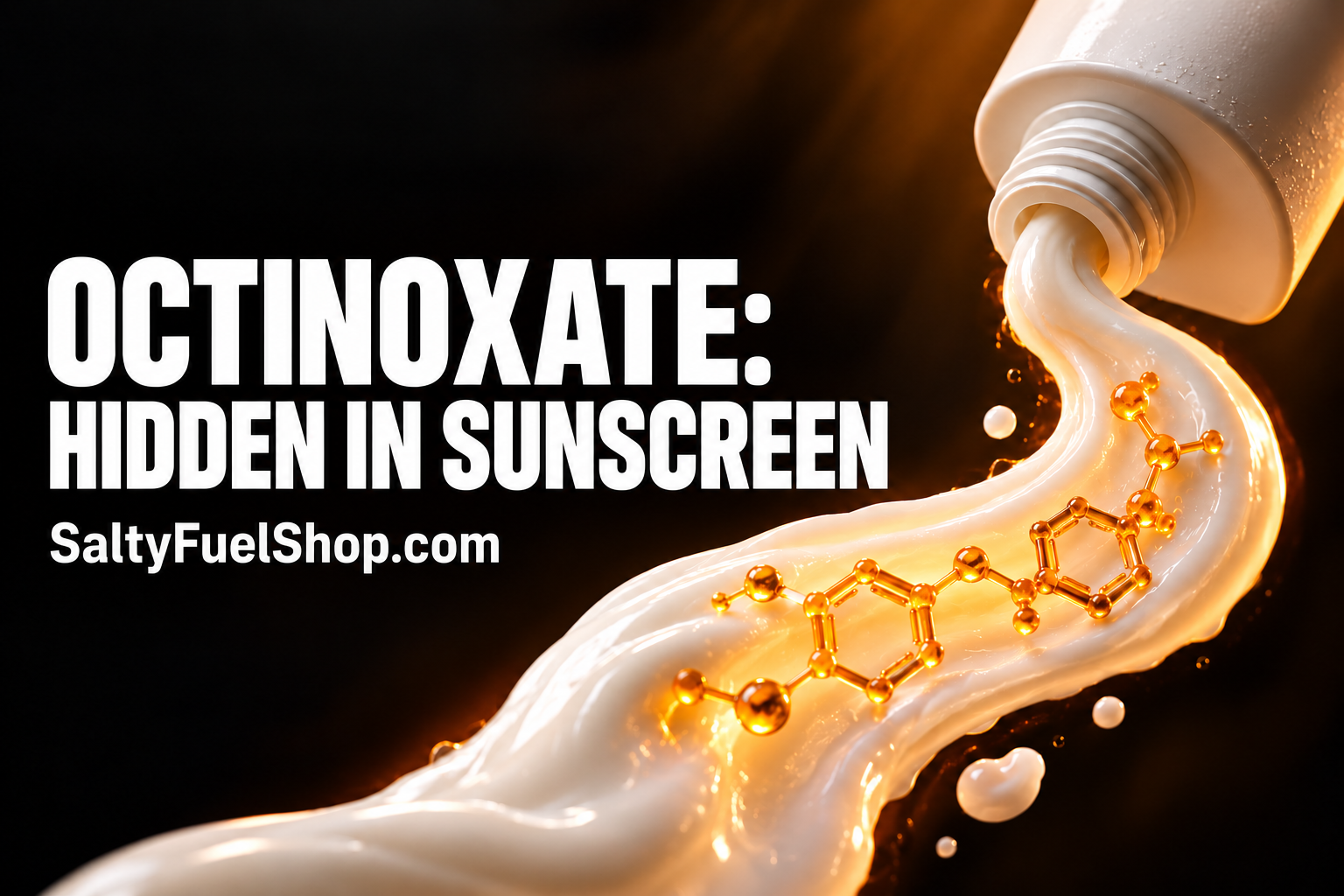
Octinoxate is a chemical UVB filter found in many sunscreens and personal-care products, but shoppers should check the label if they want broad-spectrum protection or wish to avoid the ingredient. Regulators permit it at specified concentrations, while research has raised questions about systemic absorption and environmental effects without establishing that ordinary product use causes harm.
What is octinoxate?
Octinoxate, also called octyl-methoxycinnamate, is a cinnamate ester used as a UV filter. It absorbs UVB radiation, the ultraviolet light associated with sunburn and skin cancer. The Environmental Working Group’s Safe Cosmetics database says it filters UVB rays but does not protect against UVA rays.
Companies began using octinoxate for UV protection in the 1950s. It may appear in sunscreens, lip balms, hand and face moisturizers, makeup, perfumes, hair sprays and aftershaves. Labels may list octinoxate, octyl-methoxycinnamate or 2-ethylhexyl-4-methoxycinnamate. The source article also identifies Parsol, Escalol and Neo Heliopan as trade names.
What does the human safety evidence show?
The U.S. Food and Drug Administration and the European Union consider octinoxate safe within their permitted concentration limits. Scientists have classified it as an endocrine-disrupting compound, although current evidence suggests limited penetration through the skin barrier. The available human evidence is limited, and the source article reports that a 2020 review found no studies examining octinoxate’s effects on fetal development.
Some people may develop allergic contact dermatitis or photo contact dermatitis after using products containing octinoxate. A 2010 study using rat cells reported that very high doses altered neurotransmitter release, but those doses were not comparable with typical human exposure.
What did the FDA-funded absorption study find?
A randomized clinical trial published in JAMA in 2020 tested six sunscreen ingredients: avobenzone, oxybenzone, octocrylene, homosalate, octisalate and octinoxate. The study involved 48 healthy participants, with 44 completing the trial. Researchers collected 34 blood samples over 21 days after participants applied one of four sunscreen formulations.
All six active ingredients were systemically absorbed, and their geometric mean maximum plasma concentrations were greater than 0.5 ng/mL, with this threshold surpassed on day 1 after a single application for all active ingredients. For octinoxate, concentrations were reported as 7.9 ng/mL for nonaerosol spray and 5.2 ng/mL for pump spray. Rash was the most common adverse event, reported in 14 participants.
The study measured absorption, not health outcomes. Its authors stated that the findings did not mean people should stop using sunscreen. A separate systematic review, published in the International Journal of Dermatology, reviewed 29 studies on oxybenzone and octinoxate. The authors said the evidence was insufficient to establish a causal relationship between higher systemic levels and adverse health outcomes, and they called for a well-designed long-term randomized controlled trial.
Why are some places restricting octinoxate?
Octinoxate and other chemical UV filters are found in nearly all water sources worldwide, according to the source article, and are difficult to remove through typical wastewater treatment. Researchers have identified UV filters in fish species around the world and have reported concerns about coral bleaching. The 2020 systematic review notes that Key West and Hawaii enacted reef-protection laws banning oxybenzone and octinoxate because of reported toxic effects on coral. Similar legislation has been proposed for the Florida Keys and Miami Beach.
The environmental findings concern marine ecosystems.
What should shoppers look for?
Read the active-ingredient list rather than relying only on the product name.
The American Academy of Dermatology Association recommends SPF 30 or higher. People who want to avoid octinoxate can skip products that do not need UV protection, such as some perfumes, and may look for products labeled natural mineral sunscreen or reef safe when selecting an alternative. Consider the active ingredients as well as the label.
What to do now
- Check the active-ingredient list. Look for octinoxate and its listed alternative names if you want to avoid it.
- Use SPF 30 or higher. This follows the American Academy of Dermatology Association recommendation.
- Separate questions about human safety from environmental labels.
FAQ
Is octinoxate safe for human use?
The FDA and European Union consider octinoxate safe within their applicable permitted concentration limits. Human research remains limited, and the systematic review did not find enough evidence of a causal relationship between high systemic levels and adverse health outcomes.
Does octinoxate protect against UVA rays?
No. The Environmental Working Group’s Safe Cosmetics database says octinoxate filters UVB rays but does not protect against UVA rays.
Why have some places restricted octinoxate?
Environmental research has raised concerns about effects on coral. A 2020 systematic review reported that Key West and Hawaii had banned oxybenzone and octinoxate due to reported toxic effects on coral.