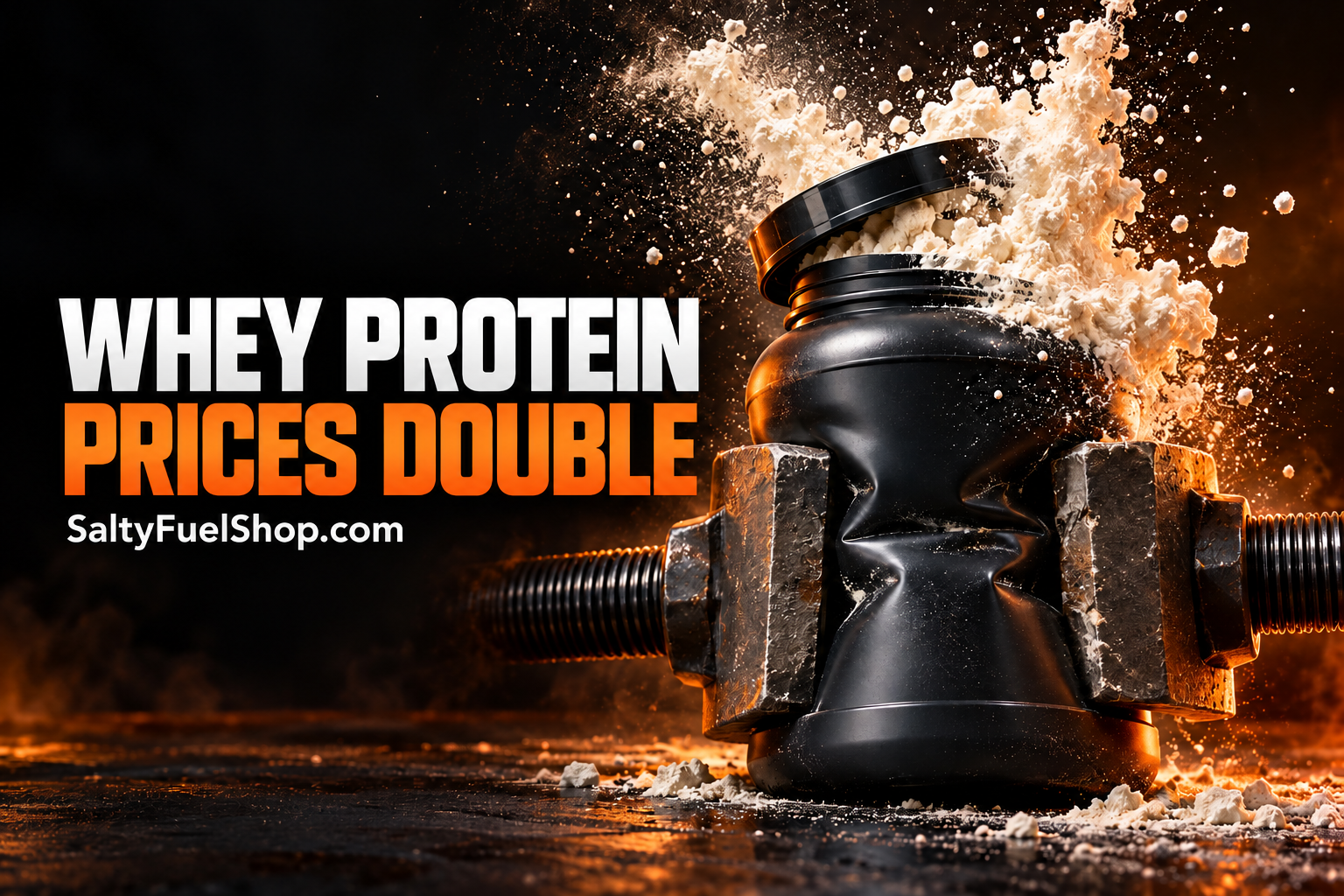
Shoppers who count on a five-pound tub of whey protein now pay roughly twice what they did five years ago, with the steepest increases landing in the last year. The cause is a supply chain built around cheese factories that cannot expand fast enough to feed a protein market growing far beyond the gym, and the practical move is to watch serving-size math, look for third-party certification, and be open to plant proteins where budgets are tight.
How whey got so expensive
Whey is the liquid left behind when milk curdles into cheese. For most of the twentieth century, cheesemakers dumped it in waterways or spread it on fields until federal environmental rules forced the industry to find another use. Filtration technology eventually turned that by-product into a powder, and for decades supplement makers bought it cheaply and applied heavy markups because the raw input was, in effect, free.
Demand has climbed sharply since. A Gallup survey from July 2026 found that 11 percent of American adults now take a GLP-1 drug, up from 3 percent in 2024. Patients on those drugs are often advised to eat lean, easily digested protein to preserve muscle while losing fat, which adds a large new buyer pool on top of traditional lifters and everyday users.
Meanwhile, the cheese factories that produce whey cannot grow quickly enough to keep up. The USDA’s benchmark for 34 percent whey protein concentrate averaged 97 cents a pound in January 2024 and reached $2.14 in August 2026, the highest monthly figure on record. In July, USDA reporting put 80 percent concentrate at $12.50 to $13 a pound and isolate near $14, with bulk buyers described as willing to pay whatever it takes for available loads.
Why concentrate has nearly caught up to isolate
Isolate, the more filtered grade with most fat and lactose removed, has historically cost more than concentrate. With raw prices this high, brands are putting more concentrate into products than isolate, driving concentrate demand up faster than isolate demand. The result is that concentrate prices have grown at a steeper rate, even though isolate still costs more per pound.
That raises a practical question: do you need to buy isolate? Richie Kirwan, a senior lecturer in nutrition and exercise physiology at Liverpool John Moores University, has worked with lifters for ten years and says he only recommends whey isolate to people who have issues with lactose tolerance, adding that for most people isolate is not worth the extra cost. Brett Massimino, PhD, associate professor and chair of the Department of Supply Chain Management and Analytics at Virginia Commonwealth University, agrees that concentrate provides the same muscle-building benefits as isolate at a lower price for the majority of consumers without lactose issues.
Jeff Byers, co-founder and CEO of the supplement company Momentous and a former NFL offensive lineman who played most of his career with the Carolina Panthers, argues that a purer input needs fewer flow agents, fillers, and emulsifiers to taste right, which is why his company sells a single 91 percent grass-fed European isolate. Jay Luthar, MD, who runs a longevity practice in Boston and teaches at Harvard Medical School, agrees that added ingredients can cut the nutritional value. His shortcut: divide grams of protein per serving by the serving size in grams. A quality powder lands at 70 to 80 percent or higher; anything lower means you are paying for filler.
How to spot cheaper tricks
When input costs rise fast, some companies cut corners rather than raise prices. Massimino expects shrinkflation and label games to lead the way.
- Check the unit price. Shrinking the tub is easier than raising the sticker price, so compare dollars per serving rather than just the total.
- Read the ingredient list for whey blends that quietly swap in soy or pea protein.
- Watch for non-essential amino acids added to inflate protein numbers without delivering a complete protein.
- Look for certification from a body like NSF Certified for Sport or Informed Sport, which both Massimino and Luthar cite as a more reliable signal than price alone.
Where the relief is coming from, and when
New capacity is on the way, but it will not arrive quickly. Glanbia, the Irish dairy cooperative that became the largest producer of American-style cheddar in the United States and the largest milk processor in Idaho, is adding 10 million pounds of whey protein isolate at its Clovis, New Mexico joint venture, set to open in 2027. Ireland’s Tirlán is putting €126 million into a whey plant expected to launch the same year. Byers does not expect any relief in his first-quarter 2027 pricing because the raw material he is buying in January is being produced right now, before either plant comes online. His read on the timeline is that meaningful price relief is a 2028 event, not a six- or twelve-month one.
Even so, he expects the protein-in-everything fad to cool and demand for whey to soften a bit, similar to how low-fat and gluten-free booms faded. When that happens, supplies loosen and prices drift down from wherever they peak. His back-of-the-envelope projection is that five-pound tubs settle in the $85 to $90 range rather than returning to pre-2021 levels.
Plant proteins as a budget hedge
For shoppers unwilling to wait, soy and pea protein powders can still be found in the $50 range for a five-pound tub, and a growing body of peer-reviewed research has found them a viable replacement for whey for most trainees. Once intake crosses about 1.6 grams of protein per kilogram of body weight per day, Kirwan says, muscle-building outcomes look similar across whey and plant sources like soy.
Massimino’s advice for someone starting out on a tight budget is to buy a certified protein and creatine, skip pre-workouts and testosterone boosters, and treat a tub of whey as a convenience rather than a dietary staple. Knappenberger, RD, program director for performance nutrition at Northwestern Medicine, points out that most Americans already exceed the recommended daily allowance of 0.8 grams per kilogram, and that a powder is generally unnecessary for anyone who consistently eats dairy, eggs, fish, meat, soy, beans, and lentils. For lifters chasing higher targets, though, whey still costs less per gram of protein than whole-food alternatives like steak or meat sticks, even at today’s prices.
What to do now
- Compare cost per serving, not sticker price. Shrinking tubs and label swaps are common, so calculate dollars per gram of protein before you buy.
- Prioritize third-party certification. NSF Certified for Sport or Informed Sport seals are a stronger quality signal than brand reputation or price tag.
- Try concentrate before paying up for isolate, unless you have a known lactose issue. The muscle-building benefit is similar for most people and the price is meaningfully lower.
- Keep a plant option on your radar. Soy and pea proteins in the $50-per-five-pound range can cover most of the same training goals while you wait for whey prices to ease.
- Stock up when prices dip. With new capacity arriving in 2027 and meaningful relief not expected until 2028, any future sale is worth treating as a buy.
FAQ
Why has whey protein powder gotten so expensive?
Whey is a by-product of cheese-making, and the cheese factories that produce it cannot grow fast enough to keep up with rising demand. The USDA’s benchmark for 34 percent whey protein concentrate averaged 97 cents a pound in January 2024 and reached $2.14 in August 2026, the highest monthly figure on record.
Is whey isolate worth paying more than whey concentrate?
For most people without lactose intolerance, no. Nutrition and exercise physiology experts say concentrate provides the same muscle-building benefits at a lower price. Isolate only offers a clear advantage for those who react to the lactose in concentrate.
When will whey protein prices come back down?
New whey plants from Glanbia and Tirlán are expected in 2027, but raw material already in production is priced before those plants come online. Industry pricing watchers expect meaningful relief in 2028 rather than in the next several months, and prices are unlikely to return to pre-2021 levels.