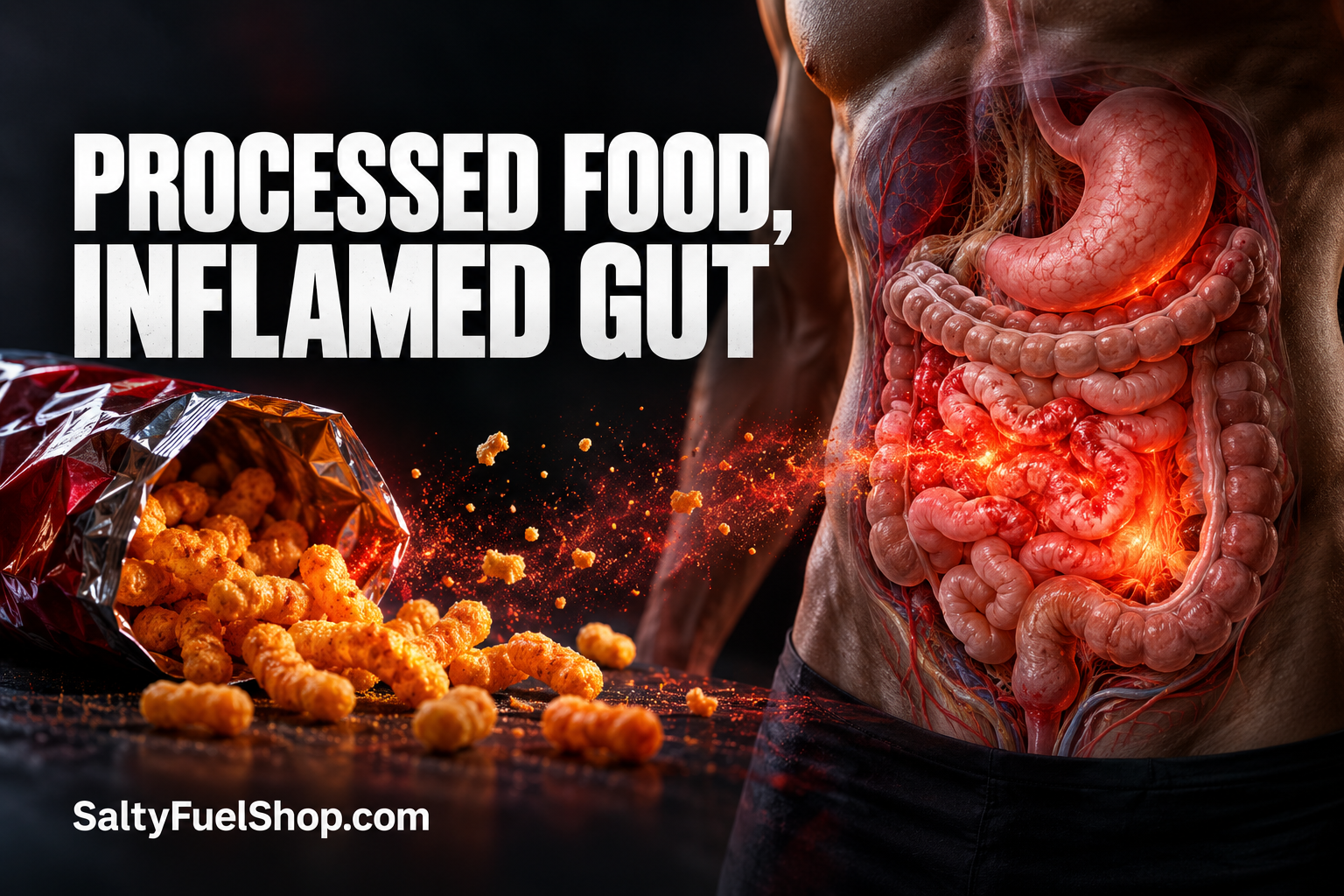
Readers concerned about long-term gut health gain a clearer picture of how diets heavy in ultra-processed foods (UPFs) have been linked to a significantly higher risk of developing Crohn’s disease. A comprehensive narrative review of more than a decade of research, published in the journal Nutrients, ties the worldwide surge in inflammatory bowel disease (IBD) to industrial food formulations engineered for shelf life and hyper-palatability rather than nutrition.
What did the review find about ultra-processed foods and Crohn’s disease?
The review combined population studies, laboratory experiments, and clinical dietary interventions, and the pattern across those sources was consistent: people who consumed more ultra-processed foods had a significantly higher risk of being diagnosed with Crohn’s disease. That association was far weaker for ulcerative colitis, suggesting Crohn’s may be uniquely sensitive to dietary exposures tied to UPFs.
Globally, nearly five million people now live with IBD, and incidence has climbed fastest in nations where packaged, ready-to-eat items dominate the food supply. The rise has moved scientists past purely genetic explanations and toward environmental triggers, with industrial dietary patterns at the center of that inquiry.
What counts as ultra-processed?
“Ultra-processed” is a specific category in the NOVA food classification system, not a vague label. These are industrial formulations of food-derived ingredients plus additives, created through multiple industrial processes. Common examples include sugary breakfast cereals, packaged snacks, reconstituted meat products, instant noodles, and soft drinks. Their hallmarks are hyper-palatability, sophisticated packaging, and the use of substances rarely found in a home kitchen, including modified starches, hydrogenated oils, and flavor enhancers.
The harm may go beyond displacement of healthier options.
How might food additives damage the gut?
Mechanistic studies show how common additives may contribute to disease.
- Emulsifiers such as carboxymethylcellulose (CMC) and polysorbate-80, used to create smooth textures and prevent separation, have been shown in animal and some human studies to thin the protective mucus layer lining the intestine, which can allow gut bacteria to encroach on the intestinal wall.
- The thickener carrageenan and the processed carbohydrate maltodextrin may increase intestinal permeability, often called “leaky gut,” allowing bacterial fragments to cross into the bloodstream and trigger persistent immune activation.
- Some additives alter the gut microbiome by reducing beneficial bacteria that produce anti-inflammatory compounds and fostering a more pro-inflammatory microbial environment, as seen in studies on emulsifiers like carboxymethylcellulose and polysorbate 80.
What does this mean for people already living with IBD?
For those already diagnosed, higher UPF consumption has been correlated with more active disease and a greater risk of relapse. Therapeutic diets that systematically reduce or eliminate these products show promise in the opposite direction. The Crohn’s Disease Exclusion Diet (CDED), which emphasizes whole foods and excludes specific additives, has been effective at inducing remission, particularly in pediatric patients.
The authors note that the evidence does not definitively prove causation, since people with high UPF intake often share other lifestyle factors, such as higher stress and lower physical activity, that can independently influence disease risk.
What practical steps reduce ultra-processed food exposure?
Experts suggest centering meals on whole or minimally processed foods, including vegetables, fruits, legumes, and unprocessed meats, whenever possible. Reading labels to flag long lists of unfamiliar additives can guide better choices at the grocery store. UPFs are engineered to be rapidly consumed and digested, bypassing the body’s natural fullness signals, while stripping away fiber and concentrating hyper-palatable fats, sugars, and refined starches.
The review argues that this mismatch may affect a large portion of the population.
FAQ
What did the Nutrients review conclude about ultra-processed foods and Crohn’s disease?
The narrative review, which covered more than a decade of population, laboratory, and clinical research, found that high intake of ultra-processed foods was strongly associated with a significantly higher risk of developing Crohn’s disease. The association was far weaker for ulcerative colitis.
Which food additives are most suspect in gut damage?
Emulsifiers such as carboxymethylcellulose (CMC) and polysorbate-80 have been shown to thin the protective intestinal mucus layer. The thickener carrageenan and the processed carbohydrate maltodextrin may increase intestinal permeability. Several additives also appear to shift the gut microbiome toward a more pro-inflammatory profile.
Can dietary changes help people already diagnosed with Crohn’s disease?
Yes. Higher UPF consumption has been correlated with more active disease and higher relapse risk. Therapeutic diets that reduce or eliminate ultra-processed products, including the Crohn’s Disease Exclusion Diet (CDED), have been effective at inducing remission, especially in pediatric patients.