
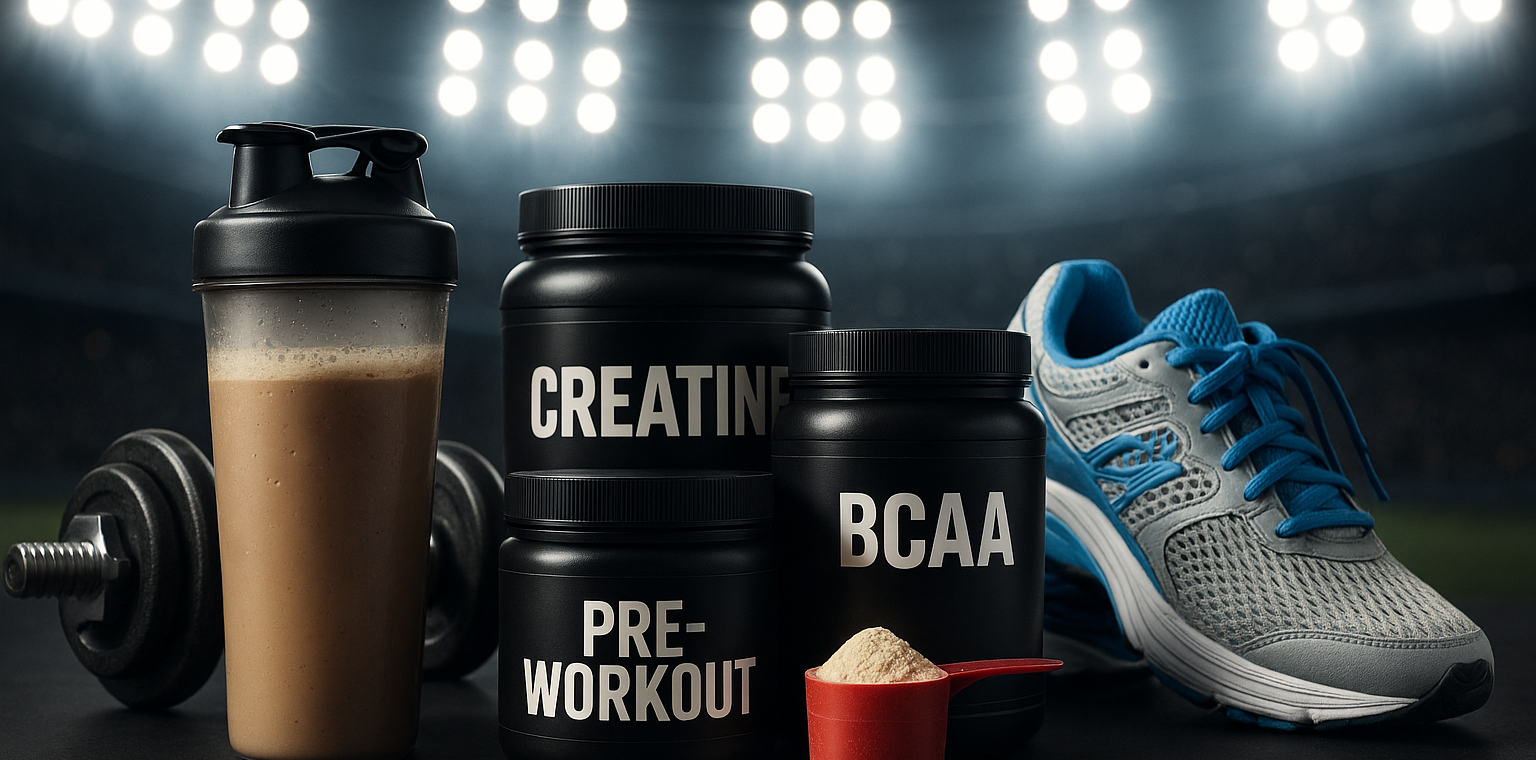
Why Supplements Matter More for Athletes
Athletes place demands on their bodies that go well beyond what ordinary daily activity requires. Repeated high-intensity training, competition stress, and accelerated recovery needs create nutritional requirements that can be difficult to meet through diet alone, even a well-planned one. This is not a sales pitch for the supplement industry. It is a physiological reality supported by decades of sports science research.
That said, the athletic supplement market is enormous and often characterized more by marketing than by evidence. Understanding which supplements have genuine, well-replicated research behind them is essential for any athlete trying to make informed decisions about performance and recovery.
This article covers the supplements with the strongest scientific evidence for improving athletic performance and recovery, along with practical dosage guidance based on current research.
Creatine Monohydrate: The Most Validated Performance Supplement
Creatine is consistently described by exercise scientists as the most well-researched and effective ergogenic supplement available. The International Society of Sports Nutrition (ISSN) position stand on creatine describes it as “one of the most popular and effective nutritional supplements for athletes” and concludes that creatine supplementation consistently increases muscle creatine and phosphocreatine concentrations, improves acute exercise capacity, and augments training-induced gains in strength, power, and muscle mass.
The primary mechanism is creatine’s role in regenerating ATP (adenosine triphosphate), the cell’s primary energy currency, during short-duration, high-intensity activities. By increasing the availability of phosphocreatine in muscle, supplementation extends the capacity for explosive efforts before fatigue sets in.
Performance Benefits
Multiple meta-analyses confirm creatine’s benefits for performance in activities lasting under 30 seconds to several minutes, including sprinting, weightlifting, wrestling, rowing, swimming, and team sports with repeated sprint demands. A 2021 double-blind crossover trial published in PMC found that short-term creatine supplementation enhanced strength, reduced fatigue, and accelerated recovery in resistance-trained athletes compared to placebo.
Recovery Benefits
Creatine also has meaningful recovery applications. A study in runners completing a 30-km race found that supplementation at 5 grams four times daily for five days prior significantly reduced muscle soreness, damage markers (including creatine kinase), and inflammation measured 24 hours post-race. This anti-inflammatory and muscle-protective effect is increasingly appreciated as a separate benefit from the acute performance gains.
Dosing Protocol
There are two approaches to creatine loading. The first is a loading phase of 0.3 grams per kilogram of body weight per day (approximately 20 grams per day for most adults) split into four doses for 5 to 7 days, followed by a maintenance dose of 3 to 5 grams per day. The second approach is to skip the loading phase and take 3 to 5 grams per day consistently for 4 weeks, which achieves the same muscle saturation over a longer timeframe with less potential for early gastrointestinal discomfort. Creatine monohydrate is the most studied and cost-effective form. There is no compelling evidence that creatine HCl, buffered creatine, or other variants outperform it.
Protein: The Non-Negotiable Foundation
Adequate protein intake is the single most important nutritional variable for muscle repair, growth, and recovery in athletes. During resistance exercise, muscle protein is broken down, and dietary protein provides the amino acids necessary for synthesis of new muscle tissue. When protein intake is insufficient, training adaptation is blunted regardless of how well other aspects of nutrition are managed.
Current evidence supports total daily protein intakes of 1.6 to 2.2 grams per kilogram of body weight for athletes engaged in regular resistance training, with some evidence for benefits at up to 3.1 grams per kilogram during aggressive caloric restriction aimed at preserving muscle mass.
Whey Protein
Whey protein is a fast-digesting, high-quality complete protein derived from milk that is particularly rich in leucine, the amino acid most responsible for triggering muscle protein synthesis (MPS). Post-exercise whey at 20 to 40 grams has been shown in numerous RCTs to rapidly and significantly stimulate MPS compared to placebo or slower proteins, producing greater muscle hypertrophy and strength gains over time in both trained and untrained populations. A 2025 systematic review in Frontiers in Nutrition covering elite athletes in multiple sports confirmed post-exercise protein supplementation as one of the most consistently supported recovery interventions.
Casein Protein
Casein is a slow-digesting milk protein that forms a gel in the stomach, releasing amino acids gradually over 5 to 7 hours. Pre-sleep casein supplementation at 40 grams has been studied by Dutch researchers and shown to increase overnight muscle protein synthesis, accelerate recovery, and support next-morning performance. This makes it particularly useful for athletes training twice per day or with short overnight recovery windows.
Caffeine: The Best-Studied Performance Stimulant
Caffeine is the most widely consumed psychoactive substance in the world, and it is also one of the most extensively researched performance-enhancing compounds in sports science. The evidence for caffeine’s ergogenic effects spans endurance sports, strength sports, team sports, and cognitive performance during competition.
Caffeine reduces perception of effort and pain, delays fatigue through adenosine receptor antagonism (adenosine signals fatigue), and enhances motor unit recruitment in muscle. A dose of 3 to 6 mg per kilogram of body weight (approximately 200 to 400 mg for most adults) taken 30 to 60 minutes before training or competition reliably improves both endurance performance and high-intensity power output. Anhydrous caffeine (in pill or powder form) shows more consistent performance effects than coffee due to standardized dosing, though coffee provides additional polyphenol benefits.
Important caveats: caffeine tolerance develops quickly with daily use, and using caffeine primarily around training and competition (rather than daily) preserves its ergogenic effect. Regular high caffeine intake disrupts sleep quality, which is the single most important recovery factor for athletes.
Beta-Alanine for High-Intensity Endurance
Beta-alanine is a non-essential amino acid that combines with histidine in muscle to form carnosine, a compound that buffers acid accumulation during high-intensity exercise. As muscles acidify during sustained effort, performance deteriorates. Higher muscle carnosine concentrations extend the time before acidosis becomes limiting.
A meta-analysis covering over 40 studies found that beta-alanine supplementation significantly improved performance in exercise bouts lasting 60 seconds to 4 minutes, the intensity range most affected by hydrogen ion accumulation. Sports where this applies include 400 to 1500 meter running, 100 to 400 meter swimming, cycling time trials, and team sport repeated sprint activities.
The effective dose is 3.2 to 6.4 grams per day, split into smaller doses to minimize the well-documented but harmless side effect of paresthesia (skin tingling). Sustained-release formulations reduce this side effect. Benefits require 4 to 6 weeks of consistent supplementation to fully develop as muscle carnosine levels accumulate.
Nitrates and Beet Root Powder
Dietary nitrates, found in high concentrations in beet root, spinach, and arugula, are converted to nitric oxide in the body, which dilates blood vessels and improves oxygen delivery to working muscles. This mechanism reduces the oxygen cost of submaximal exercise (meaning you need less oxygen to maintain the same pace) and improves performance at lactate threshold intensities.
Beet root juice or concentrated beet root powder at doses providing 400 to 600 mg of dietary nitrate have been shown in multiple well-controlled trials to improve time trial performance by 1 to 3% in recreational to well-trained cyclists and runners. While this percentage sounds small, in competitive contexts it is meaningful. The timing of supplementation matters: effects are strongest when consumed 2 to 3 hours before competition, as peak nitric oxide production follows a delay.
Omega-3 Fatty Acids for Recovery
Omega-3 fatty acids (EPA and DHA), most commonly obtained from fish oil, have a well-established anti-inflammatory profile that directly supports recovery from exercise-induced muscle damage. Intense exercise generates significant inflammatory signaling as part of the normal adaptation process, but excessive or prolonged inflammation impairs recovery and increases injury risk.
Multiple studies have found that omega-3 supplementation reduces delayed onset muscle soreness (DOMS), accelerates functional recovery after eccentric exercise, and may support muscle protein synthesis particularly in older athletes. A dose of 2 to 3 grams of combined EPA and DHA per day is generally studied for these effects, which develop over several weeks of consistent supplementation rather than acutely.
Vitamin D for Athletic Performance and Injury Prevention
Vitamin D deficiency is highly prevalent in athletes who train primarily indoors, live at northern latitudes, or train during winter months. Beyond bone health, vitamin D supports muscle function, immune resilience (critical for maintaining training consistency), and may play a role in injury prevention. Studies in professional soccer players and NBA athletes have found strong correlations between vitamin D status and injury rates, though causation versus correlation remains an active area of research.
Athletes with confirmed deficiency should supplement with 2,000 to 4,000 IU of vitamin D3 per day. Testing serum 25(OH)D levels twice per year allows supplementation to be adjusted to maintain optimal status (40 to 60 ng/mL).
What to Avoid: Overhyped Supplements
The sports supplement market is filled with products that have minimal or no evidence for their claims. BCAAs (branched-chain amino acids) have largely been superseded by research showing that adequate total protein from whole protein sources provides the same or better anabolic stimulus. HMB (beta-hydroxy-beta-methylbutyrate) shows benefits primarily in untrained individuals beginning resistance training, with limited evidence for trained athletes. Testosterone boosters marketed aggressively in gyms are poorly regulated and overwhelmingly unsupported by clinical data.
The Bottom Line
For athletes, a small number of supplements have genuine, well-replicated evidence: creatine monohydrate for power and strength, protein (especially whey and casein) for muscle repair and growth, caffeine for performance, beta-alanine for high-intensity endurance, beet root nitrates for aerobic performance, and omega-3 fatty acids for recovery and inflammation management. These form the core of what an evidence-based athletic supplement stack looks like.
Everything else deserves skepticism. The best starting point for any athlete is not a supplement cabinet but a well-structured diet, consistent training, and prioritized sleep. The supplements above work best when they are the final layer on a solid foundation, not a substitute for one.