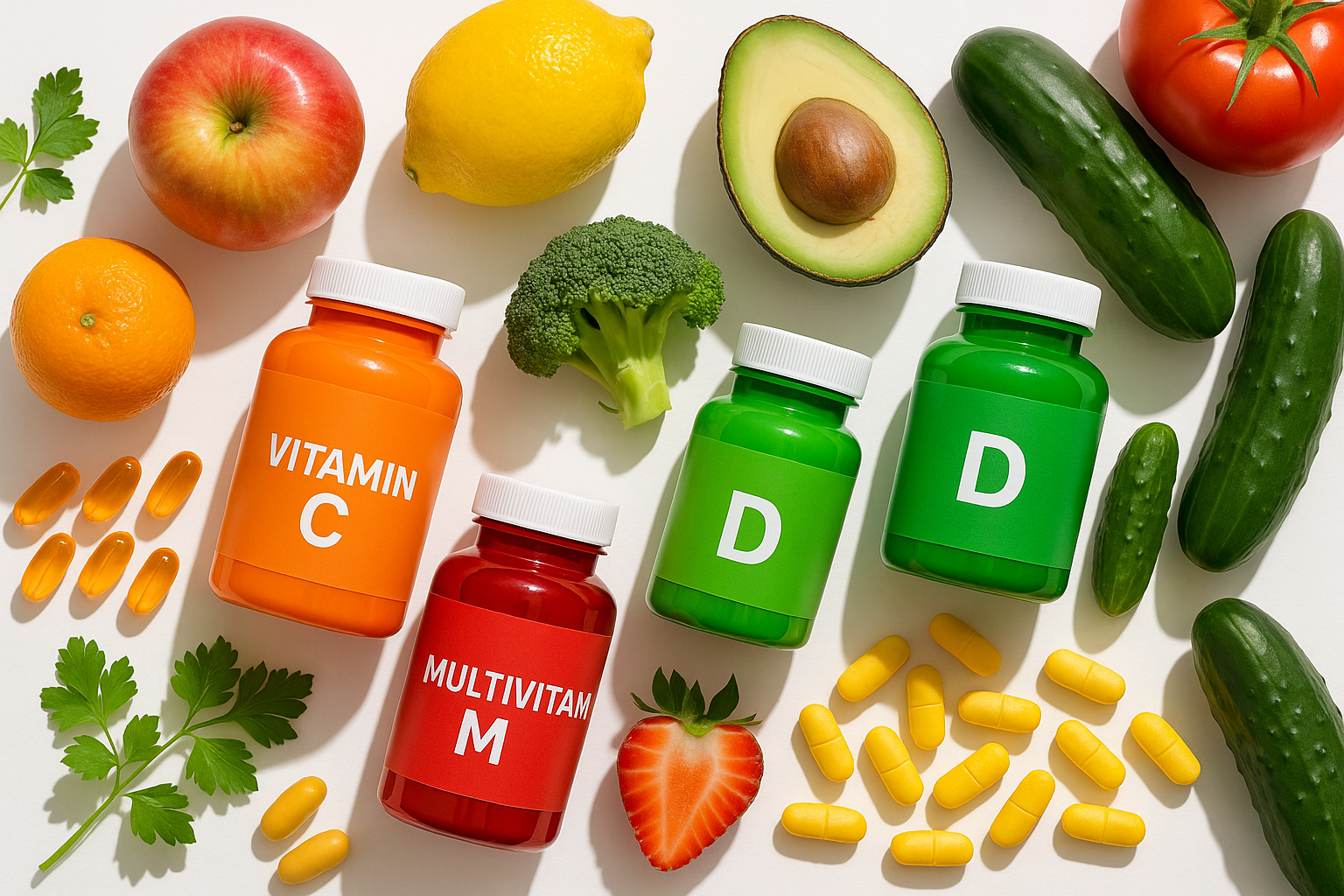
Most healthy adults who eat a varied, balanced diet do not need a multivitamin, and the strongest evidence for supplementation targets specific groups: pregnant women (folic acid), vegans (B12), and adults over 50 (B12 and vitamin D). For everyone else, whole foods outperform isolated nutrients, and high-dose fat-soluble vitamins carry real toxicity risk. Below is a breakdown of what current evidence actually says about vitamins, food-first nutrition, and when targeted supplements are genuinely necessary.
The Promise of the Vitamin Pill
The idea is appealing: take a pill in the morning and fill in whatever your diet might be missing. Americans spend over $50 billion per year on vitamin and mineral supplements, with multivitamins alone accounting for the largest share of that spending. For many people, taking a daily supplement feels like responsible self-care, a nutritional safety net against an imperfect diet.
The usefulness of vitamins depends on your individual diet, age, health status, and the specific nutrient being considered.
What Do Vitamins Actually Do in the Body?
Vitamins are organic compounds that the body requires in small amounts to perform essential biological functions. They serve as cofactors for enzymes (helping chemical reactions proceed), act as antioxidants (neutralizing damaging free radicals), regulate gene expression, support immune defense, and maintain the structural integrity of tissues. There are 13 essential vitamins: A, C, D, E, K, and the eight B vitamins (B1, B2, B3, B5, B6, B7, B9, B12).
Fat-soluble vitamins (A, D, E, K) are stored in fatty tissue and the liver. Because they accumulate, they carry a risk of toxicity when taken in excess. Water-soluble vitamins (C and the B vitamins) are not stored in significant amounts and are excreted in urine, so daily intake matters more but toxicity is less of a concern at typical doses.
Why Is Food Better Than a Pill?
When you eat a carrot, you are not just getting beta-carotene (a precursor to vitamin A). You are getting hundreds of carotenoids, flavonoids, fiber, and other phytochemicals that interact with each other in ways that isolated supplements cannot replicate. This synergistic effect is sometimes called the “food matrix,” and it is one of the primary reasons that nutrition science consistently finds whole foods outperforming isolated nutrients in clinical outcomes.
A supplement delivers a single compound (or several isolated ones) in a highly concentrated form. Food delivers a complex ecosystem of nutrients in ratios and forms that evolved alongside human biology over thousands of years. According to the Harvard T.H. Chan School of Public Health, nutrients are most potent when obtained from food because they appear alongside hundreds of other bioactive compounds absent from most supplements.
Official dietary guidelines from the USDA, the Academy of Nutrition and Dietetics, and the World Health Organization all state that nutritional needs should be met primarily through foods. This is not a dismissal of supplements. It is an acknowledgment of the evidence.
When Is a Balanced Diet Truly Sufficient?
Include:
- A variety of colorful vegetables and fruits
- Whole grains
- Lean proteins (meat, fish, eggs, or well-planned plant proteins)
- Legumes and nuts
- Dairy or calcium-rich dairy alternatives
…the case for adding vitamin supplements is weak. Multiple large-scale clinical trials have failed to show that multivitamins reduce the risk of heart disease, cancer, cognitive decline, or overall mortality in healthy adults with no identified deficiencies.
A 2023 analysis from Stanford Medicine concluded that common supplements are not needed for those with balanced diets and there is no evidence they benefit longevity or improve overall health among those who are not otherwise vitamin-deficient. This does not mean they are harmful, but it does mean they represent a poor return on investment for nutritionally replete individuals.
When Is Vitamin Supplementation Genuinely Necessary?
Diet alone often cannot reliably meet the higher physiological requirements of specific populations.
Pregnancy and Preconception
Folic acid supplementation (400 to 800 mcg daily) before and during early pregnancy is one of the most firmly evidence-backed nutritional recommendations in medicine. It significantly reduces the risk of neural tube defects including spina bifida and anencephaly. Prenatal vitamins also typically include iron, iodine, and DHA, all of which are needed in greater amounts during pregnancy than diet alone typically provides.
Vegans and Strict Vegetarians
Vitamin B12 is found almost exclusively in animal products. Vegans who do not supplement will eventually develop deficiency, which causes irreversible neurological damage over time. B12 supplementation for vegans is not optional. Plant-based eaters should also evaluate their intake of vitamin D, omega-3 fatty acids (algae-derived DHA/EPA), zinc, iodine, and calcium, depending on how their diet is structured.
Adults Over 50
Stomach acid production declines with age, impairing the absorption of protein-bound B12 from food. The NIH recommends that adults over 50 meet most of their B12 needs through fortified foods or supplements. Calcium and vitamin D become increasingly important for bone density maintenance in this group, and vitamin D is often inadequate from dietary sources alone.
People With Limited Sun Exposure
Vitamin D is synthesized in the skin upon exposure to ultraviolet B radiation from sunlight. People who live at northern latitudes, spend most of their time indoors, wear clothing that covers most of the skin, or have darker skin pigmentation that reduces UV penetration are at high risk of deficiency. Supplementation with 1,000 to 2,000 IU daily is commonly recommended for these individuals, ideally guided by blood testing.
Those With Specific Health Conditions or Medications
Certain medications impair vitamin absorption or increase excretion. Metformin reduces B12 absorption in a significant proportion of long-term users. Proton pump inhibitors (PPIs) reduce absorption of B12, calcium, and magnesium. Long-term use of anticonvulsants can deplete vitamins D and K. People on these medications should have their vitamin status monitored.
Conditions involving malabsorption, including Crohn’s disease, celiac disease, bariatric surgery, and cystic fibrosis, frequently require supplementation to compensate for impaired nutrient uptake from food.
Do Multivitamins Actually Work?
Multivitamins are the most-sold supplement category, but the evidence for their benefit in healthy adults is consistently underwhelming. The Physicians’ Health Study II, a large randomized trial following over 14,000 male physicians for more than a decade, found that multivitamin use had no significant effect on cardiovascular disease or cancer outcomes. The Women’s Health Initiative produced similar results in women.
Where multivitamins may play a useful role is as a low-cost insurance policy for people whose dietary variety is genuinely limited by food access, appetite issues, or restricted diets. A standard multivitamin is unlikely to cause harm (provided it does not megadose fat-soluble vitamins) and may help bridge gaps when dietary optimization is not achievable. But it should not be treated as a substitute for diet improvement.
Can You Overdose on Vitamins?
A persistent misconception is that more vitamins are always better. This is demonstrably false and in some cases dangerous. High-dose supplementation with fat-soluble vitamins can cause toxicity: excess vitamin A causes liver damage and bone fragility; excess vitamin D raises blood calcium to dangerous levels; excess vitamin E may increase bleeding risk. Even some water-soluble vitamins have upper limits: very high doses of B6 (above 100 mg per day over time) cause peripheral neuropathy.
Beta-carotene supplements, once expected to prevent lung cancer based on their antioxidant properties, were found in two major trials (CARET and ATBC) to actually increase lung cancer risk in smokers and asbestos-exposed workers. This was a defining cautionary lesson in the history of supplement research: nutrients in food behave differently than isolated supplements, and the same compound can have different effects depending on dose, form, and biological context.
How Should You Decide What to Take?
Use these questions as a guide for your own supplementation decisions:
- Do I have a confirmed deficiency? Blood work is the most reliable answer. Guessing is inefficient and sometimes counterproductive.
- Do I belong to a group with higher nutritional needs? Pregnant women, vegans, older adults, people with limited sun exposure, and people taking specific medications have well-documented reasons for targeted supplementation.
- Is there strong evidence for this supplement in my situation? Focus on nutrients with peer-reviewed, replicated evidence, not marketing claims.
- Is the product third-party tested? Look for NSF International, USP, or Informed Sport certification to verify label accuracy and purity.
- Am I taking anything that could interact? Always disclose supplements to your doctor and pharmacist.
The Bottom Line
Vitamins are essential for life, but obtaining them through a varied, balanced diet is superior to supplementation for most healthy adults. The evidence for multivitamins as a disease-prevention strategy in well-nourished people is weak. Targeted supplementation is evidence-supported for specific populations: pregnant women need folic acid, vegans need B12, older adults need B12 and vitamin D, and those with confirmed deficiencies need to correct them. The smartest approach is to build your nutritional foundation on real food, get your levels checked, and supplement where you have a documented need.
FAQ
Do healthy adults need a daily multivitamin?
For healthy adults who eat a varied, nutrient-dense diet, the case for a multivitamin is weak. The Physicians’ Health Study II and the Women’s Health Initiative both found no significant effect on cardiovascular disease or cancer outcomes, and a 2023 Stanford Medicine analysis concluded common supplements are not needed for those with balanced diets.
Which vitamin supplements are actually evidence-based?
The strongest cases are folic acid (400 to 800 mcg daily) before and during early pregnancy, vitamin B12 for vegans, B12 and vitamin D for adults over 50, and vitamin D (1,000 to 2,000 IU daily) for people with limited sun exposure. Targeted supplementation is also warranted for those on medications like metformin, PPIs, or long-term anticonvulsants.
Can taking too many vitamins be harmful?
Yes. Fat-soluble vitamins (A, D, E, K) accumulate in the body, and excess vitamin A causes liver damage and bone fragility, excess vitamin D raises blood calcium to dangerous levels, and excess vitamin E may increase bleeding risk. Beta-carotene supplements were found in the CARET and ATBC trials to increase lung cancer risk in smokers and asbestos-exposed workers.
Related coverage