Fatigue is a common health complaint, and most available options for boosting energy are caffeine- and sugar-based products.
Why Energy Levels Fluctuate (And What Supplements Can Actually Do)
True cellular energy is produced in the mitochondria through a process called oxidative phosphorylation, which converts nutrients from food into adenosine triphosphate (ATP), the molecule your cells use to power virtually every function. Supporting that process and removing the obstacles to it, such as nutrient deficiencies, unmanaged stress, and oxidative damage, is where evidence-based energy supplements operate.
Addressing the Root Causes First: Nutrients You May Be Deficient In
Iron
Iron deficiency is the most prevalent nutritional deficiency in the world, and it is one of the most common and underdiagnosed causes of fatigue, particularly in premenopausal women, vegetarians, and endurance athletes. Iron is a key part of hemoglobin, the protein in red blood cells that carries oxygen to muscles and organs. Without adequate iron, oxygen delivery drops, and fatigue follows regardless of how much you sleep.
A study published in the Canadian Medical Association Journal found that iron supplementation significantly reduced fatigue in non-anemic women with low-normal ferritin (stored iron) levels, reducing fatigue scores by 48% versus 29% in the placebo group. If your ferritin is below 30 to 50 ng/mL, supplementation under medical supervision may produce noticeable improvements in energy. Iron bisglycinate is a well-tolerated form with significantly fewer gastrointestinal side effects than ferrous sulfate. Do not supplement iron without confirming deficiency via bloodwork, as excess iron is oxidative and potentially harmful.
Magnesium
Magnesium is a cofactor in over 300 enzymatic reactions, including the activation of ATP itself. Without sufficient magnesium, cells cannot efficiently use the energy they produce. Magnesium is also critical for muscle function, nervous system regulation, and sleep quality, all of which directly influence energy levels.
Studies have shown that supplementation with 300 to 400 mg of magnesium daily can reduce perceived fatigue, particularly in individuals under chronic stress or with low dietary intake. Magnesium glycinate is the best tolerated form for most people. Magnesium malate, a form of magnesium bound to malic acid, is specifically associated with improved energy production in muscle tissue and is a popular choice for exercise-related fatigue and fibromyalgia.
B Vitamins
The B vitamin family, particularly B1 (thiamine), B2 (riboflavin), B3 (niacin), B5 (pantothenic acid), and B12, are essential for converting dietary carbohydrates, fats, and proteins into usable cellular energy. They are direct participants in the metabolic pathways that generate ATP, and deficiency in any of them impairs energy production in measurable ways.
Vitamin B12 deficiency in particular causes a distinctive and often progressive type of fatigue accompanied by weakness, brain fog, mood disturbances, and eventually neurological symptoms. People at risk include vegans and vegetarians (B12 is found almost exclusively in animal products), adults over 50 (due to reduced stomach acid and intrinsic factor production), and those taking metformin or proton pump inhibitors (PPIs) long-term, as both drugs reduce B12 absorption. Supplementing with 1,000 mcg of methylcobalamin per day is a standard protocol for those at risk or with confirmed deficiency.
Vitamin D
Vitamin D deficiency does not just affect bone health. Multiple studies have linked low vitamin D levels with persistent fatigue, muscle weakness, and daytime sleepiness. A 2015 study in the North American Journal of Medical Sciences found that correcting vitamin D deficiency in individuals with unexplained fatigue produced significant improvements in energy levels within just a few months.
The optimal serum level for energy and immune function is generally considered to be 40 to 60 ng/mL (100 to 150 nmol/L). Many adults in northern climates, sedentary lifestyles, or with limited sun exposure fall well below this range. Supplementing with 2,000 to 4,000 IU of vitamin D3 per day, ideally alongside vitamin K2 for cardiovascular safety, is a commonly recommended protocol, though individual dose needs vary based on baseline blood levels.
Adaptogens for Stress-Related Fatigue
Adaptogens are a class of herbs that modulate the hypothalamic-pituitary-adrenal (HPA) axis, the system governing the stress response and cortisol regulation. When cortisol stays high due to ongoing physical or psychological stress, energy levels fall, sleep quality worsens, and recovery slows. Adaptogens help normalize this dysregulated stress response rather than simply masking fatigue.
Ashwagandha (Withania somnifera)
Ashwagandha has some of the strongest human trial data of any adaptogen for fatigue and energy. A 2019 randomized, double-blind, placebo-controlled trial published in Medicine found that 240 mg of ashwagandha root extract (KSM-66) per day significantly reduced serum cortisol levels, improved sleep quality, and reduced perceived fatigue and stress over 60 days. A separate trial using 500 mg per day found significant improvements in cardiorespiratory endurance and self-reported energy in healthy adults during eight weeks of resistance training.
KSM-66 and Sensoril are the two most clinically validated standardized ashwagandha extracts. Typical effective doses are 300 to 600 mg per day. Ashwagandha is generally considered safe for most adults at these doses, with mild sedation and gastrointestinal discomfort being the most commonly reported side effects.
Rhodiola Rosea
Rhodiola rosea is a Scandinavian and Siberian adaptogen with particularly strong evidence for mental fatigue. It contains active compounds including rosavins and salidroside that appear to modulate monoamine neurotransmitters, reduce cortisol, and support mitochondrial function. A 2009 multi-center trial published in Planta Medica found that 400 mg of standardized Rhodiola extract per day significantly reduced mental fatigue, improved concentration, and decreased cortisol stress responses in physicians experiencing burnout. Results were significant within just one week.
Rhodiola is best suited for the kind of fatigue that builds under sustained cognitive work and stress, making it a practical option for people in mentally demanding professions. The effective dose range is 200 to 600 mg per day, standardized to 3% rosavins and 1% salidroside. It is best taken in the morning or early afternoon due to its mild activating effects.
Panax Ginseng
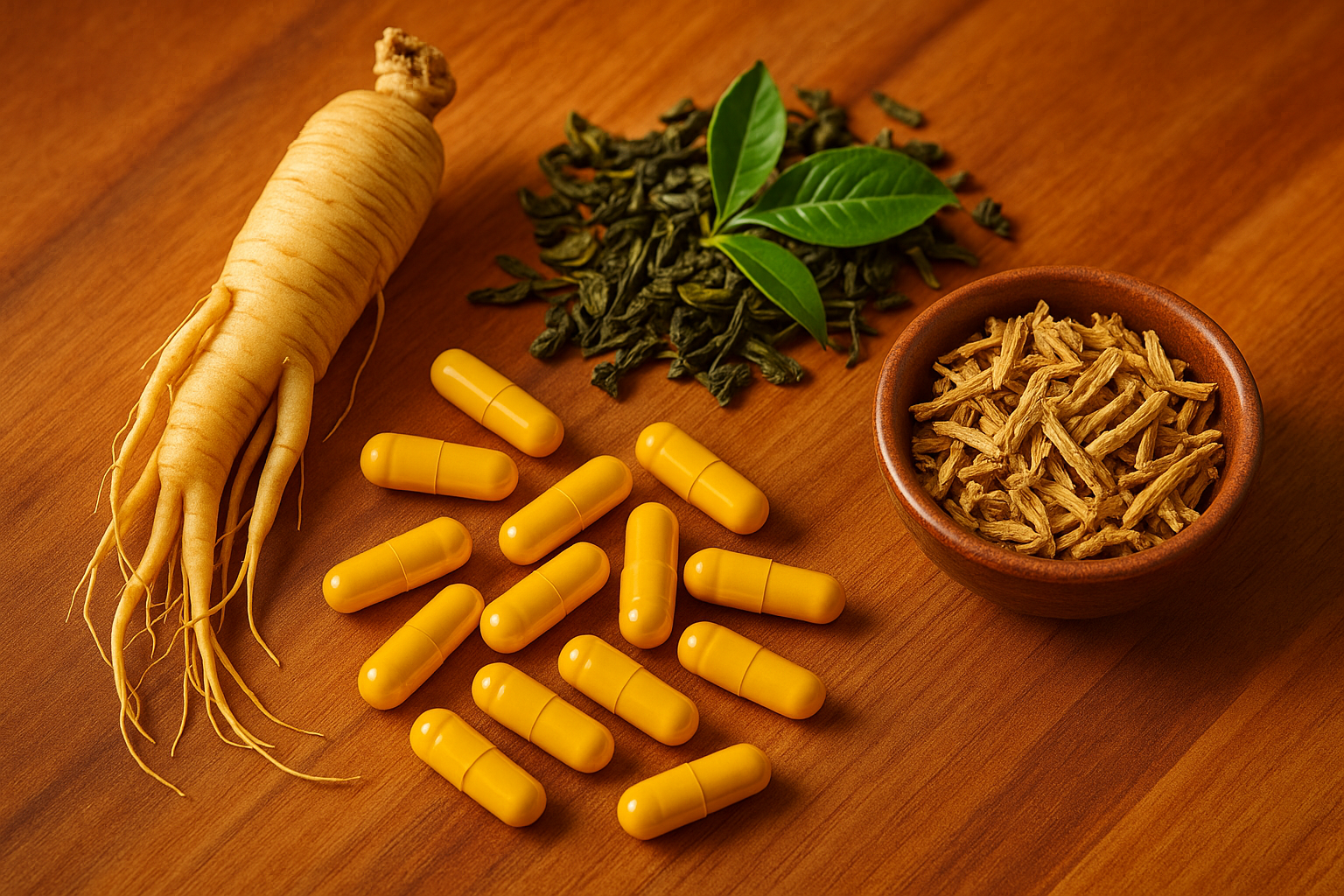
Panax ginseng (Asian ginseng) has centuries of traditional use and a reasonable modern evidence base for fatigue reduction. Multiple studies show benefit for fatigue in cancer patients, people with chronic illness, and older adults. A 2013 randomized controlled trial published in the Journal of the National Cancer Institute found that 2,000 mg of American ginseng per day significantly reduced cancer-related fatigue over eight weeks compared to placebo, a finding that has considerable clinical relevance. For general fatigue in healthy adults the evidence is more variable, but several trials show improved physical performance and mental clarity at doses of 200 to 400 mg of standardized extract per day.
Mitochondrial Support Supplements
Coenzyme Q10 (CoQ10)
CoQ10 is a fat-soluble compound present in virtually every cell and is essential for the electron transport chain, the final and most productive stage of ATP synthesis. It also acts as a powerful mitochondrial antioxidant, protecting the energy-generating machinery from oxidative damage. CoQ10 levels decline with age and are severely depleted by statin medications, which block the same biochemical pathway used to synthesize both cholesterol and CoQ10.
A study of patients with chronic fatigue syndrome found that combined CoQ10 (200 mg/day) and NADH (20 mg/day) supplementation significantly reduced fatigue scores and improved biochemical markers of cellular energy production including ATP levels and NAD+ to NADH ratio. For statin users, older adults, and those with fatigue of unknown origin, 100 to 200 mg per day of ubiquinol (the active, reduced form of CoQ10) is a commonly recommended dose. Ubiquinol absorbs significantly better than standard ubiquinone, particularly in individuals over 40.
Creatine Monohydrate
Best known in sports nutrition circles, creatine is increasingly recognized for its broader role in energy metabolism beyond the gym. Creatine supports rapid ATP regeneration during high-intensity activity by donating phosphate groups to ADP, but it also has meaningful effects on brain energy metabolism. Research published in the Proceedings of the Royal Society B found that creatine supplementation improved cognitive performance and reduced mental fatigue in tasks requiring sustained intellectual effort, particularly in sleep-deprived individuals.
The standard effective dose is 3 to 5 grams of creatine monohydrate per day taken consistently. Loading protocols (20 g/day for 5 to 7 days) saturate muscle stores faster but are not required for long-term energy and cognitive benefits. Creatine monohydrate remains the most studied and cost-effective form; more expensive variants like creatine HCl offer no proven advantage at comparable doses.
NADH and NAD+ Precursors
NAD+ (nicotinamide adenine dinucleotide) is a central coenzyme in cellular energy metabolism, acting as an electron carrier in the mitochondrial energy production chain. NAD+ levels decline with age and with chronic stress, and this decline is associated with reduced cellular energy output and accelerated aging processes. NAD+ precursors, particularly nicotinamide riboside (NR) and nicotinamide mononucleotide (NMN), have shown the ability to raise cellular NAD+ levels in human trials. A 2018 study in Nature Communications confirmed that 250 mg and 500 mg of NR per day safely increased NAD+ levels in blood over eight weeks. The clinical translation to subjective energy improvements in healthy adults is still being established, but the mechanistic rationale is strong.
Practical Guidance for Choosing Energy Supplements
A few principles make navigating this category much more effective:
- Address deficiencies first: Before buying adaptogens or mitochondrial supplements, get bloodwork checking ferritin, vitamin D, B12, and thyroid function. Correcting a documented deficiency often delivers far more benefit than any herbal supplement.
- Target the root cause: Stress-related fatigue responds best to adaptogens and sleep support. Exercise-related fatigue responds best to creatine, magnesium, and adequate protein. Afternoon energy crashes often reflect blood sugar dysregulation rather than a supplement deficiency.
- Be skeptical of stimulant-heavy products: Many commercial energy supplements are primarily high-dose caffeine with a smattering of underdosed adaptogens. Caffeine reduces fatigue perception in the short term but does not address underlying causes and can worsen fatigue over time through dependency and sleep disruption.
- Choose quality over complexity: Third-party tested products with NSF, USP, or Informed Sport certifications give you confidence that what is on the label is actually in the capsule. More ingredients in a formula does not equal more effectiveness.
The Bottom Line
Natural supplements for energy and fatigue span a wide range of effectiveness depending on the individual, the underlying cause of fatigue, and the quality of the product. At the top of the evidence hierarchy are basic nutrient corrections, iron, magnesium, B vitamins, and vitamin D, which can have dramatic effects when deficiency is present. Adaptogens like ashwagandha and rhodiola have legitimate clinical support for stress-related fatigue specifically. Mitochondrial compounds including CoQ10, creatine, and NAD+ precursors offer a different angle by supporting the cellular machinery that produces energy directly.
Supplements chosen for your specific needs can improve how you feel day to day.
FAQ
Which natural supplements have the strongest evidence for reducing fatigue?
Iron, magnesium, B vitamins, and vitamin D correction have the strongest evidence when a documented deficiency is present. For stress-related fatigue, ashwagandha and rhodiola rosea have meaningful clinical trial support, while CoQ10, creatine monohydrate, and NAD+ precursors target mitochondrial energy production directly.
Should I get bloodwork before starting an energy supplement?
Yes. The article recommends checking ferritin, vitamin D, B12, and thyroid function first, because correcting a documented deficiency often delivers more benefit than any herbal or mitochondrial supplement.
Are high-dose caffeine energy supplements a good choice?
No. Caffeine reduces fatigue perception in the short term but does not address underlying causes and can worsen fatigue over time through dependency and sleep disruption. The article recommends third-party tested products with NSF, USP, or Informed Sport certifications over stimulant-heavy formulas.
Related coverage
- Natural Supplements for Boosting Energy and Reducing Fatigue
- Supplements for Athletes: Boosting Performance and Recovery