The global superfood supplement market topped $200 billion in 2025, yet the term “superfood” has no official scientific definition, and most capsules and powders on shelves lack clinical validation. A small number of plant-derived ingredients, including curcumin, berberine, spirulina, and chlorella, do have meaningful trial data behind them, while greens blends and exotic berry extracts remain largely unproven at typical doses. The practical answer is to eat a diverse, vegetable-rich diet first, then use targeted, evidence-backed supplements to fill specific gaps.
What Exactly Is a Superfood?
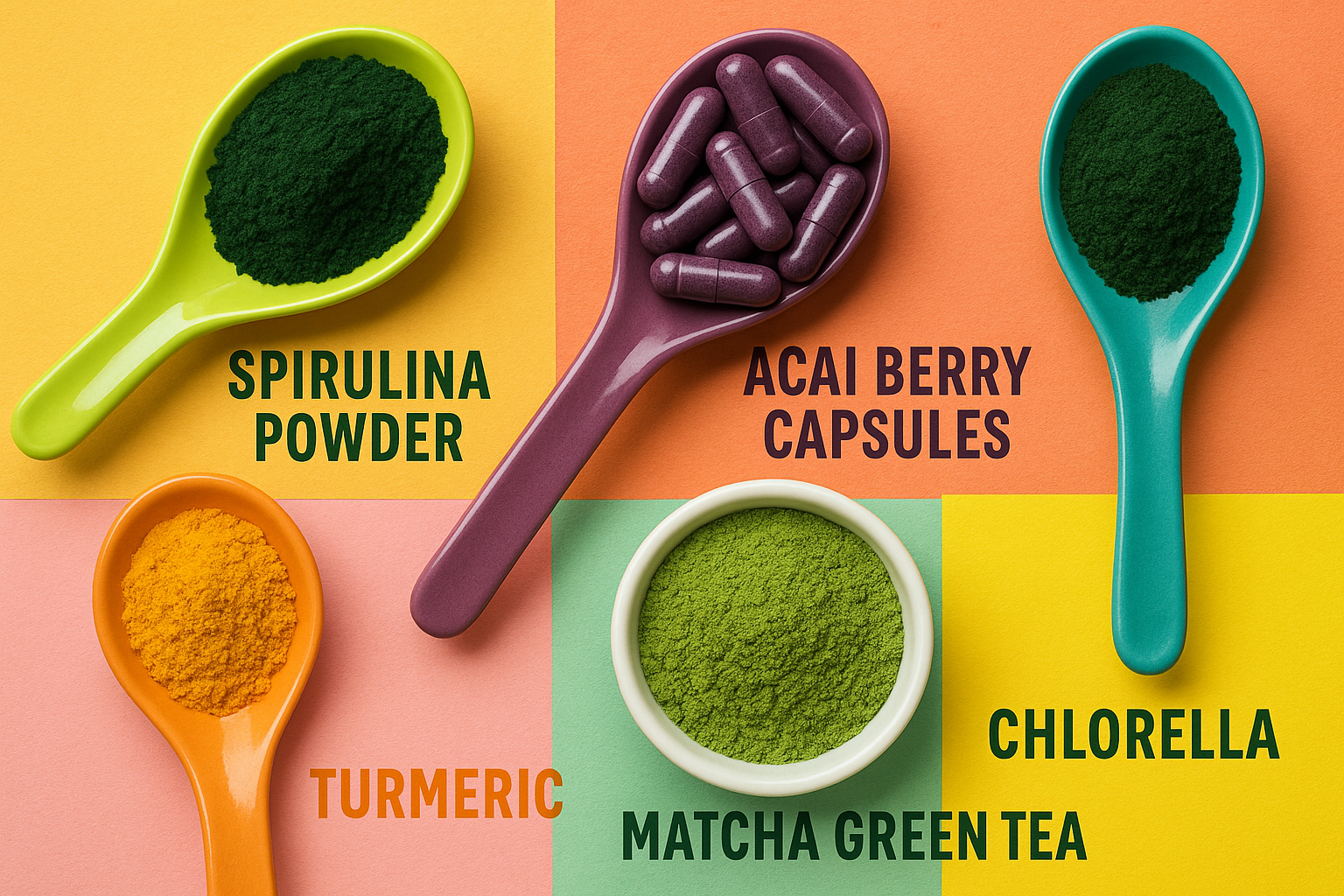
The term “superfood” gets thrown around constantly in wellness circles, but it has no official scientific or regulatory definition. A superfood is a marketing label applied to nutrient-dense whole foods, typically fruits, vegetables, seeds, and algae, that contain high concentrations of vitamins, antioxidants, polyphenols, or other bioactive compounds. Think blueberries, kale, spirulina, turmeric, and moringa.
Research shows the answer is more complicated than supplement labels suggest.
In 2025, the global superfood supplement market exceeded $200 billion in value, fueled by social media marketing, influencer endorsements, and a rising consumer interest in preventive health. But market size is not the same as clinical validation. Understanding which superfood supplements actually work, and why, requires separating the signal from the noise.
What Are the Realistic Benefits of Superfood Supplements?
A few named compounds have solid research behind them, and some supplements help in specific situations.
Can Supplements Fill Dietary Gaps?
Most adults do not eat enough vegetables, fruits, or oily fish on a consistent basis. A CDC report found that only about 10% of Americans meet the daily recommended intake for vegetables. If you genuinely cannot or do not eat enough leafy greens, a greens powder may help fill a nutritional gap. The key distinction is between filling a gap and replacing whole foods entirely, which no supplement can do adequately.
For people who travel often, lack cooking facilities, or eat a narrow range of foods because of sensory issues, specific dietary restrictions, or time constraints, superfood supplements can act as a reasonable nutritional safety net.
Is Curcumin the Best-Supported Superfood Compound?
Curcumin, the active compound in turmeric, is one of the few superfood-derived ingredients with a genuinely deep research base. A 2016 meta-analysis published in the Journal of Medicinal Food found that curcumin supplementation reduced inflammatory markers including C-reactive protein (CRP) more effectively than placebo. Additional studies have shown effects comparable to ibuprofen for knee osteoarthritis pain, with fewer gastrointestinal side effects.
The critical caveat is bioavailability. Raw turmeric powder contains only about 2 to 5% curcumin by weight, and standard curcumin is poorly absorbed from the gut. Standardized extracts formulated with piperine (black pepper extract) increase absorption by up to 2000%, according to a 1998 study in Planta Medica. Newer lipid-based formulations like BCM-95 and Meriva show similar absorption advantages. This is one case where the supplement form genuinely outperforms simply eating the spice.
What Do Spirulina and Chlorella Actually Do?
Blue-green algae like spirulina and chlorella are among the few superfood supplements with meaningful clinical trial data behind them. A 2016 study in Nutrients found spirulina supplementation at 6 grams per day improved lipid profiles, reduced oxidative stress markers, and showed anti-inflammatory effects in participants with metabolic syndrome. Spirulina is also one of the few plant sources that contains all essential amino acids, making it particularly interesting for those on plant-based diets.
Chlorella, a freshwater algae, has shown modest but consistent evidence for binding heavy metals in the gut and supporting immune function. A 2012 study in Nutrition Journal found that chlorella supplementation reduced dioxin concentrations in breast milk over six months, suggesting real detoxification potential at 6 grams per day.
Why Do People Take Berberine?
Berberine, extracted from plants including barberry, goldenseal, and Oregon grape, has accumulated some of the strongest clinical evidence of any plant-derived compound for metabolic health. Multiple meta-analyses show berberine reduces fasting blood glucose, postprandial glucose, and HbA1c in people with type 2 diabetes, with some comparisons to metformin showing similar efficacy in small trials. A 2012 meta-analysis in the Journal of Ethnopharmacology reviewed 14 randomized trials and found significant improvements in blood glucose and lipid parameters.
The effective dose is 500 mg two to three times daily with meals. Berberine has poor oral bioavailability but activates AMPK (adenosine monophosphate-activated protein kinase), the same cellular energy sensor that metformin targets, which explains its wide-ranging metabolic effects.
Where Does the Evidence Fall Short?
Clinical trials have not been published for most specific superfood blends, powders, and capsules sold.
What Gets Lost in Processing?
When manufacturers grind whole foods into powder, heat, oxidation, and mechanical processing degrade a significant portion of heat-sensitive vitamins, particularly vitamin C and folate, along with enzymes, polyphenols, and volatile phytochemicals. A 2021 study in PMC on nutritional properties of superfood extracts found that bioavailability of phytonutrients in processed forms varies enormously depending on extraction methods, storage conditions, and particle size, and that in vitro results frequently do not translate to in vivo human outcomes.
Fiber is another major casualty of processing. One of the most significant benefits of eating whole broccoli, spinach, or kale is the diverse dietary fiber that feeds beneficial gut bacteria and produces short-chain fatty acids (SCFAs) with wide-ranging health effects. Powders and capsules rarely deliver anything close to the same fiber matrix, which is a meaningful difference given how central fiber-mediated gut health is to overall wellness.
What Is the Proprietary Blend Problem?
Most greens powders and multi-ingredient superfood blends use proprietary blend labeling, which means they list ingredients without disclosing individual dosages. You might see spirulina, chlorella, ashwagandha, acai, wheatgrass, moringa, beet root, and 12 other ingredients on the label, but if the total blend is 3 grams spread across 20 ingredients, not one of them is present at a clinically relevant dose. This is a structural problem with the supplement industry that makes it nearly impossible for consumers to evaluate products honestly.
How Weak Is Regulatory Oversight?
In the United States, dietary supplements are regulated under the Dietary Supplement Health and Education Act (DSHEA) of 1994, which means manufacturers do not need to prove efficacy or safety before bringing a product to market. The FDA can act against unsafe products after they are sold, but the burden of proof lies with the agency rather than the manufacturer. Third-party testing from organizations like USP, NSF International, or Informed Sport adds valuable verification that a product contains what its label claims, but this still does not validate the health claims being made.
Which Superfood Supplements Are Actually Worth It?
Here is a practical tier ranking of superfood supplements:
Strong Evidence (Worth Considering)
- Curcumin with piperine or lipid formulation: 500 to 1000 mg per day of a high-bioavailability form. Best for inflammation, joint pain, and general antioxidant support.
- Berberine: 500 mg two to three times daily for metabolic health, blood sugar regulation, and lipid management.
- Spirulina: 1 to 8 grams per day. Good evidence for lipid support, antioxidant activity, and as a complete protein source for plant-based diets.
- Green tea extract (EGCG): 400 to 500 mg EGCG per day. Moderate evidence for metabolic support, cardiovascular protection, and antioxidant effects.
- Ashwagandha (KSM-66 or Sensoril extract): 300 to 600 mg per day. Growing evidence for cortisol reduction, stress resilience, and improved sleep quality.
Limited Evidence (Probably Harmless, Probably Overhyped)
- Greens powders and superfood blends: Convenient and generally safe, but typical doses of ingredients like spirulina, chlorella, and wheatgrass fall well below the nutrient levels found in equivalent servings of whole foods.
- Acai, goji, pomegranate extracts: High in antioxidants in whole form, but isolated extracts have limited RCT data for specific health outcomes.
- Wheatgrass and barley grass powders: Contain chlorophyll and trace nutrients but no compelling human trial data at typical supplement doses.
Whole Food vs. Supplement: The Bottom Line
A comprehensive 2022 review in Nutrients reinforced the consistent finding that whole foods contain a synergistic matrix of nutrients, phytochemicals, and fiber that supplements simply cannot replicate. Blueberries provide anthocyanins, fiber, vitamin C, manganese, and dozens of additional polyphenols that interact with gut bacteria and cellular signaling pathways in complex ways.
That said, framing this as a binary choice misses the point. The practical goal is to eat as well as you can and use targeted, evidence-backed supplements to address specific gaps or goals, not to take a daily greens powder as an insurance policy against a poor diet.
If you are evaluating a superfood supplement, ask: Is the active ingredient present at a clinically studied dose? Is it third-party tested? Is the evidence from human trials or primarily animal and cell culture studies? Is the manufacturer transparent about sourcing and extraction methods? These questions will help you separate the few products worth your money from the many that are not.
But the most important thing you can do for long-term health is still eat a diverse, vegetable-rich, minimally processed diet, with selective supplements filling the specific gaps that your food intake leaves behind.
FAQ
What does “superfood” actually mean?
“Superfood” has no official scientific or regulatory definition. It is a marketing label applied to nutrient-dense whole foods such as blueberries, kale, spirulina, turmeric, and moringa that contain high levels of vitamins, antioxidants, polyphenols, or other bioactive compounds.
Which superfood supplements have the strongest clinical evidence?
Curcumin (in a high-bioavailability form such as piperine or lipid-based extracts), berberine at 500 mg two to three times daily, spirulina at 1 to 8 grams per day, green tea extract (EGCG) at 400 to 500 mg per day, and ashwagandha extracts such as KSM-66 or Sensoril at 300 to 600 mg per day have the most consistent human trial support.
Why are most greens powders considered overhyped?
Most multi-ingredient greens powders use proprietary blends that hide individual ingredient doses. When a 3-gram blend is spread across 20 ingredients, none of them reach a clinically relevant amount, and processing further degrades heat-sensitive vitamins, polyphenols, and fiber compared to whole foods.
Related coverage