
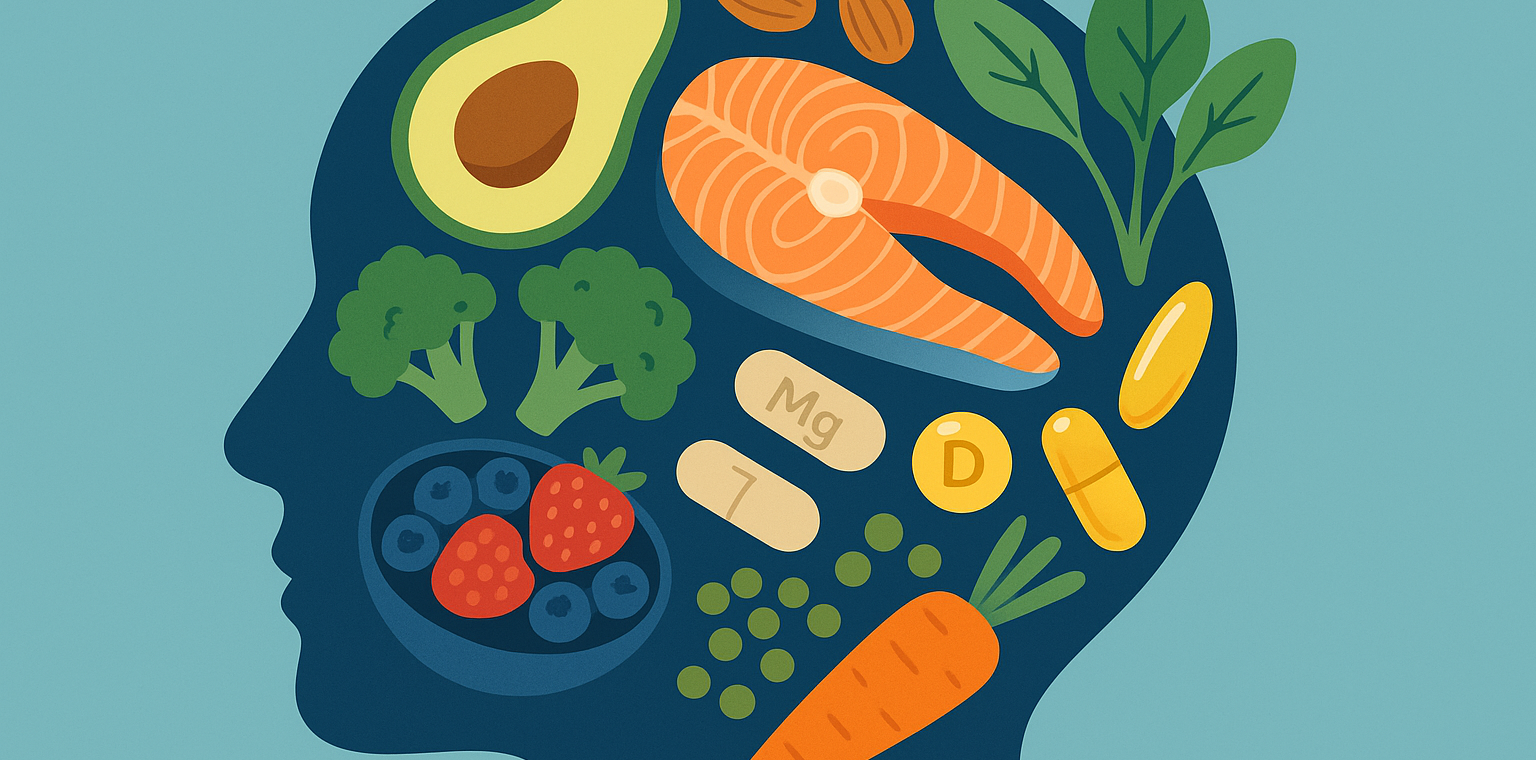
The Gut-Brain Connection: A Foundation for Understanding Nutritional Psychiatry
The relationship between nutrition and mental health is no longer a fringe idea in wellness circles. It is a rapidly growing field of clinical research called nutritional psychiatry, and the evidence base has expanded substantially over the past decade. The core insight is this: the brain is a metabolically expensive organ that depends on a steady supply of nutrients to produce neurotransmitters, manage inflammation, and maintain the structural integrity of neurons.
When the diet is chronically poor, whether that means high in ultra-processed foods, low in vegetables, or deficient in key micronutrients, the downstream effects on mood, cognition, anxiety, and depression are measurable and clinically meaningful. A landmark 2019 meta-review published in World Psychiatry, covering meta-analyses of randomized controlled trials, concluded that the strongest evidence for nutrient supplementation in mental health was for omega-3 polyunsaturated fatty acids (PUFAs), particularly EPA, as an adjunctive treatment for depression.
This article covers what the research actually shows about nutrition’s impact on mental health, which specific supplements have the strongest evidence, and how to think about using them responsibly alongside, not instead of, professional care.
Why Nutrition Affects the Brain More Than Most People Realize
Several biological mechanisms explain why diet so directly affects mental health:
- Neurotransmitter synthesis: Serotonin, dopamine, norepinephrine, and GABA are all synthesized from dietary amino acids and require specific vitamins and minerals as cofactors. Without adequate tryptophan (for serotonin) or tyrosine (for dopamine), and without sufficient B6, B12, folate, iron, and zinc to facilitate the conversion reactions, neurotransmitter production is impaired.
- Neuroinflammation: Diets high in refined carbohydrates, omega-6 fats, and ultra-processed foods promote systemic inflammation that crosses the blood-brain barrier. Elevated brain inflammation is now considered a significant contributing factor in depression and anxiety, not just a consequence of them.
- The gut-brain axis: Approximately 90% of the body’s serotonin is produced in the gut, and the gut microbiome communicates with the brain via the vagus nerve, immune signaling, and the production of short-chain fatty acids and other neuroactive metabolites. Dysbiosis, an imbalanced gut microbiome, is increasingly linked to depression, anxiety, and cognitive decline.
- Neuroplasticity: Brain-derived neurotrophic factor (BDNF), a key protein that supports the growth and maintenance of neurons, is directly influenced by diet. Diets rich in polyphenols and omega-3 fats support BDNF production, while high-sugar diets suppress it.
Omega-3 Fatty Acids (EPA and DHA)
Omega-3 fatty acids, particularly eicosapentaenoic acid (EPA) and docosahexaenoic acid (DHA), are among the most studied nutrients in mental health research. DHA is a major structural component of brain cell membranes, making up approximately 30% of the fatty acids in grey matter. EPA has more pronounced anti-inflammatory effects and is thought to play a stronger direct role in mood regulation.
A 2022 meta-analysis in Translational Psychiatry examining 19 randomized controlled trials found that omega-3 supplementation significantly reduced depression scores compared to placebo, with EPA-dominant formulas (higher EPA than DHA) showing the strongest effects. The typical dose studied for mental health is 1 to 2 grams of combined EPA and DHA per day, with some clinical protocols for treatment-resistant depression using up to 3 grams of EPA specifically.
The mechanism appears to involve EPA’s ability to reduce pro-inflammatory eicosanoids, modulate serotonin signaling pathways, and support the fluidity of neuronal membranes that affects receptor function. For general mental health maintenance, a daily fish oil supplement providing at least 500 mg to 1 gram of EPA is a well-supported starting point.
Magnesium
Magnesium is involved in over 300 enzymatic reactions in the body, and several of them are directly tied to neurological function. It regulates the N-methyl-D-aspartate (NMDA) receptor, which plays a central role in glutamate signaling and has been heavily implicated in depression and anxiety pathways. Suboptimal magnesium intake is extremely common in Western countries, with many estimates suggesting 50 to 70% of adults consume less than the recommended daily intake.
A 2017 randomized trial published in PLOS ONE found that 248 mg of elemental magnesium per day significantly improved symptoms of mild to moderate depression and anxiety within six weeks, with effects comparable to antidepressant treatment in the study population. The response was consistent across age groups and baseline depression severity.
Magnesium glycinate and magnesium threonate are two forms with superior absorption and fewer gastrointestinal side effects compared to magnesium oxide, which is common in low-cost supplements but poorly absorbed. Magnesium threonate crosses the blood-brain barrier more effectively than other forms and is the subject of ongoing cognitive health research. A typical daily dose for mental health support is 200 to 400 mg of elemental magnesium.
Vitamin D
Vitamin D deficiency is widespread, particularly among people living at northern latitudes, those who work primarily indoors, older adults, and people with darker skin tones who require more sun exposure to produce equivalent vitamin D amounts. Beyond its well-known role in bone health, vitamin D receptors are expressed throughout the brain, including in the hippocampus and prefrontal cortex, regions central to mood regulation and executive function.
Multiple studies have linked low vitamin D levels to higher rates of depression, seasonal affective disorder (SAD), and anxiety. A 2020 meta-analysis in the Journal of Affective Disorders found that vitamin D supplementation produced significant improvements in depressive symptoms, with the strongest effects in individuals who started with deficient levels below 20 ng/mL. The standard therapeutic range for supplementation is 2,000 to 4,000 IU of vitamin D3 per day, though individual needs vary. Testing serum 25(OH)D levels before supplementing is the most rational approach, allowing you to correct an actual deficiency rather than guessing.
B Vitamins: B6, Folate (B9), and B12
B vitamins are essential cofactors in the synthesis of serotonin, dopamine, norepinephrine, and other neurotransmitters. Folate and B12 are particularly important for methylation, a biochemical process that regulates gene expression, detoxification, and the conversion of homocysteine into beneficial compounds. Elevated homocysteine is both a marker of methylation dysfunction and an independent risk factor for depression and cognitive decline.
A genetic variant in the MTHFR gene (methylenetetrahydrofolate reductase), carried by an estimated 10 to 15% of the population in homozygous form, impairs the conversion of folic acid to its active form, 5-methyltetrahydrofolate (5-MTHF). People with this variant often benefit more from supplemental methylfolate rather than standard folic acid. Low folate levels have been consistently associated with depression, and low folate status predicts a poorer response to antidepressant medications in several studies.
Vitamin B12 deficiency is more common in older adults due to reduced stomach acid production and intrinsic factor, and in people following vegan or strict vegetarian diets since B12 is found almost exclusively in animal products. B12 deficiency can cause depression, cognitive decline, fatigue, and peripheral neuropathy. Sublingual methylcobalamin at 1,000 mcg per day is a well-absorbed supplementation form for those at risk.
Zinc
Zinc is a trace mineral required for the function of over 300 enzymes, including those directly involved in brain signaling. It modulates NMDA and AMPA receptors, influences GABA and glutamate balance, and plays a documented role in hippocampal neurogenesis, the process by which new neurons form in a brain region closely tied to mood and memory.
A 2013 meta-analysis published in Biological Psychiatry found that serum zinc levels were significantly lower in depressed individuals compared to controls, with the difference growing more pronounced in cases of more severe depression. This is consistent across multiple cultures and methodologies. Typical supplemental doses studied for mental health range from 7 to 30 mg of elemental zinc per day. For maintenance, 15 to 25 mg per day is a common clinical recommendation, ideally taken with food to reduce any gastrointestinal irritation. Note that long-term zinc supplementation should be balanced with copper, as high zinc intake can deplete copper stores.
Probiotics and the Microbiome-Brain Axis
The gut-brain axis has become one of the most active areas in neuroscience and psychiatry over the last decade. The gut microbiome communicates with the brain via the vagus nerve, immune cytokine signaling, and the production of neuroactive metabolites including short-chain fatty acids, GABA, and serotonin precursors. Dysbiosis has been linked to anxiety, depression, and cognitive decline in both preclinical and clinical research.
A 2019 meta-analysis in General Psychiatry found that probiotic supplementation significantly reduced depression and anxiety scores, with multi-strain probiotics generally outperforming single-strain formulas. The most studied strains for mental health include Lactobacillus acidophilus, Lactobacillus rhamnosus (particularly the JB-1 strain studied by McMaster University), and Bifidobacterium longum. Typical doses in mental health trials range from 1 billion to 10 billion CFU (colony-forming units) per day, often with a combination of Lactobacillus and Bifidobacterium strains.
Adaptogens With Emerging Mental Health Evidence
Ashwagandha (Withania somnifera)
Ashwagandha is an adaptogenic herb from Ayurvedic medicine that has accumulated a meaningful body of modern clinical evidence specifically for stress and anxiety reduction. A 2019 double-blind RCT published in Medicine found that 240 mg of ashwagandha extract per day significantly reduced serum cortisol levels, perceived stress scores, and anxiety symptoms over 60 days compared to placebo. KSM-66 and Sensoril are the most clinically validated branded extracts, with typical doses of 300 to 600 mg per day.
Saffron (Crocus sativus)
Perhaps the most surprising entry on this list, saffron has emerged from several rigorous clinical trials as a genuine option for mild to moderate depression. A 2014 meta-analysis in the Journal of Integrative Medicine found saffron supplementation at 30 mg per day of standardized extract was significantly more effective than placebo and comparable to low-dose antidepressants in reducing depressive symptoms, with an excellent safety profile. The proposed mechanisms include serotonin reuptake inhibition and potent antioxidant activity from the compounds safranal and crocin.
The Dietary Pattern Foundation
While individual supplements can play a meaningful supporting role, the research consistently shows that overall dietary patterns have a stronger impact on mental health than any single nutrient. The Mediterranean diet, rich in olive oil, vegetables, legumes, whole grains, and oily fish, has been associated in multiple large observational studies and some RCTs with significantly reduced rates of depression and cognitive decline.
A landmark 2017 trial, the SMILES trial published in BMC Medicine, found that a Mediterranean-style dietary intervention significantly reduced depression scores compared to social support alone in adults with major depressive disorder. This underscores an important principle: supplements are most effective when used to support a nutrient-dense dietary foundation, not to compensate for a consistently poor one.
Important Practical Considerations
- Supplements are not a replacement for professional care: Mental health conditions are serious, and nutritional interventions should complement, not replace, evidence-based treatments. Some supplements interact with psychiatric medications, St. John’s Wort is the most notable example, as it significantly alters the metabolism of many antidepressants and other drugs.
- Test before you supplement: Deficiencies in vitamin D, B12, iron, and zinc should be confirmed via bloodwork. Correcting a documented deficiency typically delivers far larger benefits than supplementing when levels are already adequate.
- Allow adequate time: Most nutritional interventions for mental health require 4 to 12 weeks of consistent use before meaningful changes in mood and cognition are apparent. Short trial periods often underestimate potential benefits.
- Choose quality products: Third-party testing certifications (USP, NSF, or Informed Sport) verify label accuracy and screen for contamination. In the supplement industry, quality varies enormously between brands.
The Bottom Line
The science connecting nutrition and mental health has moved well beyond theory. Omega-3 fatty acids, magnesium, vitamin D, B vitamins, zinc, and probiotics all have meaningful evidence linking them to improved mood, reduced anxiety, and better cognitive function, particularly in individuals with deficiencies or high stress loads. Ashwagandha and saffron round out the list with strong RCT data for specific mental health applications.
Used thoughtfully alongside a nutrient-dense diet and appropriate professional care, these nutrients offer a low-risk, physiologically grounded approach to supporting brain health from the inside out. The evidence supporting nutritional psychiatry is only getting stronger, and the growing number of psychiatrists and clinical psychologists incorporating dietary assessment into their practice reflects that shift.